If you’re a tradie or service contractor in Australia, you don’t need another “trend report” full of buzzwords. You need the stuff that genuinely makes running jobs easier: fewer call-backs, less admin, tighter scheduling, quicker payments, and customers who aren’t chasing you for updates.
That’s what the future of field service 2026 Australia is really about: practical improvements that change how your week feels.
Because let’s be honest: the work isn’t the hard part. Running the business around the work is what does your head in. Quoting at night, chasing approvals, digging through photos, fixing missed notes, and trying to remember what happened on that job you did two Tuesdays ago.
So here’s the big question for 2026:
What will actually move the needle for tradies?
The short answer? Anything that:
- Helps you win back time
- Results in fewer return visits and warranty dramas
- Cuts travel time
- Lifts customer experience
- Speeds up cashflow
Now, let’s get into the technology trends in field service that matter most in 2026.
1. AI co-pilots become your admin sidekick
The biggest “felt” change in 2026 will be AI showing up as a quiet helper in the background. Not the sci-fi version. The simple version that helps you capture details properly, communicate faster, and finish paperwork without the after-hours grind.
AI is getting better at taking messy inputs: voice notes, quick scribbles, and photos, and turning them into usable job records. That means less time typing and more time doing paid work. And when your job notes are clean, everything downstream improves too: invoicing, warranties, compliance, repeat jobs, and customer trust.
The point isn’t to “use AI”. The point is to remove the annoying friction that slows your business down.
What it looks like on a normal week:
- Job notes get cleaned up and structured
- Customer updates are drafted instantly
- Invoices are easier because the job info is already complete
This is one of the biggest AI and automation trends for tradies because it fixes the “death by admin” problem without adding headcount.
2. Automation shifts from reminders to workflows
A lot of businesses say they automate, but what they really mean is that they send reminders.
In 2026, automation gets more useful when it connects the dots between steps, from booking to dispatch, job, approval, invoice, and payment. Instead of relying on someone to remember the next action, your system nudges it automatically.
This is where you stop losing money to simple gaps: forgetting to follow up on quotes, missing an approval, not sending an ETA, or letting an invoice sit there because you got smashed on-site all week.
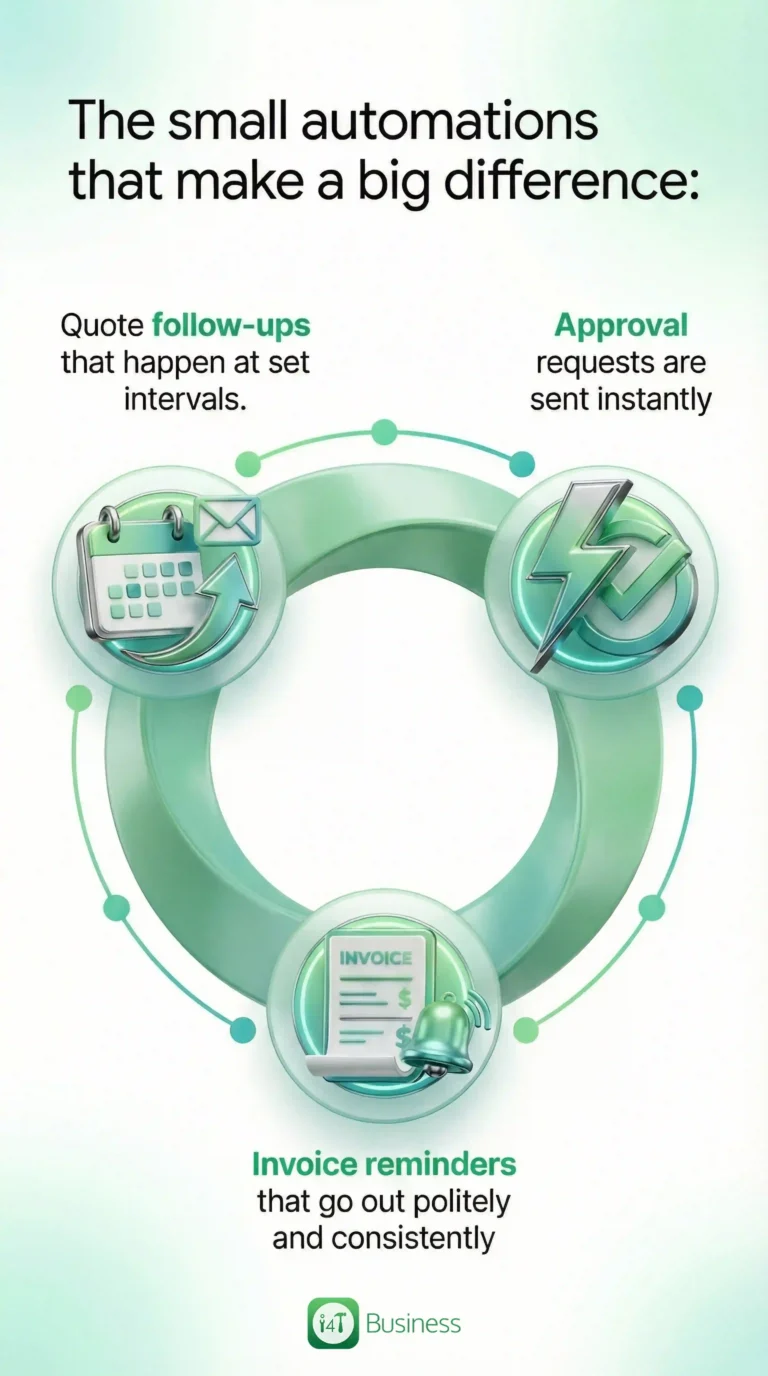
The small automations that make a big difference:
- Quote follow-ups that happen at set intervals.
- Approval requests are sent instantly
- Invoice reminders that go out politely and consistently. When it’s set up right, automation doesn’t feel like “tech”. It feels like your business runs smoother without you pushing every single button.
3. Customer experience becomes the real battleground
Most tradies already do good work. The difference in 2026 is that customers won’t judge you only by the quality of the job; they’ll judge you by the experience around it.
And that experience is mostly communication: how easy it is to book, how clear your ETA is, whether you keep them updated, and whether the invoice makes sense without a back-and-forth drama.
These customer experience trends in field service are becoming non-negotiable, even for smaller operators, because customers are comparing you to the best experience they’ve had, not to the average in your industry.
In practice, great CX doesn’t need fancy systems. It needs consistency.
The basics that customers love and remember:
- Clear arrival windows and updates when things change
- Simple approvals so work doesn’t stall
- A clean handover: photos, notes, and what was actually done
Do that well, and you’ll notice fewer complaints, fewer “just checking…” calls, and more 5-star reviews.
4. Scheduling gets smarter, not just “fit it in”
Scheduling is where profit is made or lost. Especially in Australia, where travel time can chew up your day if you’re not careful.
In 2026, smarter scheduling is less about having a calendar and more about making decisions based on real factors: job type, expected duration, skill requirements, location, urgency, and even parts availability.
The biggest win here isn’t more jobs. It’s better jobs per day, the kind where you’re not bouncing across suburbs, arriving late, or setting yourself up for a rushed finish.
This trend matters for solo operators, too. Even if you’re doing the scheduling yourself, you’ll feel the difference when you stop planning your week in a panic and start planning it like a system.
Simple ways tradies can tighten scheduling:
- Group jobs by area where possible
- Standardise job types so duration is easier to estimate
- Build buffer time for the jobs that always blow out
5. Predictive and condition-based maintenance grows
Breakdown work will always exist. But in 2026, more businesses will push toward planned servicing because it’s better for customers and better for cash flow.
Predictive maintenance sounds high-tech, but the core idea is simple: service things before they fail, based on patterns, wear, usage, or inspection results. For some trades, that’s already common; for others, it’s becoming a bigger opportunity as more equipment gets connected and more customers want reduced downtime.
For tradies, the real value isn’t the predictive part; it’s the business model part. Planned servicing creates steadier revenue, less last-minute chaos, and customers who stick around longer.
Where you’ll see this trend most:
- Commercial HVAC and refrigeration
- Fire and safety compliance servicing
- Facilities maintenance for multi-site customers
If you’re not doing maintenance agreements yet, 2026 is a good year to start trialling a simple service package.
6. Remote assist grows up
Remote support used to feel awkward. Now it’s becoming normal, because everyone’s comfortable jumping on video, and customers would rather try a quick fix than pay for a visit they didn’t need.
Remote assist in 2026 will be about two things: triage and support.
Triage means working out whether you actually need to attend the site. Support means helping someone on-site – a junior tech, a customer, or another contractor, with real-time guidance.
This doesn’t replace fieldwork. It reduces dumb trips and helps your team learn faster.
Good remote-assist moments:
- Confirming fault symptoms before booking the job properly
- Walking a customer through a simple reset or check
- Helping a less experienced tech get unstuck without waiting hours
Even doing this informally with a quick video call can save a heap of time and protect your schedule.
7. Knowledge capture becomes essential because the skills crunch isn’t easing up
It’s getting harder to find great people, and when you do find them, you don’t want your quality to depend entirely on one experienced tech who “just knows”.
In 2026, strong field service businesses will treat knowledge like an asset. They’ll capture it, standardise it, and make it teachable.
That means templates, checklists, job steps, photo requirements, and consistent handovers. Not because you love paperwork, but because it reduces mistakes, speeds up training, and keeps your work consistent even when the team changes.
This is one of the least glamorous trends on the list, but it’s one of the most profitable.
Simple ways to systemise knowledge:
- Turn your top 10 job types into templates
- Use consistent checklists for safety and compliance
- Make photo capture part of the job flow
8. Parts and inventory get tighter
Nothing kills a first-time fix like turning up without what you need. And nothing kills customer experience like “we’ll have to come back”.
In 2026, parts planning becomes more connected to job planning, especially for teams doing repeat work where patterns are predictable. The smart move is linking common parts to job types, tracking what gets used, and making stock visibility simple.
You don’t need a warehouse system worthy of NASA. You just need enough structure that you stop getting caught out.
Practical improvements that reduce return trips:
- Track the most common parts per job type
- Keep minimum stock levels for high-frequency items
- Record parts used as part of closing the job
This trend pays off fast because it improves both efficiency and customer trust
9. Security and data handling become everyone’s problem
Field service is getting more digital every year: photos, signatures, compliance docs, customer details, device access, cloud storage, and now AI features.
That’s great, until it’s messy. A lost phone, shared logins, ex-staff still having access, customer data sitting in personal messages… It’s risky, and it can bite hard.
In 2026, smarter businesses will tighten the basics: permissions, access control, and keeping customer information in one place instead of scattered across devices.
This isn’t about paranoia. It’s about protecting your reputation.
Good security habits for tradies:
- Role-based access
- Two-factor authentication
- Keeping job info in one system
10. Outcome-based services grow
This is the business-model trend that quietly changes everything.
More customers, especially commercial and multi-site, want certainty. They want reliable response times, regular servicing, compliance reporting, and clear records. In return, they’ll often pay for it as a package rather than one-off jobs.
For tradies, that means more recurring revenue and fewer “feast or famine” months.
It can start small: a basic maintenance plan, a priority-response add-on, or tiered service packages.
A simple way to start:
- Offer 2–3 service tiers like basic/standard/premium
- Bundle priority response as a paid upgrade
- Automate renewals and reminders so contracts don’t slip
This is where the “move the needle” effect shows up over time, resulting in steadier bookings and stronger customer retention.
How to prioritise these trends
You don’t need to do everything at once. The smarter move is to pick the trends that match where your business is right now.
If you’re a small team or solo operator, focus on removing friction:
- Clean job capture with notes, photos, and customer updates
- Smarter scheduling so your day doesn’t blow out
- Faster invoicing and fewer payment delays
If you’re growing, focus on consistency and scale:
- Templates and checklists so quality stays high
- Parts planning to reduce return visits
- Automation that keeps quotes, approvals and invoices moving
If you’re servicing commercial customers, lean into:
- Planned servicing and agreements
- Strong reporting and compliance records
- Service tiers and SLAs
Do that, and you’ll be ahead of most businesses trying to “do AI” without fixing the basics first.
The real future of field service in 2026, Australia
The future of field service 2026 Australia won’t be won by whoever buys the fanciest tech. It’ll be won by the businesses that make service smoother and more consistent, for their team and for their customers.
The biggest winners in 2026 will be the tradies who:
- Cut admin without cutting corners
- Tighten scheduling and reduce return trips
- Lift customer experience with clear communication
- Improve cash flow by getting invoices out fast and keeping job records clean
And that’s where the right system matters.
If you want a practical way to turn these technology trends in field service into day-to-day wins, i4T Business helps you run the full job flow, scheduling, job tracking, customer updates, and invoicing, without the admin blowout. It’s built for tradies who want their business to feel more under control in 2026.
FAQs
AI is helping with admin and communication, plus smarter scheduling to reduce wasted time.
No. It’s mainly used to cut paperwork, speed up job notes, and improve planning.
Clear ETAs, proactive updates, easy approvals, and clean job handovers.
Quote follow-ups, booking confirmations, approval requests, and invoice reminders.
Better job scoping upfront and tighter parts planning so you turn up prepared.
Hot off the press!