


//
Share this article

Table of Contents

How to Build a Simple Weekly Job Planning System for Your Trade Business

How to Build a Simple Weekly Job Planning System for Your Trade Business

Table of Contents

Key Takeaways

  • Implementing a simple weekly job planning system improves productivity and reduces downtime.

  • Job scheduling software provides efficiency and flexibility for trade businesses.

  • Regular review and adjustment of schedules prevent missed appointments and enhance customer satisfaction.

Key Answer

A simple weekly job planning system for trade businesses enhances productivity, reduces missed appointments, balances workloads, and boosts customer satisfaction. Implementing job scheduling software can simplify these tasks and improve efficiency significantly.

In the bustling world of Aussie tradies, mastering the art of job scheduling can be the difference between chaos and a smooth-running operation. Developing a simple weekly job planning system for your trade business is not just about keeping track of jobs; it’s about enhancing productivity, improving customer service, and boosting your bottom line. This guide is here to help you take control and ensure your business thrives.

Why Weekly Job Scheduling Is Essential

Weekly job scheduling is a cornerstone for any successful trade business. It provides a clear roadmap for the week, helping you allocate resources effectively and avoid downtime. By having a structured schedule, you prevent missed appointments and can ensure each team member knows their responsibilities ahead of time. This not only streamlines operations but also enhances customer satisfaction, as clients value punctuality and reliability.

Moreover, a well-planned schedule enables you to anticipate potential delays, whether due to weather conditions, material procurement issues, or unexpected urgent jobs. By integrating job scheduling software, you can easily adjust to these variables, maintaining operational fluidity.

What to Prepare Before Planning the Week

Preparation is key to successful job scheduling. Start by reviewing completed jobs from the previous week to identify any patterns or recurring issues. Understanding these can inform your scheduling decisions and improve future planning.

Next, gather all necessary information, such as client details, job specifications, and resource availability. Ensure you have a clear understanding of the availability of your tradies, including their specialisations and any equipment they might need. This groundwork is vital to crafting a realistic schedule that maximises efficiency.

Finally, consider external factors that could impact your schedule. Keep an eye on weather forecasts, supplier lead times, and potential roadworks that could affect travel. Having this information upfront allows you to create a flexible yet robust plan.

How to Prioritise Jobs Effectively

Effective prioritisation is the backbone of a productive schedule. Start by categorising jobs based on urgency and importance. Consider client deadlines, the potential for repeat business, and any contractual obligations. High-priority tasks should naturally take precedence, but always build in buffer time for emergencies or sudden changes.

Using a job management system can streamline this process by allowing you to tag jobs with priority levels and due dates. This visibility ensures that everyone on your team is aligned with the day’s critical tasks and can adjust their focus accordingly.

Build a Simple Weekly Job Scheduling Workflow

To build an effective weekly job scheduling workflow, begin by establishing clear objectives for each day. Outline what needs to be achieved and allocate resources accordingly. This could involve assigning specific jobs to tradies based on their expertise or availability, ensuring that no one is overburdened while maintaining a steady workflow.

Implement a job management system that can automate routine tasks, such as sending reminders or updating job statuses. Such software not only reduces manual errors but also frees up time to focus on more strategic activities. By digitising your scheduling process, you can also easily make real-time adjustments as needed.

Finally, ensure that your workflow is transparent and accessible to your team. Clear communication about the schedule helps prevent misunderstandings and boosts team morale.

Common Job Scheduling Mistakes to Avoid

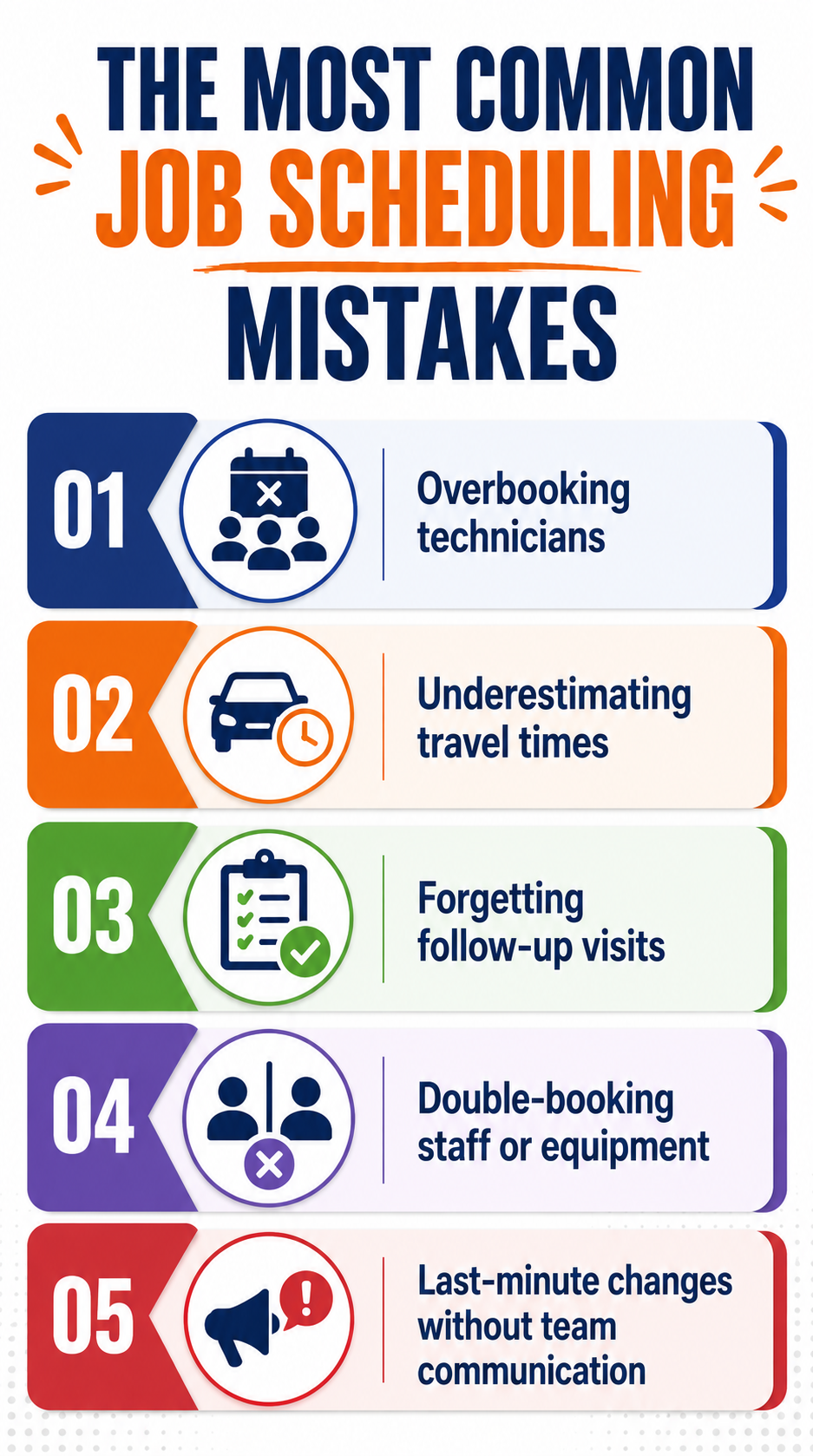
Avoiding common scheduling pitfalls can dramatically enhance your efficiency. One major mistake is failing to account for all variables, such as travel time or unexpected delays. Overloading your tradies with back-to-back jobs without considering these factors can lead to burnout and missed appointments.

Another common error is relying solely on manual scheduling methods, such as whiteboards or paper. These are prone to human error and can quickly become outdated. Investing in tradie scheduling software can offer a more reliable and scalable solution.
TY5Si2GUIIOOU4rlnSVXkTfZEri9yuYB8MYSNoU2.png

How Job Scheduling Software Simplifies Planning

Job scheduling software is a game-changer for trade businesses. It centralises all scheduling information, providing a single source of truth for your team. This not only simplifies tracking and updating job progress but also improves communication across your organisation.

With features like automated reminders and real-time updates, job scheduling software minimises the risk of double bookings or overlooked appointments. It also offers analytics and insights that help you refine your scheduling strategies over time, leading to continuous improvement and higher profitability.

Reviewing and Adjusting Your Schedule During the Week

A static schedule is a flawed schedule. Continuous review and adjustment are crucial to managing a dynamic work environment. Regularly check progress against your plan and be prepared to shuffle priorities or resources as needed.

Use your job management system to flag bottlenecks or delays, enabling quick decision-making and course corrections. This proactive approach not only keeps your operations running smoothly but also improves client satisfaction by ensuring timely service delivery.

Creating a Consistent Weekly Planning Routine

Consistency is key to successful job scheduling. Establish a routine where you dedicate time each week to planning, reviewing, and adjusting your schedule. This could be a Monday morning meeting to kickstart the week or a Friday afternoon review to prepare for the next week.

By making weekly planning a regular practice, you foster a culture of preparedness and adaptability. This not only keeps your business agile but also ensures your team is always aligned with the company’s goals. A job scheduling software like i4T Business can ensure you keep on top of your plans and keep clients happy. Book a demo today.

Frequently Asked Questions

Job scheduling software enhances efficiency by automating routine tasks, improving communication, and providing real-time updates, thereby reducing errors and improving service delivery.

Consider factors like resource availability, job priority, weather conditions, and potential delays when planning your weekly job schedule.

Regularly reviewing your job schedule allows you to adjust for unforeseen changes, ensuring smooth operations and maintaining high customer satisfaction.

A job management system provides a centralised platform for scheduling, which simplifies job tracking, improves resource allocation, and enhances overall business efficiency.

Use digital tools to automate scheduling and avoid overloading your tradies. Always account for travel time and potential delays when planning.

Scroll to Top