

Key Takeaways
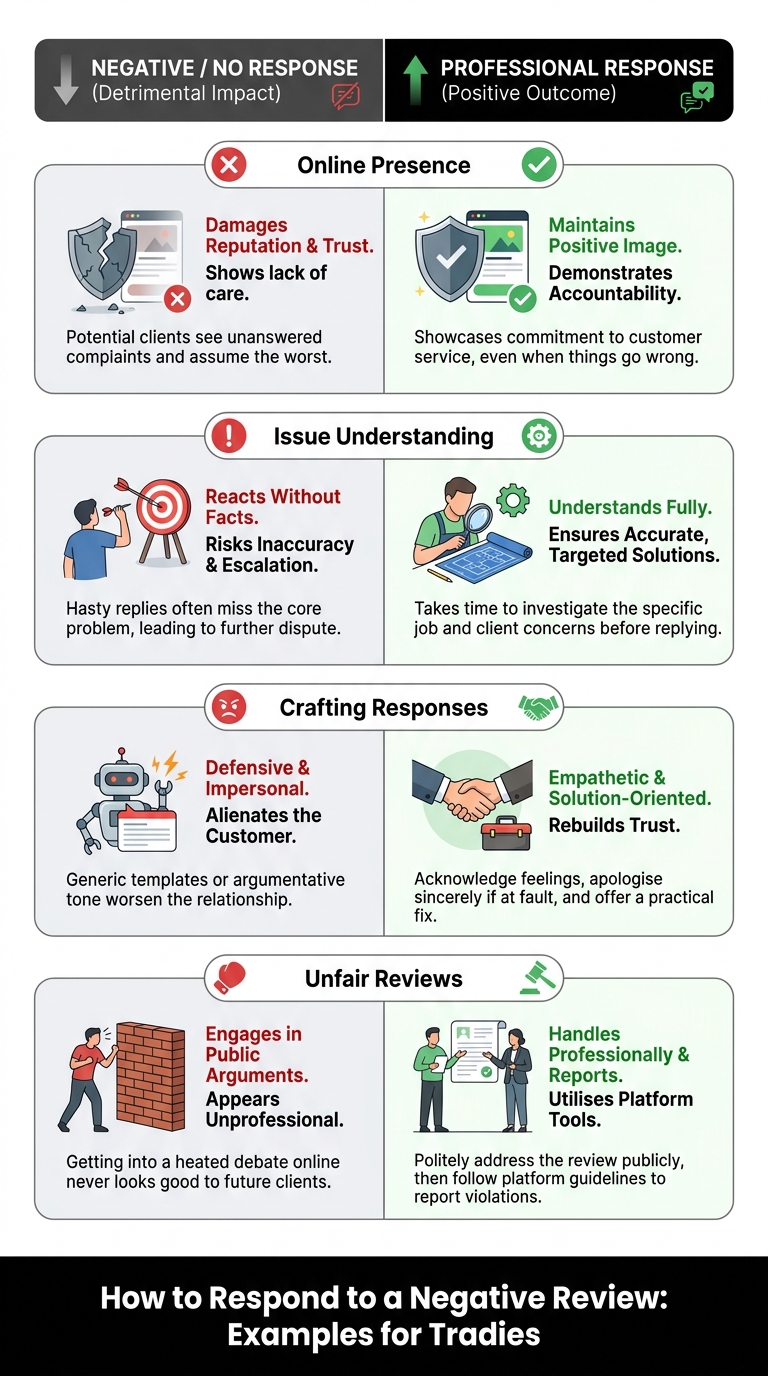
Responding to reviews is crucial for maintaining a positive online presence.
Understand the issue fully before responding to ensure accuracy.
Craft responses that are empathetic and solution-oriented.
Handle unfair reviews professionally and report them when necessary.
Key Answer
Learn how to turn negative reviews into a chance to build trust. This guide offers tradie-specific examples and strategies for effective response management.
In the trades industry, managing your online reputation is more crucial than ever. Knowing how to respond to a negative review effectively can turn an adverse situation into an opportunity to showcase your professionalism. This guide is tailored for Aussie tradies, focusing on response strategies that protect your reputation and build trust with future customers.
Why Responding to Negative Reviews Matters
In today’s digital age, your online reviews are often the first impression potential clients have of your business. Responding to negative reviews is not just about damage control; it’s a chance to show how you handle issues professionally and with integrity. A well-crafted response can demonstrate your commitment to customer service and your willingness to make things right.
Ignoring negative reviews can lead to missed opportunities. Instead, view each review as a chance to engage with your customers and improve your services. For tradies in particular, where word-of-mouth and reputation are key, a positive response can greatly enhance your standing in the community.
Before You Respond: Check the Facts
Before you jump into responding, it’s essential to understand the details of the complaint. Review the job records, speak to your team, and gather all relevant information. Was there an issue with the quality of work, pricing, or was it a communication breakdown? Understanding the problem from your customer’s perspective will help you craft a more empathetic response.
Having accurate job records and communication history is invaluable. Using tools like i4T Business software can streamline this process by keeping all your job-related information organised and easily accessible.
How to Respond to a Negative Google Review Professionally
Start by acknowledging the customer’s experience and expressing regret for any inconvenience caused.
Example:
“We’re sorry to hear that you weren’t satisfied with our service and appreciate your feedback, as it helps us improve.”
This shows that you value their input and are open to making changes.
Next, offer a solution or explain the steps you are taking to address the issue. Invite the customer to continue the conversation offline. This can often de-escalate the situation and prevent further public scrutiny.
Consider saying, “Please contact us directly so we can resolve this matter promptly.”
Response Examples for Common Trade Complaints
Here are some examples of how to respond to typical trade business complaints:
Late Arrival
“Thank you for your patience. Our technician was delayed due to unforeseen traffic. We’re reviewing our scheduling to prevent this in the future.”
Price Discrepancy
“We aim to provide clear estimates. Please contact us to discuss the details, and we’ll ensure your concerns are addressed.”
Mess Left on Site
“We apologise for the oversight. Our team has been reminded to adhere to our clean-up protocols.”
Handling Unfair or Fake Reviews
Sometimes, you might come across reviews that seem unfair or potentially fake. First, report these to the platform for investigation. However, still craft a response that shows your side without being defensive.
Example:
“We take all feedback seriously. Unfortunately, we cannot find records of this incident. Please reach out to us directly to resolve any issues.”
Being proactive about monitoring your reviews and addressing any suspicious ones protects your reputation. It’s also important to encourage genuine customers to leave reviews, balancing out the occasional unfair review with positive testimonials.
Mistakes to Avoid When Replying Publicly
Avoid using defensive or dismissive language in your responses. Remember, your reply is not just for the person who left the review, but also for anyone who may read it in the future. Keep your tone professional and constructive.
Never disclose personal information about the customer or try to publicly negotiate compensation. Such discussions should always be private. Stick to facts, express empathy, and guide the conversation offline if further resolution is needed.
Using Reviews to Improve Your Reputation Management
Treat every review as valuable feedback. Regularly review your online presence to identify common complaints or suggestions. This insight can help you make practical changes that enhance customer satisfaction.
Utilising reputation management strategies effectively can turn reviews into a tool for growth. Adjust your services based on the feedback, and share improvements with your customer base to show your commitment to excellence.
Building a Long-Term Review Response Process
Having a structured approach to handling reviews can streamline your operations. Develop a response workflow where every negative review is acknowledged within a specific timeframe. Use templates for common issues, but personalise them to reflect each unique situation.
Integrating a review response process with your business operations ensures consistency. Train your team to handle reviews proficiently, maintaining a cohesive voice across all communications. Consider using automation tools like a Field Service CRM to help manage the volume efficiently, ensuring no review goes unattended.
Frequently Asked Questions
Aim to acknowledge a negative review within 24 to 48 hours. A prompt response shows you’re attentive and committed to resolving issues.
Your response should acknowledge the customer’s experience, express regret for any inconvenience, provide a solution, and invite further discussion offline.
Report suspected fake reviews to the platform, and respond professionally to indicate you’re open to resolving genuine issues.
Yes, responding effectively can enhance customer trust and demonstrate your dedication to quality service, potentially turning negative experiences into positive outcomes.
Avoid being defensive or disclosing personal customer details publicly. Keep responses professional and focus on resolution.