Key Takeaways
AI can streamline job scheduling and inventory management for tradies.
Data privacy and over-reliance are key risks when using AI.
A solid data foundation is crucial before integrating AI into your business processes.
Key Answer
Discover how AI in job management software can transform your trade business by streamlining tasks, reducing errors, and boosting efficiency. Learn about its use cases, benefits, and potential risks before starting your journey with AI.
Ever wondered how AI in job management software can make your workday smoother and more efficient? AI has been a buzzword in the industry, but what does it really mean for your trade business?
Let’s dive into practical use cases, risks, and how you can start embracing AI technology.
What Is AI in Job Management Software?
Artificial Intelligence (AI) in job management software refers to the use of machine learning and algorithms to handle tasks that typically require human intelligence. This might include scheduling, prioritising work orders, or analysing data for insights. For tradies, it means less time on admin and more on the tools. AI can suggest optimisations based on past job data, predict workload fluctuations, and automate routine tasks, helping you focus on what you do best.
Practical AI Use Cases for Australian Tradies
Imagine your job scheduling sorted with the click of a button. AI can prioritise your work orders by urgency and location, ensuring the closest available technician is assigned. AI-driven tools can also identify patterns in job completion times, helping you manage team productivity more effectively. Need help with inventory? AI can predict stock requirements based on past jobs, so you’re never caught out without the necessary parts. These practical applications are transforming how tradies manage day-to-day operations.
For more insights, check out the most popular AI use cases for tradies.
How Can AI Benefit Small Trade Businesses?
Small businesses can harness AI to streamline operations and reduce overheads. By automating routine tasks, you free up time to focus on client relationships and expanding your services. AI can enhance decision-making by providing insights into job performance and areas for improvement. It also helps in resource allocation, ensuring that your team is working efficiently. Customer satisfaction improves as response times decrease, and jobs are completed more accurately. AI makes your business not just more efficient but also more competitive.
What Are the Risks of Using AI in Job Management?
While AI offers many benefits, it’s not without its risks.
Data privacy is a major concern, ensuring your client and job data is secure should be a top priority. There’s also the risk of over-reliance on AI, which might lead to a lack of human oversight in critical decision-making.
It’s important to maintain a balance where AI supports but doesn’t replace human intuition and expertise. Always keep your systems up-to-date and compliant with local data regulations to mitigate these risks.
AI vs Traditional Job Management Software: What's the Difference?
Traditional job management software focuses on streamlining basic tasks like scheduling and invoicing. AI, however, takes things a step further by enabling predictive analytics and intelligent automation. Think of traditional software as a basic toolkit, while AI-powered systems offer a dynamic, learning engine that adapts and improves over time. While both systems aim to enhance efficiency, AI provides a level of sophistication that can transform how tasks are managed.
How to Start Using AI in Your Trade Business
Before jumping into AI, ensure your business is ready. Start by centralising your data; this means having all job, customer, and inventory details in one place. Choose a job management platform that can integrate with AI systems. Begin with small, manageable AI applications to test their impact, like automating invoices or scheduling. Collect feedback from your team and gradually expand AI use to other areas.
Remember, AI is a tool to enhance, not replace, your existing processes.
Why Good Systems and Processes Matter Before Adopting AI
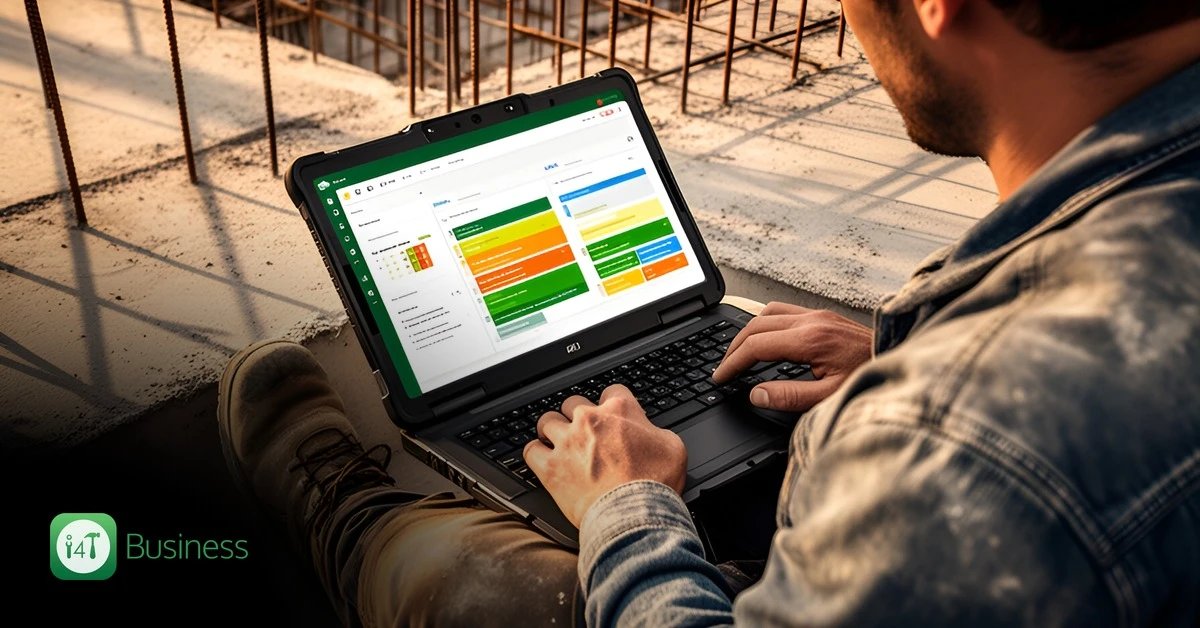
A solid foundation is crucial before adopting AI. If your business relies on scattered spreadsheets and paper notes, you’ll struggle to get the most from AI. Start by using software like i4T Business, which centralises workflows for quoting, scheduling, and invoicing. By having consistent data and processes, AI can perform effectively, providing accurate insights and recommendations.
For more on integrating AI into your workflow, see how AI is reshaping the trades industry.
Build the Right Foundation with i4T Business
To fully leverage AI in job management software, start with reliable systems that can support advanced AI features. i4T Business is designed to lay this foundation, making your workflows seamless and ready for future AI integration. Remember, it’s not just about having the technology but making sure it’s utilised effectively.
Ready to transform your trade business? Start your free trial of i4T Business today.
Frequently Asked Questions
AI can automate scheduling, optimise inventory management, and improve decision-making, freeing up time for tradies to focus on their work.
Key risks include data privacy concerns and over-reliance on AI, which can lead to diminished human oversight.
AI relies on accurate and consistent data to function effectively, making data centralisation and proper systems crucial before integration.
No, i4T Business doesn’t offer AI features yet, but it sets up the necessary foundation for AI integration.
Tradies should centralise their data, choose a compatible management platform, and start with small AI applications to evaluate their impact.