


//
Share this article

Table of Contents

When AI Dispatch Learns the Wrong Lesson: How Bad Job-Duration Data Corrupts Your Schedule

Table of Contents

Key Takeaways

  • Accurate job data is essential for effective AI scheduling in the trades.

  • Bad data leads to poor scheduling, affecting productivity and customer satisfaction.

  • Regular audits and standardised data collection methods can improve scheduling data quality.

  • Advanced field service scheduling software offers AI features that enhance scheduling accuracy.

Key Answer

AI dispatch systems rely heavily on accurate job-duration data. Bad data can lead to inefficient schedules, impacting productivity and customer satisfaction. Clean data is essential for effective AI scheduling, ensuring seamless operations.

AI dispatch systems are crucial in the trades industry, as they rely on accurate job-duration data to create efficient schedules. When these systems learn incorrect lessons from flawed data, it can lead to significant disruptions in your operations, affecting everything from productivity to customer satisfaction. Understanding the impact of bad data and how to address it is essential for maintaining smooth and effective scheduling.

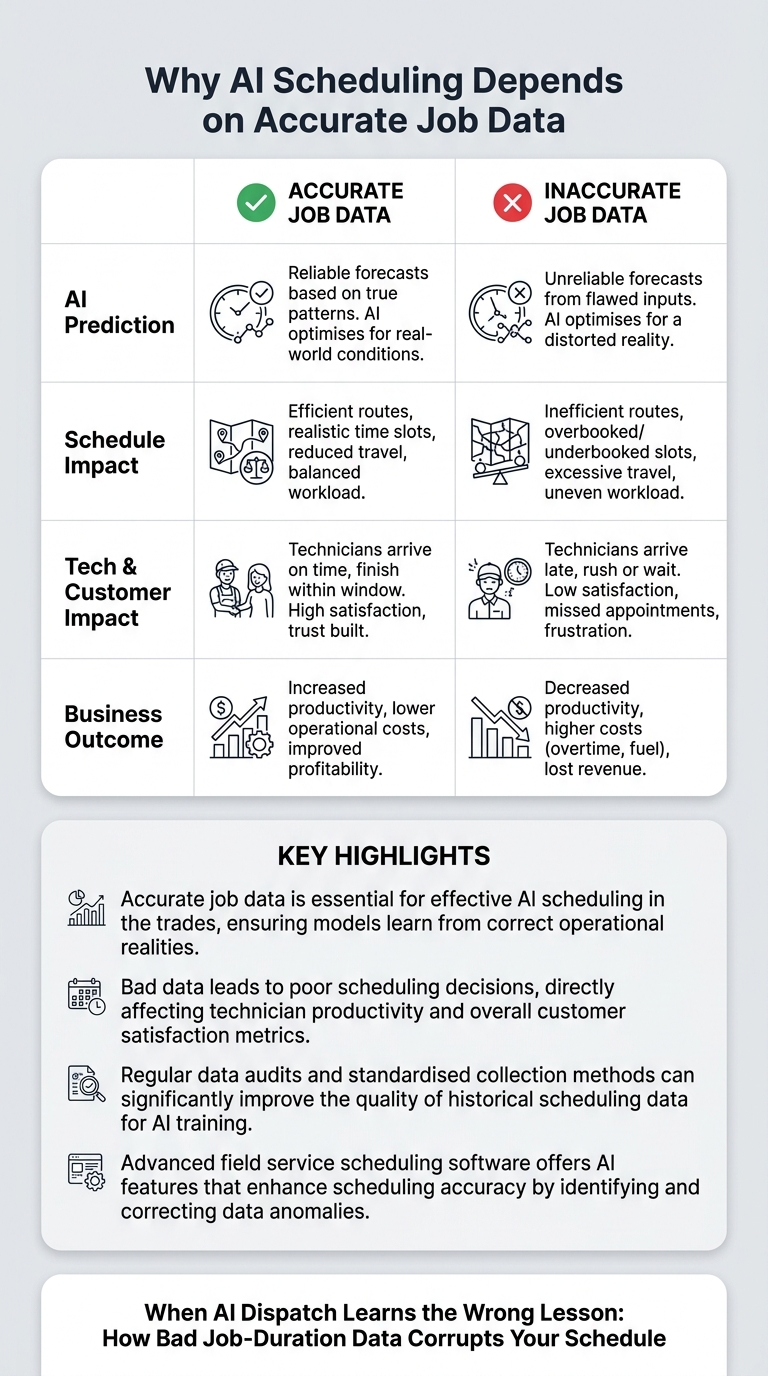
Why AI Scheduling Depends on Accurate Job Data

AI scheduling is a powerful tool that leverages historical job data to optimise routes and allocate resources effectively. Without precise job-duration records, even the most sophisticated AI scheduling systems can falter, leading to a cascade of inefficiencies. For instance, if your previous jobs are logged inaccurately, the AI will assume incorrect patterns as normal, disrupting its ability to schedule effectively.

When you think of field service scheduling software, it’s crucial to remember that its brain relies on the quality of the data you feed it. Accurate job durations help in creating realistic schedules, leading to efficient resource allocation and improved customer satisfaction. The better the input data, the smarter the AI system becomes, allowing it to predict and plan for future jobs with precision.
infographic_popIDsxa72.jpg

What Creates Poor Job-Duration Data

The causes of poor job-duration data are varied but often stem from human error or lack of proper data collection protocols. Common issues include inconsistent logging of job start and end times, inadequate training for staff on the importance of accurate data entry, and a lack of feedback loops to correct discrepancies.

For tradies, it might be tempting to estimate rather than record exact job times. However, these minor inaccuracies can add up, leading to significant scheduling issues. Furthermore, without a standardised approach to data collection, AI systems receive mixed messages, making it harder for them to predict future job durations accurately.

How Bad Data Disrupts Your Daily Schedule

The impact of bad job-duration data is profound. When AI scheduling relies on flawed data, it can create ripple effects across your entire operation. Imagine arriving at a job site only to find that you’ve underestimated the time required, causing a knock-on effect that pushes back subsequent jobs and delays your entire day.

This kind of disruption affects not just your productivity but also your reputation with clients. Consistent delays can lead to overtime costs, affecting your bottom line, and may erode customer trust if appointments are consistently missed or rescheduled. Accurate data is therefore not just a matter of operational efficiency but also a cornerstone of customer satisfaction.

Why AI Keeps Repeating Scheduling Mistakes

One of the challenges with AI scheduling is that AI can learn from past mistakes, but only if given the right data. Bad data creates a feedback loop where the AI assumes inaccurate job durations are correct and uses them to make future scheduling decisions. This repetition of errors can become ingrained, leading to persistent inefficiencies.

AI systems crave consistency and patterns. If the data patterns they learn are wrong, they perpetuate these errors, adjusting future schedules based on flawed assumptions. Breaking this cycle requires consistent, accurate data entry and regular audits to correct any discrepancies.

Signs Your Scheduling Data Needs Attention

How do you know if your scheduling data is unreliable? Key signs include frequent last-minute schedule changes, unexplained delays, or feedback from technicians about unrealistic time allocations. If you’re constantly fighting fires rather than executing a smooth schedule, it might be time to examine the data feeding into your AI systems.

Regular reviews and comparisons of planned versus actual job times can also reveal inconsistencies. Another red flag is when you notice that different technicians report vastly different durations for similar jobs without a clear reason, suggesting the presence of underlying data quality issues.

Simple Ways to Improve Scheduling Data Quality

Improving scheduling data quality doesn’t have to be a massive overhaul. Start with standardised procedures for logging job durations accurately. Training is key; ensure everyone understands why precise data entry is crucial and how it impacts the broader operation.

Implementing regular feedback loops where technicians can report on schedule discrepancies helps in maintaining data integrity. It’s also beneficial to use advanced field service scheduling software that includes features for automatic data verification and real-time tracking, reducing the reliance on manual inputs and errors.

What Smarter Field Service Scheduling Software Can Do

Modern field service scheduling software is designed to make your life easier, incorporating features like AI route optimisation and real-time updates that help streamline your operations. These systems can automatically adjust schedules based on live data, improving accuracy and efficiency.

Moreover, advanced software solutions often offer integration with other business systems, allowing for seamless data transfer and more holistic decision-making. For tradies, this means reduced downtime, better customer service, and an overall more profitable operation.

Preparing Your Trade Business for Better AI Scheduling

Getting ready for better AI scheduling involves a bit of prep work. Start by evaluating your current data entry processes and identify any gaps. Look for field service scheduling software that supports AI features and is user-friendly for your team.

Also, consider the benefits of investing in technician scheduling software like i4T Business.This investment can pay off in improved scheduling accuracy and increased operational efficiency. Remember, the key to successful AI scheduling is clean, reliable data; the more you put in, the more you get out.

Frequently Asked Questions

Accurate job-duration data allows AI scheduling systems to allocate resources and plan schedules effectively, ensuring operational efficiency and customer satisfaction.

Poor data can lead to inefficient schedules, increased operational costs, and decreased customer satisfaction due to delays and mismanagement.

Implementing standardised data entry procedures, using advanced scheduling software, and regular data audits can significantly improve data quality.

Look for software with AI route optimisation, real-time updates, and integration capabilities with other business systems to enhance efficiency.

Evaluate your data processes, invest in suitable scheduling software, and train your team to understand the importance of accurate data entry.

Scroll to Top