

//
Share this article

Table of Contents

From Quote to Payment: How to Manage the Entire Job Lifecycle in One System

From Quote to Payment: How to Manage the Entire Job Lifecycle in One System

Table of Contents

Key Takeaways

  • A job management system connects all stages of the job lifecycle, reducing admin and improving efficiency.

  • Real-time tracking and updates ensure all parties are informed and issues are addressed promptly.

  • Seamless quote-to-invoice conversion enhances cash flow and reduces the risk of errors.

Key Answer

A job management system centralises job details, transforming quotes into jobs and invoices seamlessly, thus eliminating double handling and boosting efficiency for tradies.

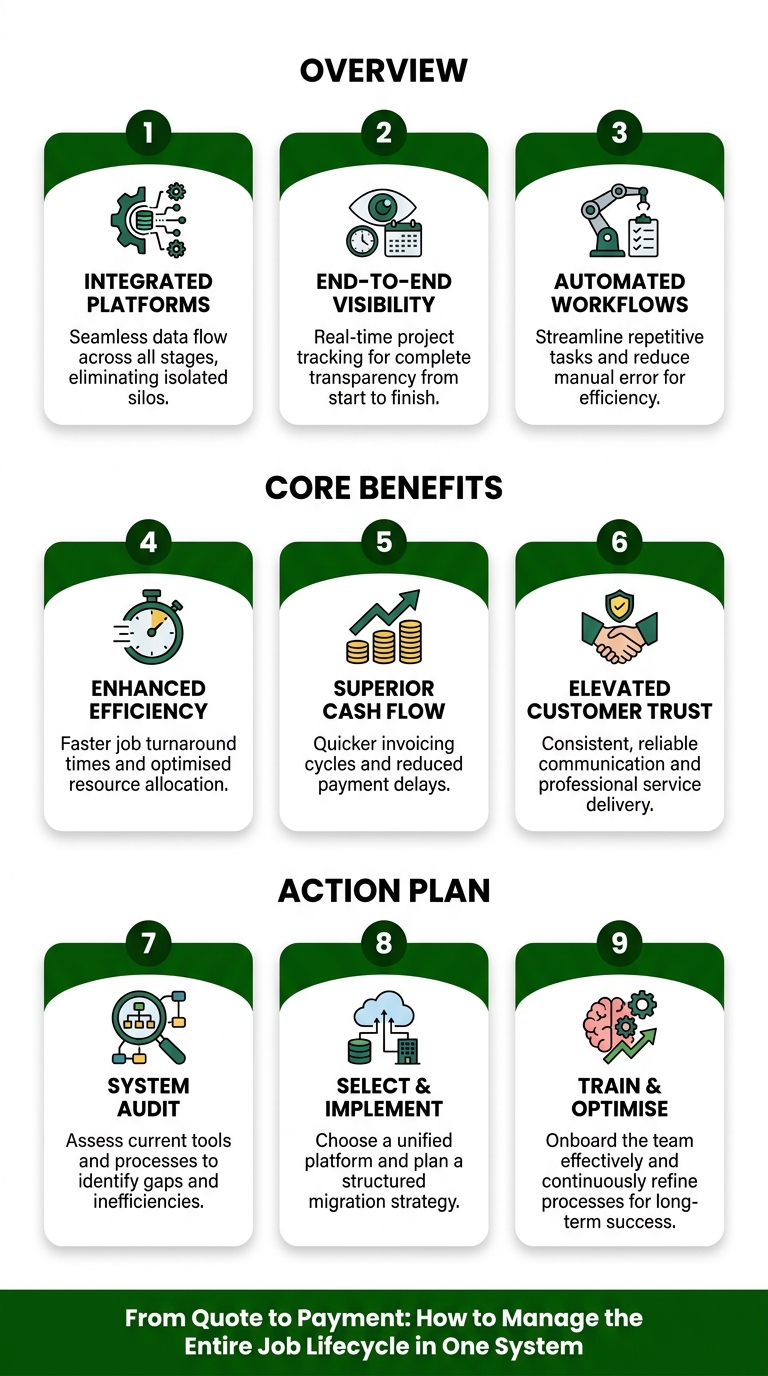
Navigating the complexities of job management can be challenging for Australian tradies. From Quote to Payment: How to Manage the Entire Job Lifecycle in One System is the secret weapon that can streamline every phase of your job workflow. By leveraging a comprehensive job management system, you reduce the administrative hassle, ensuring nothing falls through the cracks.

What Is the Job Lifecycle in a Trade Business?

In the trade sector, the job lifecycle encompasses several critical stages, from the initial client enquiry through to payment collection. This cycle typically includes creating and sending quotes, converting accepted quotes into active jobs, scheduling the right tradies, tracking job progress, finalising details before completion, and ensuring prompt invoicing and payment collection. A streamlined job lifecycle helps minimise administrative errors and enhances overall business efficiency.

Create and Send Quotes Without Re-Entering Details

One of the key advantages of a job management system is the elimination of redundant data entry. When you create and send quotes using this system, all essential job details are stored and easily accessible. This not only reduces the risk of errors but also saves valuable time. You no longer need to re-enter information, enabling faster quote delivery and follow-up, ensuring you don’t miss out on potential jobs.

Turn an Accepted Quote Into a Job

After a quote is accepted, it should seamlessly transition into a job. The integration between quote and job stages is crucial, as it allows you to carry forward all approved details such as pricing, scope, and timelines. This seamless conversion prevents any loss of information and ensures the job progresses smoothly from the outset, aligning with your schedule and resources.

Schedule and Assign the Right Tradie

Scheduling is a vital part of managing jobs efficiently. A job management system facilitates optimal scheduling by providing a calendar view of all jobs, making it easier to assign the right tradie based on their skills and availability. This ensures that jobs are allocated efficiently, reducing downtime and improving customer satisfaction.

Track Jobs and Updates From the Field

Real-time tracking of jobs is possible with field service management software, which allows you to monitor progress and updates directly from the field. Field teams can log their hours, upload photos, and note any changes in real-time, offering a transparent and accurate view of the job status. This connectivity helps ensure projects stay on track and any issues are addressed promptly.

Capture Job Details Before Completion

Capturing comprehensive job details before completion is critical for ensuring client satisfaction and accurate billing. A robust job management system allows field workers to record all necessary data, such as materials used, labour hours, and any variations. This complete record supports accurate invoicing and future reference, safeguarding against potential disputes.

Turn Completed Jobs Into Invoices Faster

A seamless transition from job completion to invoicing is essential to maintain cash flow. With quote-to-invoice software, you can generate invoices directly from job data, minimising the risk of errors and missed billables. This efficiency accelerates the payment process, enhancing your business’s financial health and reducing administrative workload.

Track Payments and Keep a Complete Job History

Managing payments and maintaining a complete job history is vital for operational transparency. Job management systems enable effective payment tracking, notifying you of overdue invoices and ensuring follow-ups are conducted timely. Furthermore, maintaining a comprehensive history of jobs allows you to analyse performance metrics and make informed business decisions.

Want to learn more about how i4T Business helps you manage the entire job lifecycle in one system? Schedule a demo now.
infographic_T1bjUh8RpG.jpg

Frequently Asked Questions

A job management system is software that integrates various stages of job workflow, from quoting to invoicing, ensuring seamless operations for tradies.

It allows real-time job tracking and communication, ensuring that updates are promptly logged and shared, thus enhancing job efficiency.

It reduces administrative errors, accelerates the billing process, and ensures no billable item is missed, thus improving cash flow.

Tracking job history aids in analysing business performance, identifying areas for improvement, and enhancing customer relationships through transparent operations.

You can start by signing up for a free trial on their official website to explore how it can enhance your job management efficiency.

Scroll to Top