


Key Takeaways
FSM software is ideal for businesses focused on field operations and real-time management.
Job Management Software is better suited for managing detailed project workflows and timelines.
Both software types offer invoicing and reporting, but their complexity differs based on the business focus.
Key Answer
In 2026, Job Management Software focuses on tracking job details and workflow, ideal for project-based work, while Field Service Management Software optimises scheduling and field operations, suited for ongoing service tasks.
In 2026, navigating the world of Job Management Software vs Field Service Management Software can be a game-changer for Australian tradies and trade business owners. Understanding the differences between these tools will help you choose the right fit for your operations. While both systems aim to streamline business processes, they cater to distinct needs. Let’s delve into what each offers and how they can enhance your trade business.
What Is Job Management Software?
Job management software is designed to keep your projects organised from start to finish. It’s your digital toolkit for managing quotes, invoices, and project timelines. Imagine handling a large-scale construction project; you’ll want every job detail documented and accessible. This software helps you with just that, ensuring nothing slips through the cracks. It’s perfect for tradies handling larger or multiple projects at once.
What Is Field Service Management Software?
Field Service Management Software (FSM) is all about keeping your team in the loop while they’re out in the field. It’s a powerhouse for scheduling, dispatching, and managing the logistics of your workforce. Picture a day where each plumber or electrician gets their job details on their phone, knows exactly where to go, and what tools they need. This is not just about keeping the wheels turning; it’s about making sure they’re turning in the right direction. FSM software ensures real-time updates and efficient field operations, reducing time wastage and boosting customer satisfaction.
For a deeper dive, check out this detailed overview of FSM software.
FSM vs Job Management: What's the Difference?
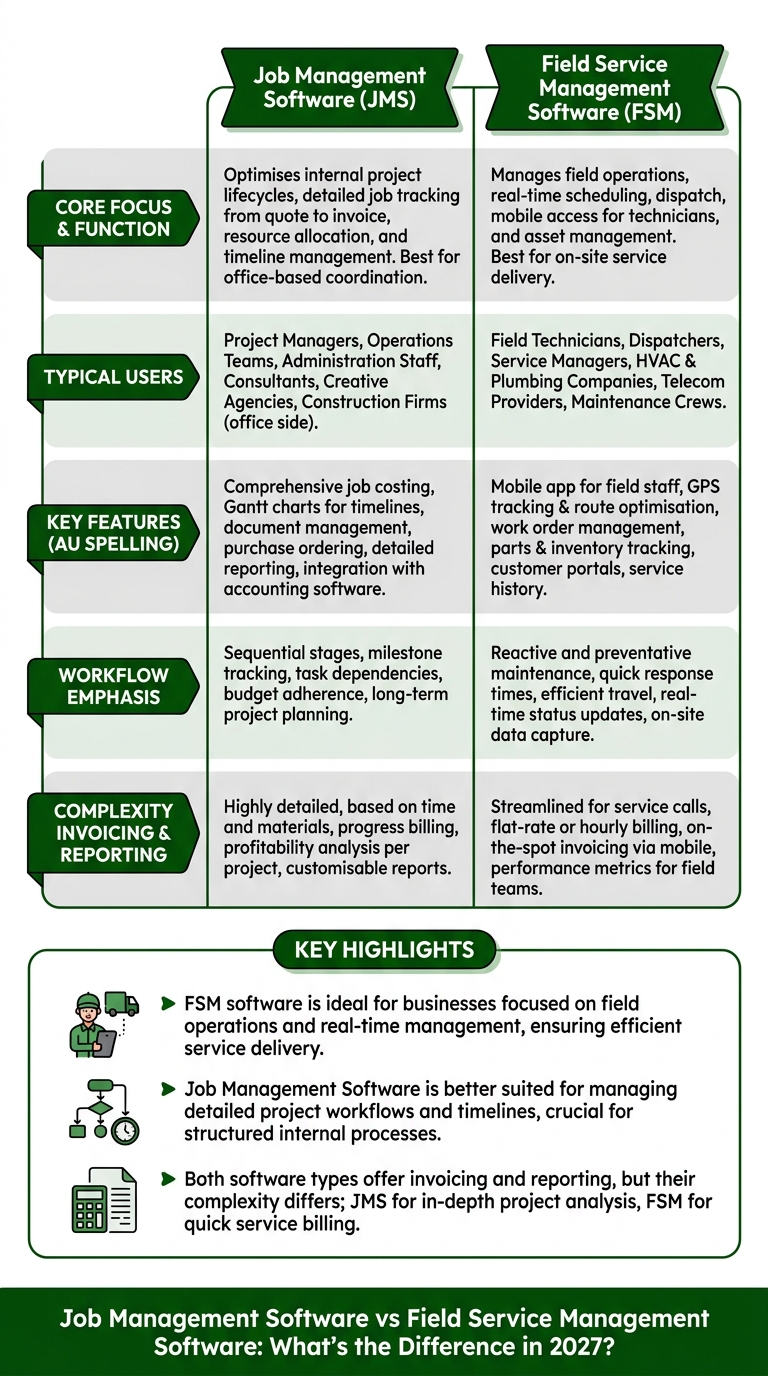
The core difference between FSM and job management software lies in their focus. FSM software zeroes in on field operations, optimising schedules and ensuring smooth field activities. It’s excellent for businesses that need to manage multiple field workers across various locations. On the flip side, job management software focuses on the transactional side of things like quoting and invoicing, making it ideal for project-driven workflows. Understanding these distinctions helps you decide which tool aligns with your business needs.
Where Do the Two Types of Software Overlap?
Both software types aim to enhance efficiency and productivity. They overlap in aspects like scheduling, though FSM offers a more dynamic and real-time approach, while job management might have a simpler calendar feature. Both provide invoicing and reporting functionalities, yet the depth and complexity of these features can vary. The choice often boils down to whether your focus is more on projects or field service logistics.
When Does Job Management Software Make More Sense?
Job management software shines when your primary concern is keeping track of extensive project details. If you’re dealing with numerous tasks, managing quotes, and ensuring project timelines are met, this is the way to go. It’s particularly beneficial for builders and contractors who need to keep everything coordinated from the office.
When Does Field Service Software Make More Sense?
Field service software is your best mate when field operations are at the heart of your business. If your trade involves frequent site visits, such as plumbing or electrical work, FSM software streamlines everything from scheduling to technician dispatch. It keeps field tasks efficient, ensuring your workers have everything they need right at their fingertips, reducing the time spent on back-and-forth communication.
What Should Australian Tradies Look for in 2027?
As you step into 2027, look for software that integrates easily with other systems like CRMs and accounting tools. Prioritise features that offer real-time updates and mobile accessibility, as well as scalable options that can grow with your business. Tools that provide sustainability tracking and detailed analytics will be invaluable for staying competitive.
Check out this Field Service Software Buyer’s Guide to find essential features.
Choose the System That Fits How You Work
Deciding between FSM and job management software boils down to your specific business needs. If you’re more about managing multiple ongoing projects, job management software might be your best bet. However, if your focus is on efficient field operations, FSM software will serve you better. Remember, the right software can significantly streamline your operations and boost productivity. So why wait?
Kick off your free trial of i4T Business here and see how these tools can transform your workflow.
Frequently Asked Questions
Field Service Management Software focuses on optimising field operations through efficient scheduling, real-time updates, and mobile accessibility.
A business should opt for Job Management Software when the focus is on detailed project workflows, managing quotes, and maintaining project timelines.
Yes, both software types offer scheduling and invoicing capabilities, but FSM provides a more dynamic real-time approach.
Tradies should look for software that offers integration with other systems, real-time updates, mobile access, and scalability to grow with their business.
FSM software improves customer satisfaction by providing real-time updates and efficient management of field operations, reducing delays and miscommunications.