

Key Takeaways
Understanding the differences between estimates, quotes, and invoices is crucial for Australian tradies.
An estimate is a non-binding initial cost guess, while a quote is a fixed price offer.
Invoices should be detailed and comply with ATO requirements to ensure prompt payment.
Managing job variations effectively can improve client satisfaction and protect your profits.
Key Answer
Learn the critical differences between quotes, estimates, and invoices for Australian tradies. Master these to enhance customer trust, streamline cash flow, and elevate your business efficiency.
Navigating the complexities of quotes, estimates, and invoices is crucial for Australian tradies. Understanding these documents not only ensures smoother operations but also boosts your business’s efficiency and trustworthiness. Let’s delve into what differentiates an estimate from a quote, how an invoice ties it all together, and why mastering this workflow is essential for your trade.
Understanding Estimates, Quotes and Invoices
When it comes to managing your trade business, knowing the difference between an estimate, a quote, and an invoice is fundamental. An estimate gives a rough idea of what a job might cost. It’s your best guess based on limited information, typically used when the details of a project are not yet fully defined.
In contrast, a quote is a fixed price offer. Once you’ve assessed the job site and determined the exact scope of work, you can provide a quote. This document is legally binding once accepted by the client, meaning you can’t change the terms unless both parties agree.
An invoice is the document you issue after completing the work. It details the services provided, the agreed price, and the payment terms. It’s crucial for maintaining cash flow and ensuring you get paid on time. Understanding these documents can significantly enhance your business operations.
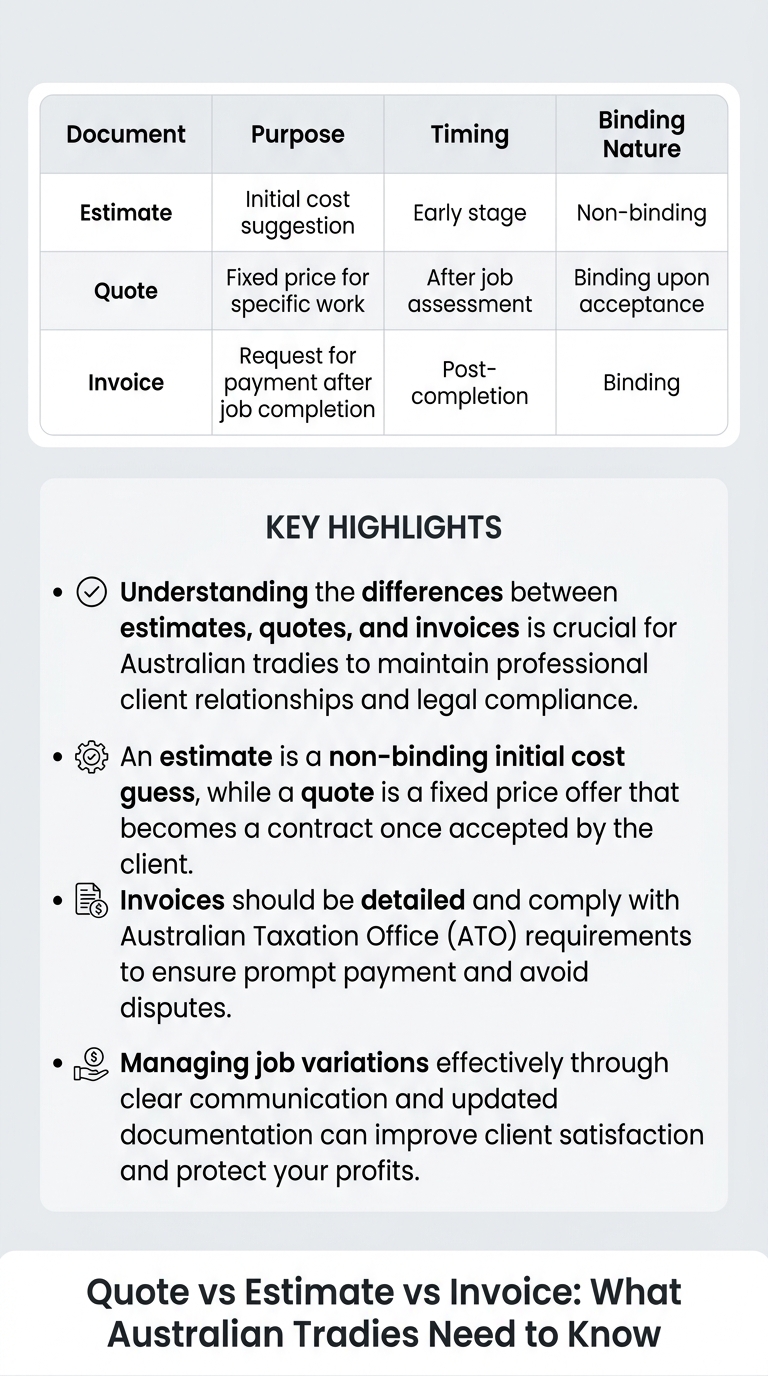
Document | Purpose | Timing | Binding Nature |
|---|---|---|---|
Estimate | Initial cost suggestion | Early stage | Non-binding |
Quote | Fixed price for specific work | After job assessment | Binding upon acceptance |
Invoice | Request for payment after job completion | Post-completion | Binding |
When to Use an Estimate
Estimates are perfect for those early stages when details are still fuzzy. Perhaps you’re approached for a bathroom renovation, but the client isn’t sure about specific materials or design. This is where an estimate shines. You can provide a ballpark figure based on common scenarios, which helps the client understand potential costs without committing to specifics.
It’s important to communicate clearly that this is not a fixed price, which will prevent any misunderstandings later. Use estimates to build trust by setting realistic expectations from the get-go.
When to Send a Formal Quote
A quote comes into play when you’re ready to provide a detailed cost breakdown. Once you’ve inspected the site and discussed specifics with the client, it’s time to create a formal quote. This document should list every aspect of the job, from materials and labour to timelines and payment terms.
Your quote should be crystal clear to avoid any disputes later. Include all necessary details such as the scope of work, cost of materials, and any additional fees. By doing so, you offer transparency and professionalism, which can significantly increase your chances of winning the job.
Read more here: What Should My Quote Include to Win More Jobs?
What an Invoice Should Include
An invoice is your final step in the quote-to-invoice workflow. It should clearly outline the work completed, the total amount due, and the payment terms. According to the Australian Taxation Office (ATO), a tax invoice must include your ABN, the price of the goods or services, and whether it includes GST.
Make sure your invoices are professional and detailed. This not only ensures compliance with Australian regulations but also helps maintain a healthy cash flow. Clearly define payment terms to prevent any confusion or delays in payment.
Managing Job Changes and Variations
In the world of trades, changes are inevitable. Clients may decide to alter the scope of a project, or unforeseen issues might arise. How you manage these variations can significantly impact your profitability and client satisfaction.
Always document changes promptly and revise your quotes as necessary. Keep clear communication with your clients to ensure they understand the implications of these changes, including any additional costs or time delays. This approach not only protects your interests but also maintains transparency and trust.
Building an Efficient Quote-to-Invoice Workflow
Building a seamless workflow from quote to invoice involves integrating all the elements of your business operations. Start by developing a reliable system for tracking quotes and transitioning them smoothly into invoices. Digital tools can be invaluable here, providing templates and automated processes to ensure nothing is overlooked.
Consider using job management software that allows you to prepare quotes, track job progress, and issue invoices all in one place. This not only saves time but also minimises errors, ultimately leading to faster payment and improved cash flow.
Learn more about this here: How Does Automated Quoting Help Win More Jobs?
Common Quoting and Invoicing Mistakes to Avoid
One of the most common pitfalls is failing to provide enough detail in your quotes. This can lead to disputes, delays, and loss of trust. Always be thorough in outlining every aspect of the job and the associated costs.
Another frequent error is neglecting to update invoices with any variations that occurred during the job. Keep your invoices up-to-date and make sure all parties are aware of any changes. Lastly, always double-check for errors such as incorrect amounts or missing information before sending out your invoices.
How Digital Software Simplifies the Entire Process
Digital quoting software like i4T Business is a game-changer for Australian tradies, offering a streamlined approach to managing quotes and invoices. By using i4T Business, you can create professional documents quickly, track all changes, and ensure timely follow-ups.
It reduces the risk of errors and provide a clear audit trail of all communications and transactions. This enhances professionalism and builds client trust, ultimately leading to more successful projects. Book a demo today.
Frequently Asked Questions
An estimate provides a rough cost idea early in a project, while a quote is a fixed price offer that becomes binding once accepted.
An invoice is issued after job completion, detailing services provided and the total payment required, ensuring smooth cash flow.
Digital tools streamline the process of creating quotes and invoices, reduce errors, and improve customer satisfaction through efficiency.
By documenting and communicating changes promptly, you can adjust costs accurately, preventing profit loss and maintaining client trust.
An invoice should include your ABN, a detailed list of services, total costs, and payment terms, complying with ATO requirements.