
//
Share this article

Table of Contents

How to Reconnect With Customers Who Have Not Booked in 12 Months: A Tradie's Guide

How to Reconnect With Customers Who Have Not Booked in 12 Months: A Tradie’s Guide

Table of Contents

Key Takeaways

  • Reactivating inactive customers is more cost-effective than acquiring new ones.

  • Personalised reactivation emails can strengthen customer relationships and increase bookings.

  • CRM tools are crucial for effective segmentation and automation of follow-up processes.

Key Answer

Reconnect with customers who haven’t booked in 12 months using targeted emails, CRM tools, and marketing strategies. Learn how to identify, segment, and re-engage customers effectively.

Reconnecting with customers who haven’t booked your services in over 12 months can seem daunting, but it’s a brilliant strategy for boosting your trade business. Using a targeted customer reactivation email, alongside effective CRM and marketing techniques, you can rekindle those valuable relationships and secure repeat work. This guide will show you how to identify and win back inactive customers, offering practical insights to help you maintain a steady stream of business without continually chasing new leads.

Why Reconnecting with Past Customers Matters

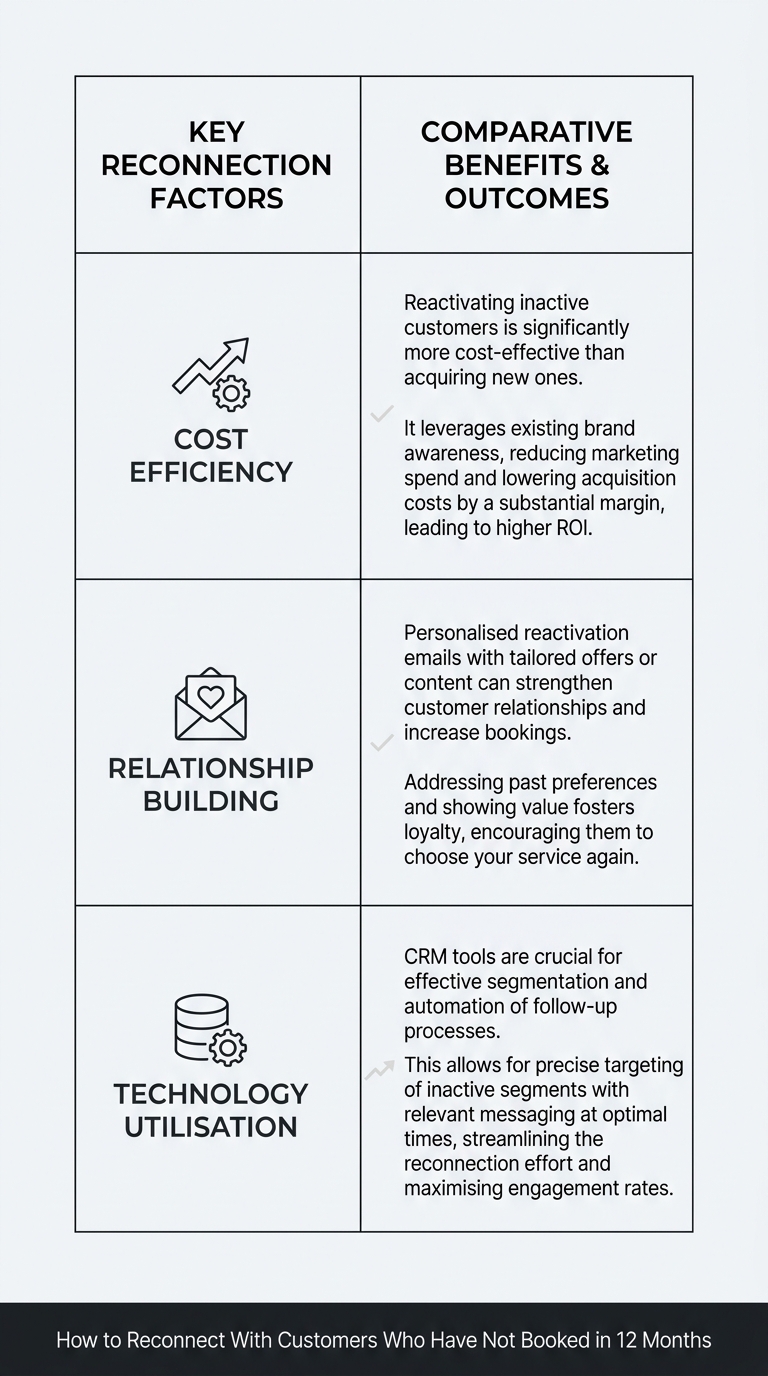
It’s significantly easier and more cost-effective to retain existing customers than to acquire new ones. This is where reconnecting with past customers becomes crucial. By re-engaging those who haven’t booked in the past 12 months, you’re tapping into a customer base that already trusts your service. This approach not only increases your repeat business but also strengthens brand loyalty.

Moreover, repeat customers are more likely to recommend your services to others. A well-crafted customer reactivation email can remind them of the quality of your work and the value you provide. Leveraging CRM tools, you can personalise communication, making each customer feel special and appreciated.
infographic_CCVXjBPr08.jpg

Identifying Customers Who Haven't Booked in 12 Months

Start by diving into your CRM to identify those customers who haven’t booked your services in the past year. Tag these customers as ‘inactive’ and create a segment within your CRM for easy access. This segmentation allows you to target them specifically with reactivation emails.

Understanding why these customers have become inactive is essential. Use your CRM data to analyse past interactions, looking for any patterns or feedback that might highlight issues or changes in their needs. This information is invaluable for tailoring your approach and ensuring you offer solutions that genuinely meet their needs.

Writing a Customer Reactivation Email That Gets Results

Crafting an engaging customer reactivation email starts with a compelling subject line. You might try something like, “We Miss You! Here’s a Special Offer Just for You”. The body of your email should be personalised, addressing the customer by name and referencing past jobs you’ve completed for them.

Include a clear call to action, such as “Book now to save 15%” or “Schedule your next appointment with ease.” You can also highlight any new services you’re offering since they last booked. This way, they might find new reasons to engage with you.

Giving Customers a Reason to Book Again

To incentivise past customers to return, offer them something of value. This could be a discount, a free consultation, or even a loyalty program that rewards repeat bookings. Make sure the offer is clear in your communication and provide a deadline to encourage prompt action.

You could also remind them of seasonal services or any maintenance their property may require. For instance, as the seasons change, customers might be more inclined to book if reminded about air conditioning maintenance or plumbing checks.

Automating Follow-Ups with CRM and Marketing

Use your CRM to automate follow-up emails. After sending the initial reactivation email, schedule a series of follow-ups for those who haven’t responded. This ensures you remain on their radar without needing to manually track each individual case.

By integrating marketing tools with your CRM, you can streamline the process of sending personalised emails, scheduling them at times when customers are most likely to engage. This approach not only saves time but also increases the effectiveness of your campaigns.

Measuring the Success of Your Reactivation Campaigns

Evaluating your campaign’s performance is key to understanding what works. Track metrics such as email open rates, click-through rates, and conversion rates to measure success. Adjust your approach based on these insights to optimise future campaigns.

Regularly assess customer feedback and engagement levels. This will help you refine your messaging and offers, ensuring they resonate well with your audience. Successful reactivation campaigns are not just about reaching out but engaging effectively.

Common Customer Reactivation Mistakes to Avoid

Avoid sending generic emails that lack personalisation. An impersonal approach is unlikely to convince customers to return. Also, don’t overwhelm them with too many messages; this can lead to unsubscribe requests and damage your brand image.

Ensure your offers are relevant and time-sensitive to create urgency. Don’t forget to follow up with customers who have expressed interest, as failing to do so might make you miss potential business opportunities.

Building a Repeatable Customer Reactivation Process

Establish a systematic approach to customer reactivation by regularly reviewing your customer list and updating your CRM. Set up automatic reminders to periodically check on inactive customers and craft tailored reactivation plans.

Incorporating feedback and continuously refining your process will make it more efficient over time. Use insights gained from past campaigns to improve your strategy and ensure long-term success in retaining customers.

i4T Business Job Management Software paired with i4T CRM is the best way forward for Tradies, looking to have a connected customer journey from quoting for the first time to re-booking every other time.

Book a demo today.

Frequently Asked Questions

A customer reactivation email is a targeted message aimed at re-engaging past customers who have not used your services in a while, encouraging them to book again.

CRM tools help you organise customer data, segment inactive customers, and automate reactivation processes, making your campaigns more efficient and personalised.

Tradies can boost their repeat business, strengthen customer relationships, and reduce marketing costs by focusing on reactivating customers who haven’t booked recently.

Successful campaigns include personalised messaging, compelling offers, automation of follow-ups, and regular performance measurement to optimise strategies.

You can measure success through metrics like open rates, click-through rates, and conversion rates, as well as customer feedback and engagement levels.

Scroll to Top