

//
Share this article

Table of Contents

How to Reduce the Time Between Finishing a Job and Getting Paid: Tips for Tradies

How to Reduce the Time Between Finishing a Job and Getting Paid: Tips for Tradies

Table of Contents

Key Takeaways

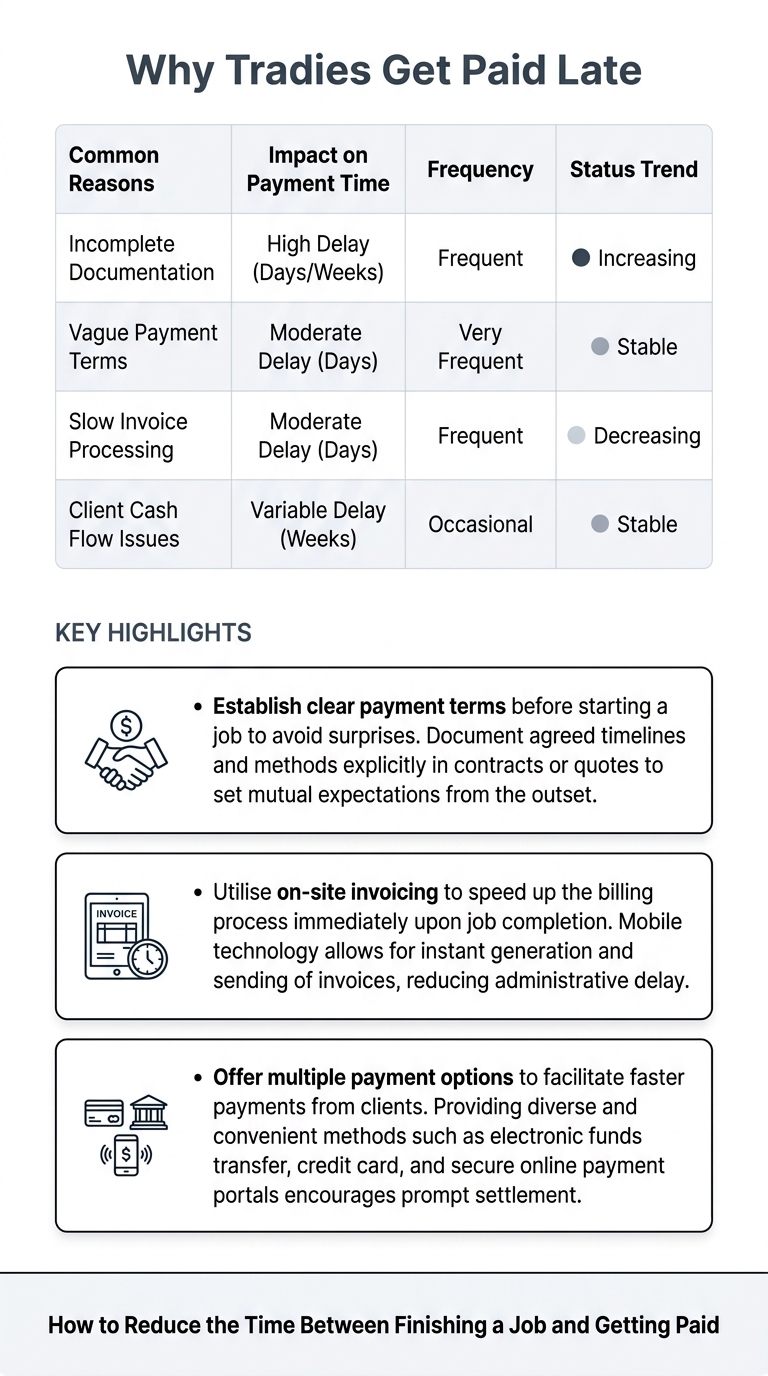
  • Establish clear payment terms before starting a job to avoid surprises.

  • Utilise on-site invoicing to speed up the billing process immediately upon job completion.

  • Offer multiple payment options to facilitate faster payments from clients.

Key Answer

Learn how to reduce the time between finishing a job and getting paid with strategies like setting clear payment terms, using on-site invoicing, and automating payment reminders.

In the fast-paced world of Australian tradies, cash flow is crucial. Understanding how to reduce the time between finishing a job and getting paid is not just about survival; it’s about thriving. Late payments can choke your cash flow, turning a successful job into a financial headache. Luckily, there are concrete steps you can take to get those invoices paid faster and keep your business running smoothly.

Why Tradies Get Paid Late

Late payments are a common challenge in the trades industry, and several factors contribute to this issue. Often, the problem starts with unclear payment terms agreed upon before the job begins. If clients aren’t fully aware of when and how they are expected to pay, delays can easily occur.

Moreover, invoicing errors such as incorrect amounts or unclear descriptions can lead to disputes and slow down the payment process. By addressing these issues upfront, you can minimise delays and enhance your cash flow.
infographic_j7dnpbOEIC.jpg

Set Payment Expectations Before the Job Starts

Setting clear payment expectations with your clients is crucial for ensuring timely payments. Begin with a transparent contract that outlines when payments are due. For instance, consider implementing ‘Due on Receipt’ or ‘Net-7’ terms instead of the traditional ‘Net-30’ terms. This can significantly speed up your cash flow.

It’s also beneficial to discuss these terms with your clients before you start work. This way, there are no surprises, and both parties understand their responsibilities. When you set these expectations right from the beginning, you lay the groundwork for a smoother financial transaction at the end of the job.

Capture Every Charge While You're On Site

Accurate record-keeping is essential to ensure you capture all costs associated with a job. This includes labour, materials, and any variations to the original plan. Use a mobile app to track these expenses in real-time while you’re on site. This approach minimises errors and ensures nothing is left out, which helps in creating precise invoices quickly.

Recording these details as they happen means you can invoice immediately upon job completion. This proactive approach not only saves time but also reduces the likelihood of errors that could cause disputes.

Use On-Site Invoicing to Bill Faster

On-site invoicing is a game-changer for tradies looking to accelerate their payment cycles. By using mobile software, you can generate and send invoices as soon as a job is finished. This eliminates the lag time between job completion and invoice delivery.

Additionally, on-site invoicing integrates seamlessly with various payment methods, making it easier for clients to pay promptly. Leveraging this technology not only improves your cash flow but also enhances your professional image.

Make Every Invoice Clear and Easy to Pay

A clear and concise invoice is crucial for fast payments. Ensure that each invoice includes all necessary information, such as detailed descriptions of services, associated costs, and payment terms. Use simple language and avoid jargon to prevent misunderstandings.

Additionally, offer multiple payment options like credit cards, bank transfers, and digital wallets. The easier you make it for clients to pay, the faster you’ll get paid. Remember, an accessible invoice is a paid invoice.

Automate Payment Reminders and Follow-Ups

Automation can dramatically reduce the time you spend chasing unpaid invoices. Set up automatic reminders to notify clients of upcoming due dates or overdue payments. This can be done via email or SMS and ensures your invoices remain top-of-mind for your clients.

Automated systems reduce administrative overhead and allow you to focus more on client satisfaction and less on manual follow-ups. This not only improves your cash flow but also strengthens client relationships by maintaining clear and consistent communication.

Common Invoicing Mistakes That Delay Payment

Mistakes in invoicing can stall the payment process. Common errors include incorrect billing details, omitted charges, and unclear payment terms. To avoid these, double-check your invoices before sending them out.

Utilising job management software can help minimise these errors by keeping your records accurate and up-to-date. For example, software solutions can automate many aspects of the invoicing process, reducing the risk of human error.

Build a Faster Job-to-Payment Workflow

Streamlining your workflow from job completion to payment can significantly improve your cash flow. Implementing strategies like invoicing software and defined payment processes helps ensure that your billing is as efficient as your work.

You might also consider integrating your invoicing with job management software. This can help you track job progress and seamlessly transition from completion to invoicing, ensuring that every part of your operation is optimised for speed and efficiency. For more details, check out our guide on From Enquiry to Paid: The Jobs-to-Cash Workflow in 7 Steps.

Integrating job scheduling tools like i4T Business can further enhance efficiency, ensuring that nothing slips through the cracks. Schedule a demo today.

Frequently Asked Questions

On-site invoicing allows tradies to generate and send invoices immediately upon job completion using mobile software. This speeds up the billing process and improves cash flow by reducing the delay between job completion and payment.

To set clear payment expectations, discuss payment terms such as ‘Due on Receipt’ or ‘Net-7’ before starting the job. Ensure all details are included in the contract and verbally confirmed with the client.

Common mistakes include incorrect billing details, missing charges, and unclear payment terms. Double-check invoices before sending and consider using software to automate and minimise errors.

Automating payment reminders ensures that clients are consistently notified about due or overdue payments, reducing the time and effort spent on manual follow-ups and improving cash flow efficiency.

Job management software integrates job tracking with invoicing, enabling seamless transitions from job completion to billing. This minimises errors and ensures all job details are accurately reflected in invoices.

Scroll to Top