Key Takeaways
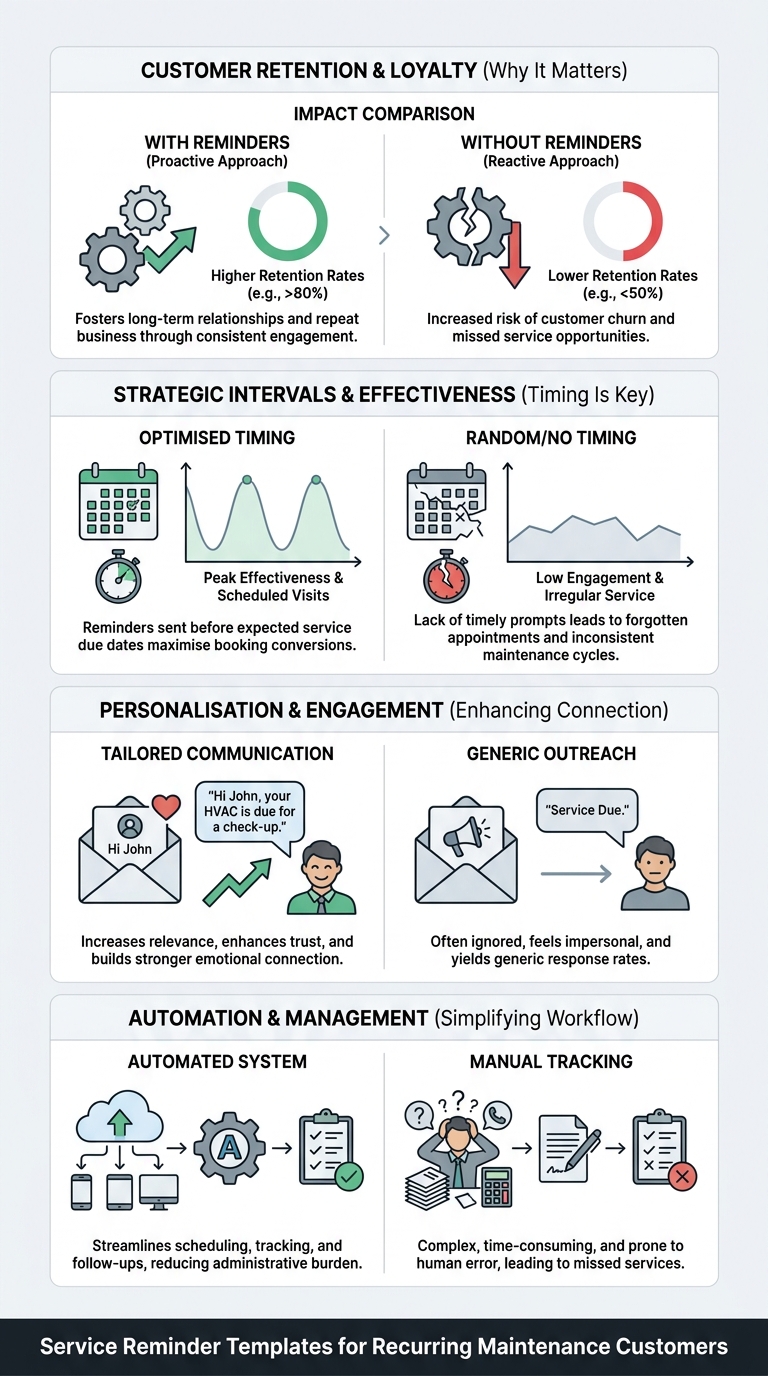
Service reminders are essential for retaining maintenance customers.
Sending reminders at strategic intervals boosts effectiveness.
Personalisation enhances customer engagement and loyalty.
Automation simplifies the management of recurring services.
Key Answer
Learn how Service Reminder Templates can increase customer retention and ensure repeat business by scheduling reminders and automating recurring job management.
Are you a tradie struggling to keep your maintenance customers returning year after year? Service Reminder Templates for Recurring Maintenance Customers could be the game-changer you need. These templates not only improve customer retention but also boost repeat business. Let’s dive into the why and how of service reminders, and how they seamlessly integrate with recurring job management to keep your business thriving.
Why Service Reminders Matter
Service reminders are a crucial part of customer retention strategies for tradies. By sending timely alerts, you ensure that your customers don’t forget about necessary maintenance tasks, which keeps them coming back. These reminders transform a one-time service into a reliable source of recurring revenue. In essence, well-executed service reminders contribute to a steady cash flow and enhance the customer experience. Moreover, reminders must be automated for efficiency and to prevent any service disruptions.
When to Send a Service Reminder
Timing is everything. Sending reminders at strategic intervals ensures that your message is heard loud and clear without overwhelming your clients. Ideally, you should dispatch reminders at key milestones: 30 days before the service is due, one week out, and a final nudge 24 hours prior. This cadence ensures that the service is on your clients’ radar, increasing the likelihood of them booking or confirming appointments.
For more insights, check out our guide on reducing no-shows and cancellations in service-based businesses.
What Every Service Reminder Template Should Include
An effective service reminder template needs several key elements to convert a passive client into an active appointment. These include the customer’s name, the type of service, scheduled date and time, and contact details. It’s also beneficial to include a link or a call-to-action (CTA) prompting the customer to confirm or reschedule their appointment. Clear and concise language is essential to prevent misunderstandings, while personal touches can make all the difference. Discover how to leverage email marketing effectively.
Email and SMS Reminder Examples
Crafting the perfect message for email or SMS requires a balance of brevity and detail.
Here’s an example for an email reminder:
“Hi [Customer’s Name],
It’s time for your annual maintenance on [Service Type]. Your appointment is scheduled for [Date] at [Time].
Please let us know if you need to make any changes. Otherwise, we look forward to seeing you then!
Cheers,
Your Team at [Your Business Name]”
For SMS:
“G’day [Customer’s Name], your [Service Type] appointment is booked for [Date] at [Time]. Let us know if you need changes. Cheers!”
Personalising Reminders for Better Results
Personalisation is key when it comes to strengthening customer relationships. By addressing customers by their first name and referencing their specific service history, you create a connection that goes beyond mere transactions. This approach fosters loyalty and increases the chances of repeat business. Personalised messages see higher engagement and conversion rates.
Automating Reminders with Recurring Job Management
Automation is not just a trend; it’s an essential component of modern business operations. Recurring job management software enables you to send reminders without lifting a finger. This software tracks service intervals and automatically dispatches reminders, ensuring that you never miss an opportunity to engage with your customers. This kind of efficiency not only saves time but also significantly reduces the risk of human error.
Learn more about how to build lasting customer relationships with effective tools.
Measuring the Success of Your Reminder Campaigns
Measuring the effectiveness of your reminder campaigns is crucial for continuous improvement. Key performance indicators (KPIs) such as appointment confirmation rates, service completion rates, and customer feedback are vital metrics. Analysing these KPIs helps you adjust your strategies to maximise engagement and satisfaction.
Common Service Reminder Mistakes to Avoid
Even the best strategies can fall short if common pitfalls are not avoided. One major mistake is sending reminders too frequently, which can overwhelm and annoy customers. Another is failing to personalise messages, which can make your communication feel robotic. Lastly, ignoring feedback from clients can lead to missed opportunities for improvement. Always strive for a balance between automation and personal touch to keep your customers engaged and satisfied.
Frequently Asked Questions
Service reminders help in retaining customers, ensuring repeat business, and providing a consistent revenue stream.
Use the customer’s first name, reference their service history, and tailor messages to their specific needs for better engagement.
Automation saves time, reduces errors, and ensures timely communication with customers, enhancing overall business efficiency.
Sending too many reminders can overwhelm customers, while generic messages lack engagement. Always personalise and balance your communication.
Track KPIs like appointment confirmation rates and customer feedback to assess and refine your reminder strategies.