TL;DR
Email marketing for tradies is a simple way to stay top of mind, win more repeat jobs, and reduce quiet patches without spending more on ads.
- Focus on sending helpful, local emails like maintenance reminders, seasonal tips, quote follow-ups, and post-job care notes.
- Keep it consistent; ideally monthly.
- Make emails short and mobile-friendly, and
- Segment your list by job type, location, or how recently someone booked you so messages stay relevant.
In Australia, make sure you have consent, clearly identify your business, and always include a working unsubscribe link, then action opt-outs quickly.
The easiest way to make it run smoothly is to set up a few automations and manage your contacts properly using i4T CRM.
If your work comes in waves, flat out one week and quiet the next, email can help steady things up. Not in a spammy way, and not with complicated marketing jargon. Just simple, helpful messages that remind past customers you’re still around, build trust over time, and bring people back when they need servicing, maintenance, upgrades, or a quick fix.
That’s the real value of email marketing for tradies. You’ve already done the hard part by doing good work and earning trust. Email just keeps that relationship warm, so you’re not starting from scratch every time you need bookings.
This guide is built for tradie email marketing Australia style: practical, local, and aligned with Australian rules around consent and unsubscribing, so your messages stay welcome and compliant.
What is email marketing for tradies, and does it actually work?
Email marketing is simply sending useful updates to your customers and leads, so they remember you and know what to do next. For tradies, it works because most trade businesses run on trust, locality, and repeat needs. Hot water units don’t last forever. Switchboards get upgraded. Air con needs servicing. Gutters clog. Drains are blocked again. People move house and need new contacts.
Even if you mainly do one-off jobs, email helps you stay the first person they think of, instead of the tenth person they Google when something goes wrong. It also helps referrals. Customers are far more likely to recommend you when they’ve heard from you recently, even if it’s just a helpful reminder.
The main mindset shift is this: you’re not emailing strangers. You’re staying in touch with people who already know your business, and you’re making it easy for them to book you again.
What should a tradie email customers about without sounding salesy?
The quickest way to make email work is to be helpful first. Most customers don’t want a weekly promo. They do want reminders and tips that save them money, prevent breakdowns, or reduce stress when something goes wrong.
A good tradie email is usually one idea at a time. For example, a seasonal reminder before summer about air con servicing, a simple note about what signs to watch for with a failing hot water unit, or a quick checklist for storm season so customers can avoid emergency callouts. When you give value, people read it. When people read it, they remember you.
Promos can still have a place, but they land better when they’re tied to something practical. Off-peak availability, a suburb run, or a limited number of priority booking spots often feel fair because it relates to how trades actually operate.
Keep it conversational, keep it local, and keep it focused on the customer’s problem rather than your business.
How do I build an email list the right way in Australia?
The best email lists come from real interactions: quotes, bookings, completed jobs, and website enquiries. That list may grow slower than a purchased database, but it will perform far better because the people on it actually recognise your name.
The easiest approach is to collect emails naturally during your normal workflow. When someone requests a quote, you’re already taking details. When you invoice a job, you’ve already got a customer record. When someone fills out your website form, that’s a perfect place to invite them to receive reminders and updates.
It’s also worth avoiding the temptation to buy lists. Apart from being poor quality, it creates consent headaches and often leads to complaints, unsubscribes, and emails going straight to spam folders. In Australia, marketing messages need consent, and the message must clearly identify the sender and include an unsubscribe option.
A clean, permission-based list is what makes email simple and sustainable.
What are the email marketing rules in Australia under the Spam Act?
You don’t need to memorise the Spam Act, but you do need to follow the basics. Australian guidance from ACMA is clear that if you’re sending marketing emails, you should have consent first. Your email must identify you as the sender, include your contact details, and make it easy to unsubscribe.
Business.gov.au also reinforces the unsubscribe requirement and explains that promotional messages by email or text fall under the Spam Act rules, including making unsubscribe instructions clear and workable.
A really practical point many businesses miss is speed. If someone unsubscribes, ACMA explains that businesses must generally stop sending marketing within five business days of the request.
If you want your emails to keep landing in inboxes and keep customers happy, treat these rules like part of good customer service, not a box-ticking exercise.
What about privacy and customer details?
Customers are trusting you with personal information, even if it’s just a name and email. Handling that information properly isn’t just good practice; it’s part of building trust.
The OAIC’s guidance on direct marketing under APP 7 focuses heavily on giving people a simple way to opt out of direct marketing, and making that opt-out option clear in each marketing communication. The OAIC also states that organisations must stop using or disclosing someone’s personal information for direct marketing if the individual asks them to stop.
For a tradie, the common-sense approach is usually the best:
- Only email people who have a genuine connection to your business
- Don’t use their details for unrelated purposes
- Make opting out easy, and respect it quickly
When customers feel in control, they’re more likely to stay subscribed and more likely to book again.
How often should I send emails without annoying people?
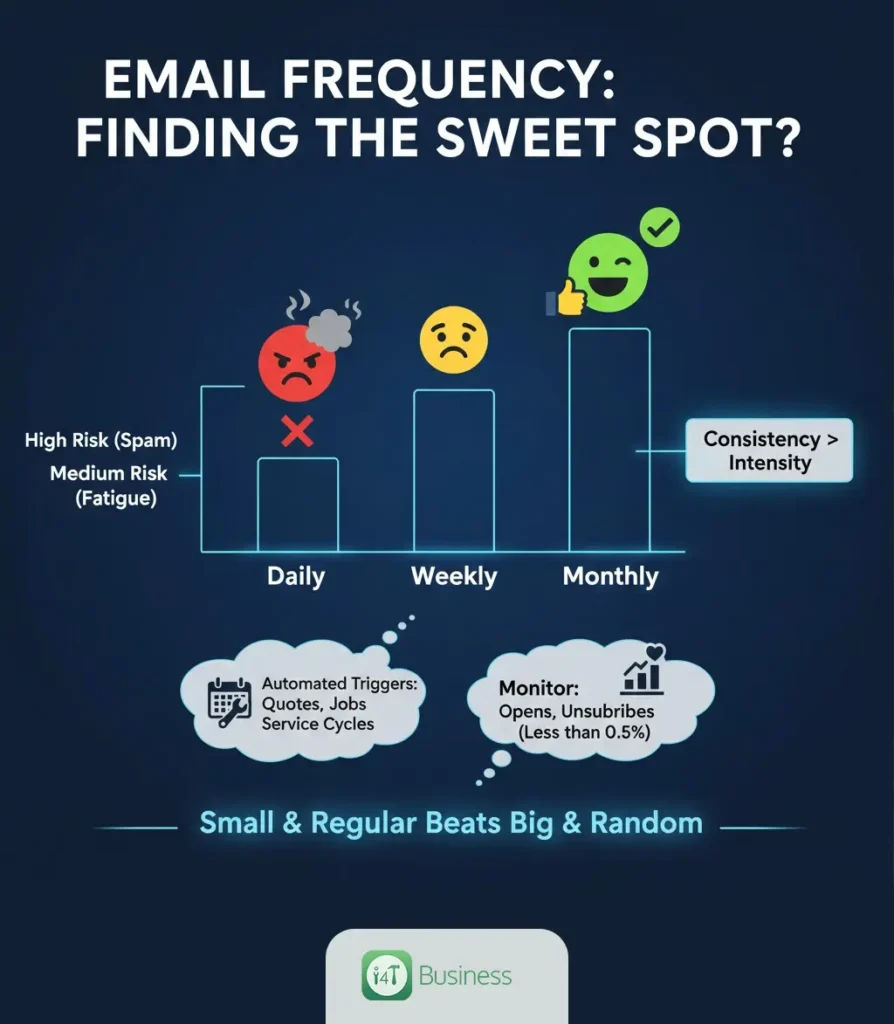
Frequency is where most businesses get it wrong. Some send nothing for a year, then suddenly blast a promo when the diary is empty. Others send too often and burn through goodwill.
A steady, low-effort rhythm usually works best. For many tradies, one helpful email a month is plenty for past customers, especially if it’s genuinely useful. You can add automated emails around key moments, such as after a quote is sent, after a job is completed, or when a servicing cycle is due.
The best guide is customer behaviour. If unsubscribes rise, the emails probably aren’t relevant, or you’re sending too frequently. If opens and replies are healthy, you’re in the zone.
Consistency matters more than intensity. Small and regular beats big and random.
What is segmentation, and how can tradies keep it simple?
Segmentation sounds fancy, but it’s just grouping customers so you can send more relevant emails. Relevance is what stops email from feeling like spam and starts it from feeling like a helpful reminder.
Tradies can segment in a very simple way. One group might be customers who booked you in the last three months. Another might be customers from the last year. You can also segment by job type, like plumbing maintenance versus renovations, or air conditioning servicing versus new installs. If you cover multiple suburbs, even a basic “north side” versus “south side” split can help when you’re trying to fill a local run.
The big benefit is that your emails feel personal without you writing personal emails. Someone who just had a hot water unit replaced doesn’t need a general newsletter. They’re more likely to respond to a reminder about checking tempering valves or a simple annual inspection offer.
Start with two or three segments. That alone can lift results noticeably.
How do I write tradie emails that people actually read?
Most customers read emails on their phones. That means your email needs to be scannable and clear.
A good tradie email usually has a subject line that tells the truth about what’s inside, then a short opening line that feels human, then one main point. The best ones feel like a helpful nudge, not a pitch. Keep paragraphs short, avoid long blocks of text, and finish with one clear next step.
Your call-to-action should be frictionless. Reply to this email. Call this number. Book a time. The harder you make the next step, the less likely it is to happen.
If you’re unsure what to write, imagine you’re texting a regular customer, then clean it up slightly for email. That’s often the perfect tone: friendly, direct, and helpful.
What are the best set-and-forget automations for tradies?
Automations are where email becomes a real tool instead of another chore. They let you stay consistent without remembering to send messages manually.
For trades, the most valuable automations are the ones tied to real job moments. A quick email when a new enquiry comes in. A gentle follow-up after a quote is sent. A post-job email with care tips and what to do if something changes. A maintenance reminder six or twelve months later. These aren’t flashy, but they’re effective because they arrive when the customer actually needs them.
The goal isn’t to build a massive sequence. It’s to cover the moments that matter, so your business follows up consistently even when you’re on the tools all day.
If they say they’re getting a few quotes, you can respond by highlighting what matters: reliability, warranty, timeframe, or quality of materials. You can also offer to answer questions so they can compare properly.
If they ask for a better price, try options instead of discounts. You can adjust the scope, offer staged work, suggest alternate materials, or change timing. That way, they feel heard and you protect your margin.
If they say they’re not ready yet, park it with a specific next step. Ask when they’d like you to check back, then set a reminder. A delayed yes is still a yes.
If they went with someone else, keep it classy and ask for one line of feedback. This is gold for improving future quotes and your follow-up system.
How do I measure results and know if it’s worth it?
You don’t need a marketing degree to track results. You just need to connect emails to outcomes.
Start with a simple view: are customers replying, calling, and booking after you send emails? Opens are useful, and clicks can help, but the real win is jobs in the diary.
If you want an easy improvement routine, focus on three levers:
- Make subject lines clearer if opens are low.
- Make the next step simpler if people read but don’t book.
- Improve relevance with segmentation if unsubscribes climb.
Over time, email becomes a compounding asset. A customer who doesn’t need you today might need you in three months. A customer who booked you once might book you every year. That’s where email pays off.
The easiest way to stay top of mind
Email works for tradies because it matches how trade businesses really grow: trust, repeat work, and word-of-mouth. When you send useful, local, timely emails, customers don’t see it as marketing. They see it as good service and a helpful reminder.
Just make sure you follow the Australian basics: get consent, identify your business clearly, and always include an easy unsubscribe, then respect opt-outs quickly.
If you want to run email marketing for tradies without the hassle, use i4T CRM to keep your contacts organised, segment customers by job type or suburb, and send consistent follow-ups and reminders that help turn one-off jobs into repeat work.
FAQs
Yes. It’s a simple way to stay top of mind and win more repeat work and referrals.
Yes. For marketing emails, you need customer consent, and you must include an unsubscribe link.
Usually, once a month is plenty, plus job-based follow-ups like quote reminders or service reminders.
Helpful reminders, maintenance tips, seasonal checks, and simple updates that make it easier to book you.
Start with a clean customer list, send one helpful email a month, and add one automation like quote follow-up or maintenance reminders.
Hot off the press!