

Running a small trade business in Australia involves a constant juggling act, especially when growth kicks in. More jobs might sound like a dream, but it often brings a flood of admin tasks, scheduling headaches, slower quoting, missed follow-ups, delayed invoicing, and a general loss of control. For tradies and field service operators, this extra pressure can quickly become overwhelming. Automation in the trade business offers a practical way out. It isn’t about replacing people but about building smarter systems that handle the repetitive stuff. This helps businesses grow sustainably, keeping operations smooth and customers happy.
What Automation in the Trade Business Actually Means
Automation in the trade business might sound high-tech or complicated, but at its core, it’s quite straightforward. It means using software and connected tech to take care of repetitive, time-consuming tasks that tradies often face. Think of it as setting up your business systems to run routine jobs on their own, without needing constant manual input. This can include following up on enquiries, scheduling jobs, sending reminders, updating job statuses, invoicing customers, and even chasing payments.
Many small tradie businesses think automation is something only big, corporate players can afford or ‘need’. But that’s a myth. Automation is just as valuable, if not more so, for small trade businesses, where every minute saved means more time on the tools or with family. It’s not about removing the human touch in your work but making sure the behind-the-scenes admin doesn’t slow down your day or your growth.
Why Small Trade Businesses Struggle to Scale with Manual Processes
A lot of tradies start with paper-based job sheets, manual diaries, phone calls, and spreadsheets to manage their workload. While this might work when the business is small, these methods come with hidden costs that grow bigger over time. Paper trails get lost, quotes get delayed, schedules clash, and follow-ups slip through the cracks. This creates bottlenecks, moments where the business just can’t move forward smoothly.
These manual processes often rely heavily on memory or routine, which can lead to mistakes and missed opportunities. Busy tradespeople end up spending evenings and weekends catching up on admin rather than resting or focusing on growth. Burnout becomes a real risk. Importantly, many small trade businesses don’t struggle because they lack jobs; they stumble because their existing systems can’t keep pace with their ambitions.
How Automation Helps Scale a Tradie Business
So, how exactly does automation help tradies scale without adding chaos? It starts with speed. Automated systems handle routine tasks faster and more consistently than manual methods. Quotes get sent promptly, follow-ups happen on time, and job schedules update dynamically. This consistency reduces errors and missed jobs, ensuring customers get the reliable service they expect.
Automation gives business owners better visibility, meaning you can see the status of jobs, payments, and communication at a glance. This clarity stops things slipping through the cracks and helps manage multiple projects without overload. Team coordination smooths out as everyone gets real-time updates and reminders. When your admin runs faster and smoother, you free up valuable time to take on more work or plan further growth, making the connection between automation and scaling crystal clear.
The Key Areas Where Automation Delivers the Biggest Impact
Automation delivers the most noticeable benefits in certain practical parts of the trade business. Lead capture is a prime example, software can instantly capture enquiries from your website or social media and trigger follow-ups without you lifting a finger, making sure no lead goes cold. Quoting tools can speed up preparing and dispatching accurate quotes, reducing wait times and winning more jobs.
Scheduling and dispatch automation means tradies and teams know where they need to be, and when, without tedious manual planning. It removes clashes and double bookings, improving efficiency. Team communication flows better thanks to automated job updates and reminders sent directly to phones or tablets, cutting down confusion on site.
Then there’s invoicing and payment reminders. Automated invoicing sends out bills promptly after a job’s done and can trigger gentle payment reminders to customers, helping smooth out cash flow. Lastly, repeat business can be boosted by automation sending timely service reminders to past customers, helping tradies build stronger client relationships and steady work pipelines. These are the areas where small businesses usually feel the biggest difference first.
Business Automation Tools That Matter Most for Small Trade Businesses
In the realm of trade businesses, the right automation tools are those that make your daily operations simpler and more predictable. Job management software is a standout, letting you track jobs from enquiry to completion in one place. It often bundles quoting, scheduling, and invoicing into an accessible platform, cutting down the need for several disconnected apps.
Quoting and invoicing tools designed for tradies help turn estimates into invoices quickly and with fewer mistakes, essential when time is tight. Scheduling and dispatch systems automagically allocate jobs to the right team members based on location, skill, and availability, saving endless back-and-forth calls. Customer communication tools automate reminders, appointment confirmations, and follow-ups, improving customer service without extra effort.
Monitoring dashboards provide clear reports on job statuses, cash flow, and team performance, giving business owners the insight needed to make informed decisions. Focusing on solutions that solve operational headaches, rather than flashy features you won’t use, is the key to getting the best outcomes.
Signs Your Business Is Ready for Automation
How do you know if it’s time to start automating your trade business? Several red flags often signal you’ve hit a threshold where manual processes are holding you back. Maybe you’re missing leads because enquiries aren’t followed up promptly, and your phone or inbox feels like a constant scramble. Quotes might be getting delayed, or worse, lost, pushing potential jobs out the door.
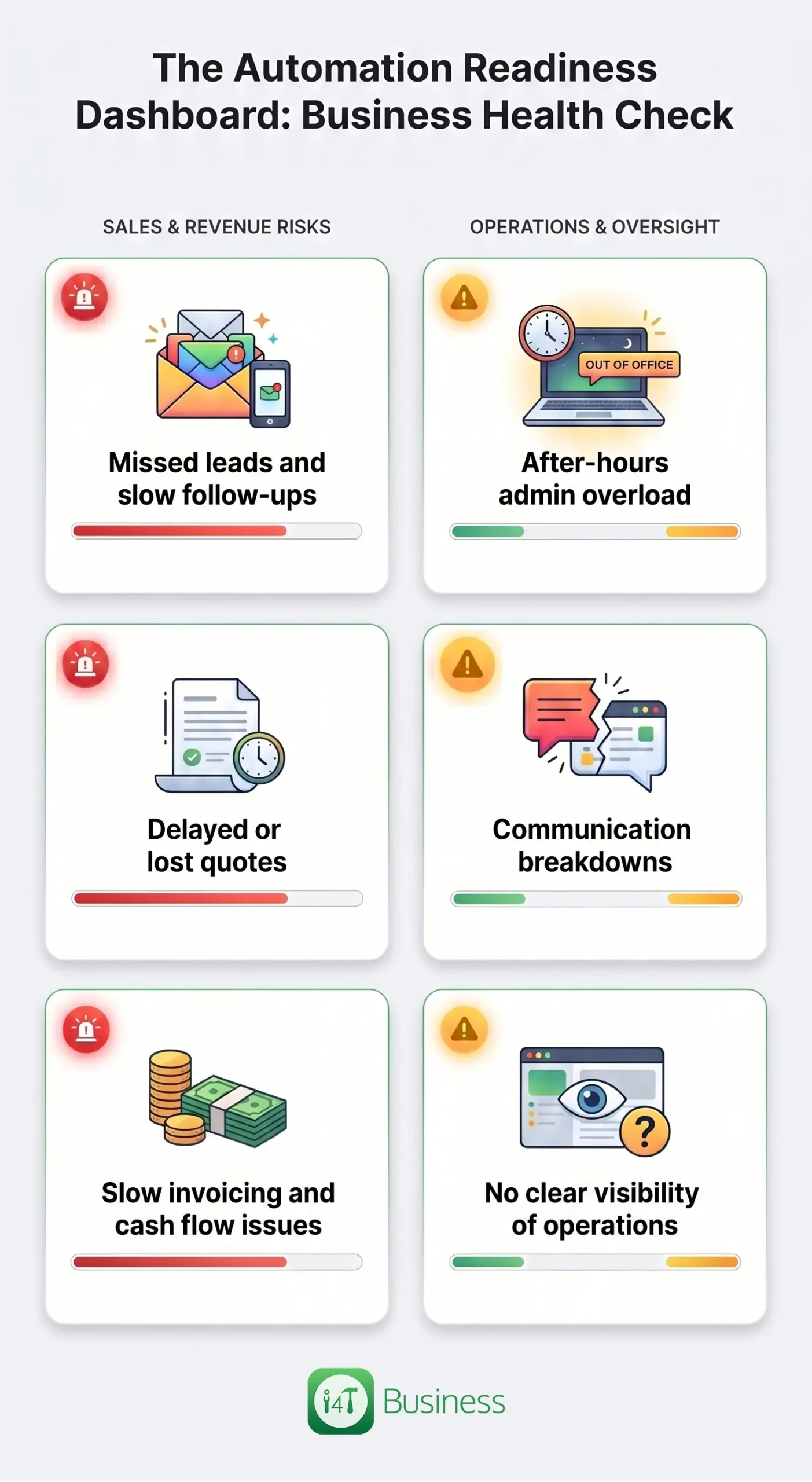
Invoicing bottlenecks are another clear sign; if payments are slow or invoices get forgotten, your cash flow will suffer. Communication breakdowns within your team or with customers can cause frustration and mistakes on site. Are you burning the midnight oil doing admin after hours instead of relaxing? Maybe you’re struggling to juggle multiple jobs or feel like you’re constantly firefighting. If you can’t get a clear view of everything happening, automation is not just helpful, it’s essential.
What to Automate First
Starting automation can feel daunting, especially when time and resources are tight. The good news is you don’t have to automate everything from day one. The best approach is to focus on the most repetitive and high-impact tasks.
Begin by automating enquiry follow-ups so no lead goes cold, then streamline your quoting process to win jobs faster. Scheduling and dispatch are natural next steps to free up time spent organising team members and appointments. Adding automated reminders for jobs and customer follow-ups improves service and reduces missed appointments. Finally, getting your invoicing automated means you’ll get paid faster and with less hassle.
Taking small, manageable steps helps embed changes smoothly, builds confidence with new tools, and keeps the benefits coming steadily.
Common Mistakes to Avoid When Automating a Trade Business
Jumping into automation is exciting, but it pays to be cautious to avoid pitfalls. One common mistake is adopting too many disconnected tools that don’t ‘talk’ to each other, which just creates another layer of complexity instead of cutting it. Another trap is automating broken or inefficient processes. If your current workflows are messy, automating them won’t fix underlying issues.
Overcomplicating workflows with unnecessary steps or features can overwhelm your team and stall adoption. Speaking of the team, failing to properly train staff or get their buy-in is a recipe for underused systems and frustration.
Lastly, chasing too many shiny features or gadgets instead of focusing on the outcomes that matter, like time saved, errors reduced, and customer satisfaction improved, wastes time and money. Keeping automation practical and user-friendly is the key.
How Automation Improves Profitability, Not Just Efficiency
Many tradies think automation is just about saving time. While that’s a big part of it, the impact on profitability goes deeper. With automation, missed opportunities due to slow follow-ups drop sharply, meaning more jobs won instead of lost. Improved quoting speed and accuracy boost conversion rates from enquiry to booked work.
Payment speeds up thanks to timely invoicing and friendly reminders, which eases cash flow and helps keep equipment, suppliers, and staff paid on time. Admin costs shrink because less time is spent on manual data entry and chasing paperwork, which lifts your overall productivity.
Furthermore, automation creates capacity for your team to focus on the core trade work that brings in the profits, rather than firefighting admin headaches. All of this adds up to a healthier, more profitable business.
A Real-World Example of What Growth Looks Like with Automation
Imagine a small plumbing business in Brisbane. Before automation, the owner juggled paper job sheets, a manual diary, and heaps of phone calls. Quotes got sent out late, jobs were double-booked, and invoicing was often delayed. The admin overwhelmed evenings, and cash flow was tight due to delayed payments.
After introducing automation tools tailored for their trade, enquiries from the company website automatically triggered prompt follow-up emails and quotes. Job scheduling and dispatch were managed through an app visible to all staff, avoiding overlaps and confusion. Automated invoicing sent bills immediately after work completed, and reminder messages gently nudged customers to pay. With clear dashboards showing all activity, the owner confidently took on more jobs without stress, improved cash flow, and spent less time on admin after hours. The business grew steadily with happier customers and a less stressed team, all thanks to automation.
How to Introduce Automation Without Disrupting the Business
Introducing automation doesn’t have to mean a sudden upheaval in how your trade business operates. Start by reviewing your existing workflows to spot repetitive, time-consuming tasks that would benefit most from automation. Don’t rush into buying software without knowing exactly what you need.
Choose platforms that are designed for trade businesses, easy to learn, and can integrate with your current systems. Roll out changes gradually, starting with one or two processes so the team can adjust comfortably. Make sure everyone gets proper training and understands the benefits, so they feel part of the change, not weighed down by it.
Check in regularly to gather feedback and tweak your approach. Over time, as confidence and efficiency grow, additional automation can be added without disrupting daily operations.
Why Smarter Systems Will Define the Next Generation of Trade Businesses
Looking ahead, the trade businesses that thrive won’t just be those who work the longest hours or who have the most hands on deck. They will be the ones that embrace smarter systems offering better visibility, more consistent customer experiences, and the ability to adapt quickly to changing demands.
Automation and connected tech allow small trade businesses to operate like well-oiled machines, with less frantic chasing of jobs or invoices. This gives owners the freedom to focus on strategic growth, deeper customer relationships, and innovation in their trade. In an industry where on-time, quality work is king, automation isn’t just a nice extra, it’s fast becoming a vital competitive advantage.
Conclusion
The role of automation in the trade business is clear: it offers tradies and small trade businesses the tools to handle growth without adding chaos. By automating repetitive admin tasks like quoting, scheduling, invoicing, and customer communication, tradies can save time, reduce errors, improve cash flow, and deliver a better customer experience. Ultimately, automation helps small trade businesses scale with confidence, keeping operations smooth and staff happy. If you’re feeling the pinch of manual admin slowing you down, it’s worth exploring practical automation solutions, such as i4T Business, tailored for your trade. The time saved and stress avoided can be a game-changer for your business’s future.
Frequently Asked Questions
Automation in the trade business means using software and connected tools to handle routine tasks like enquiries, scheduling, invoicing, and reminders, freeing tradies to focus on their work.
Automation speeds up admin, reduces errors, improves communication and scheduling, which lets tradie businesses take on more jobs efficiently and deliver better customer service.
Job management software, quoting and invoicing tools, scheduling and dispatch systems, and customer communication platforms are most useful for tradies looking to automate their business.
Start automating enquiry follow-ups, quoting, scheduling, payment reminders, and invoicing as these areas have the biggest immediate impact and are often most repetitive.
Automation can be affordable and scalable, with many tools designed specifically for small trades, making the investment worthwhile due to time saved and improved cash flow.
Yes, automated invoicing speeds up payments while timely reminders and scheduling improve customer communication, leading to better cash flow and higher customer satisfaction.