

Many tradies start out using simple methods like notebooks, whiteboards, texts, spreadsheets, or just plain memory to manage their work. These systems might get you by in the early days when the job list is short and the team is small. But as your trade business grows, these manual ways often create gaps – gaps that lead to lost time, missed jobs, piles of admin, delayed invoicing, communication breakdowns, and poorer customer service overall. In fact, many tradie mistakes in business aren’t about the quality of the work itself but stem from these poor systems.
Why Tradie Mistakes in Business Often Start with Manual Systems
Relying on disconnected tools and manual processes for daily trade business admin can build pressure that’s hard to manage. It’s not about working harder, but about working smarter. When each part of your trade business, from scheduling jobs to raising quotes or communicating with customers, is handled separately or tracked on paper or spreadsheets, it’s easy to lose track of details. Without clear visibility or a structured system, it’s all too common for important tasks to slip through the cracks, leaving you scrambling to catch up. This lack of organisation can result in costly job management errors that affect your team’s productivity and your bottom line.
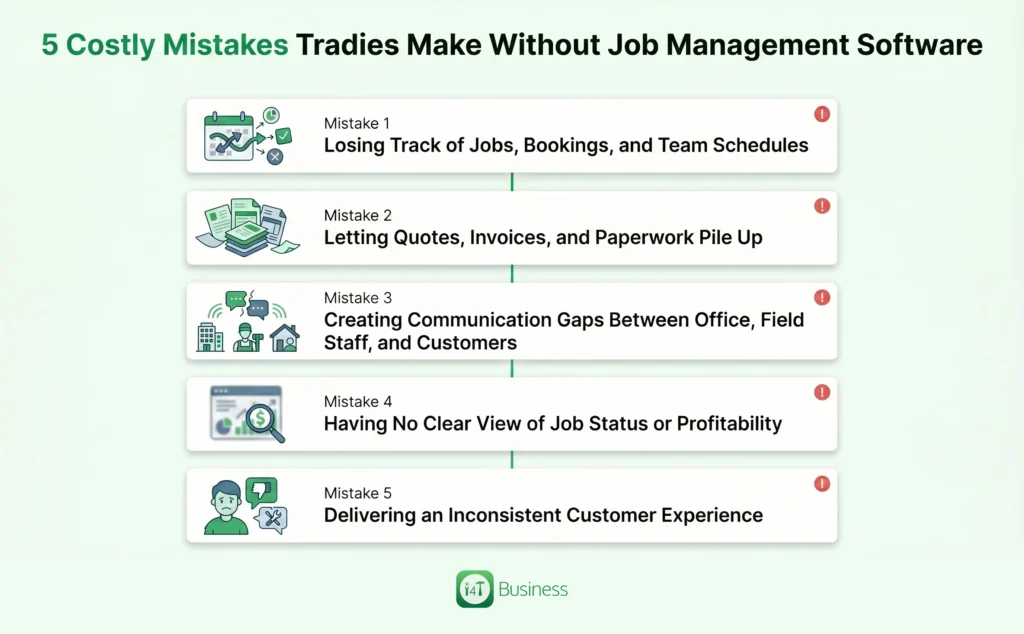
Mistake 1: Losing Track of Jobs, Bookings, and Team Schedules
One of the biggest pitfalls tradies face with manual job management is losing control over schedules. When appointments and job details are scattered over multiple platforms, such as a diary here, a text message somewhere else, or a whiteboard at the office, you risk double bookings or forgotten jobs. This creates unnecessary stress as you scramble to rearrange work or apologise to customers.
Furthermore, poor job allocation can lead to wasted travel time, as tradespeople might not be assigned jobs logically based on their locations. This inefficiency chips away at your team’s productivity and increases fuel costs, which impacts profitability.
The knock-on effect on customer trust can be significant. Customers expect their tradies to show up when promised. Missing a booking or turning up late damages your reputation and may cost you future work.
Mistake 2: Letting Quotes, Invoices, and Paperwork Pile Up
Without quoting and invoicing software tightly linked to job management, paperwork can quickly pile up. Manual processes mean quotes can get delayed, costing you potential jobs when competitors respond faster. Invoices pushed out late create cash flow problems, a common headache for small trade businesses.
After-hours pressure also mounts as tradies or admin staff try to catch up on overdue paperwork, distracting from what really matters: getting work done and maintaining great customer relationships.
Delayed approvals and payments are not just frustrating but directly affect your ability to cover expenses, pay staff, and invest in growth. Often, these cash flow issues are a symptom of underlying job management errors rather than the actual work itself.
Mistake 3: Creating Communication Gaps Between Office, Field Staff, and Customers
Trade businesses rely on smooth communication between the office, field staff, and customers. When job information is split across phone calls, texts, paper notes, and emails, important details vanish or get misinterpreted. Jobs can be started without all the necessary instructions or materials, leading to rework and delays.
Customers become frustrated when they don’t get timely updates or have to chase your team for progress reports. These communication gaps slow down the overall workflow and make managing customer expectations challenging.
In a fast-moving trade business, clear and consistent communication is key to running efficiently and maintaining loyalty. Without it, mistakes multiply quickly.
Mistake 4: Having No Clear View of Job Status or Profitability
Many tradies and small trade business owners operate on gut feel rather than solid data because they lack visibility into how jobs are tracking. Without job tracking software that gives real-time updates, it’s difficult to know if a project is on time or running over budget.
This guesswork can hide the real financial health of your business. You might be investing hours or materials in jobs that aren’t profitable, without knowing until it’s too late.
Having clear insights into job progress, costs, and profitability helps you make smarter decisions, prioritise effectively, and spot issues before they escalate.
Mistake 5: Delivering an Inconsistent Customer Experience
Tradies who rely on manual job management systems often struggle to maintain consistent customer service. Slow responses to enquiries, unclear job updates, forgotten client details, and late invoicing all contribute to a patchy customer experience.
This inconsistency harms your reputation and reduces the chances of referrals, positive reviews, and repeat work; crucial growth drivers in the Australian trade sector.
A professional, timely, and reliable customer experience sets your business apart, but it requires effective trade business systems that can track communications, follow-ups, and jobs seamlessly.
Why These Job Management Errors Become More Expensive as the Business Grows
When you’re a sole trader or small team, some slip-ups might be manageable. You know your customers personally and can keep tabs on everything in your head or in a diary. However, the more your business grows, the more complex operations become. More staff, more jobs, and more customers increase the chances for error and inefficiency.
Missed jobs and scheduling mistakes no longer just irritate customers; they cost revenue and tarnish your hard-earned brand.
Manual job management can’t keep pace with the volume and complexity, leading to more significant financial and reputational damage that’s harder to recover from.
How Job Management Software Helps Tradies Avoid These Problems
Investing in job management software for tradies addresses these costly mistakes head-on. These platforms centralise scheduling, quoting, invoicing, job tracking, and customer communication into one easy-to-use system accessible from the office or on-site.
Scheduling software for tradies helps allocate jobs efficiently, avoiding double bookings and minimising travel time. Quoting and invoicing software speeds up paperwork, improving cash flow by getting invoices out faster and payments in sooner.
Job tracking software provides real-time visibility into where every job is at, helping you spot and fix potential issues before they become costly problems.
Customer communication tools keep everyone in the loop with timely updates, ensuring a smooth and professional experience that builds trust and encourages repeat business.
Overall, field service management software boosts trade business efficiency by reducing manual job management tasks, freeing tradies to focus on delivering quality work while improving profitability.
Signs Your Trade Business Has Outgrown Manual Job Management
A few telltale signs will show when manual systems have run their course. If you’re regularly dealing with admin backlogs, missed or double bookings, poor team coordination, or customers chasing updates, it’s time to reconsider your systems.
Delayed invoices, disorganised paperwork, and mounting customer complaints also flag that your tradie business systems need an upgrade.
Recognising these signs early can save your business from bigger headaches down the track and help that growth transition go smoother.
What to Look for in Job Management Software for Tradies
When evaluating job management software, prioritise ease of use since tradies need quick access on-site and in the office without steep learning curves.
Look for robust scheduling tools that automatically allocate jobs and update calendars in real time. Mobile access is crucial for field staff to receive job updates, record progress, and communicate instantly.
Features like quoting and invoicing integration reduce paperwork and help keep cash flow healthy. Job tracking capabilities provide transparency on progress and profitability.
Also, customer communication tools that send automatic reminders or notifications enhance service without extra effort from your team.
Finally, good reporting helps you analyse business performance and make informed decisions about growth and efficiency improvements.
Conclusion
The real cost of tradie mistakes in business isn’t the expense of job management software itself; it’s the ongoing loss of time, money, control, and customer trust caused by outdated, manual systems.
Many of the common tradie errors or job management errors can be prevented by adopting smarter, centralised digital tools that grow with your business. Investing in quality job management software allows you to streamline quoting, scheduling, communication, and invoicing, freeing you up to focus on what you do best: providing excellent trade services. If you want to build a more professional, efficient, and profitable trade business, embracing better systems like i4T Business – job management software, is the way forward.
Book a demo today!
Frequently Asked Questions
Common tradie mistakes include poor scheduling, delayed quoting and invoicing, communication breakdowns, lack of job tracking, and inconsistent customer experiences.
It centralises scheduling, quoting, invoicing, job tracking, and communication, reducing manual errors and improving efficiency and customer satisfaction.
Missed or double bookings, delayed invoices, poor cash flow management, and jobs running over budget are some of the costliest errors.
Absolutely. Even small teams can save time and reduce errors, setting themselves up for smoother growth with the right software.
When admin piles up, jobs get missed, invoices are delayed, or customer communication falters, it’s a good sign to upgrade to digital job management.