
Running a trade business in Australia comes with its fair share of challenges; missed enquiries, scheduling chaos, mountains of paperwork, slow quoting, delayed invoicing, and that constant pressure on cash flow. If you’re bogged down by admin overload and disjointed processes, it’s time to explore how you can automate trade business operations from start to finish. This article will walk you through six practical steps to automate everything from customer booking right through to payment collection, streamlining your workflow and freeing up more time to focus on what you do best.
Why You Need to Automate Trade Business Workflows
In today’s competitive trade and field service market, relying on manual processes is more costly than many realise. Hidden expenses pile up through repetitive data entry, missed jobs due to poor communication, inconsistent quoting methods, and delayed invoicing cycles. These inefficiencies can stifle growth, frustrate customers, and put unnecessary pressure on cash flow. Automation in trade businesses, particularly FSM workflow automation, brings all these loose ends together and connects the entire customer experience—from the first call or online enquiry right through to final payment. Automating workflows means fewer errors, faster response times and ultimately a smoother, more professional service that appeals to customers and boosts your bottom line.
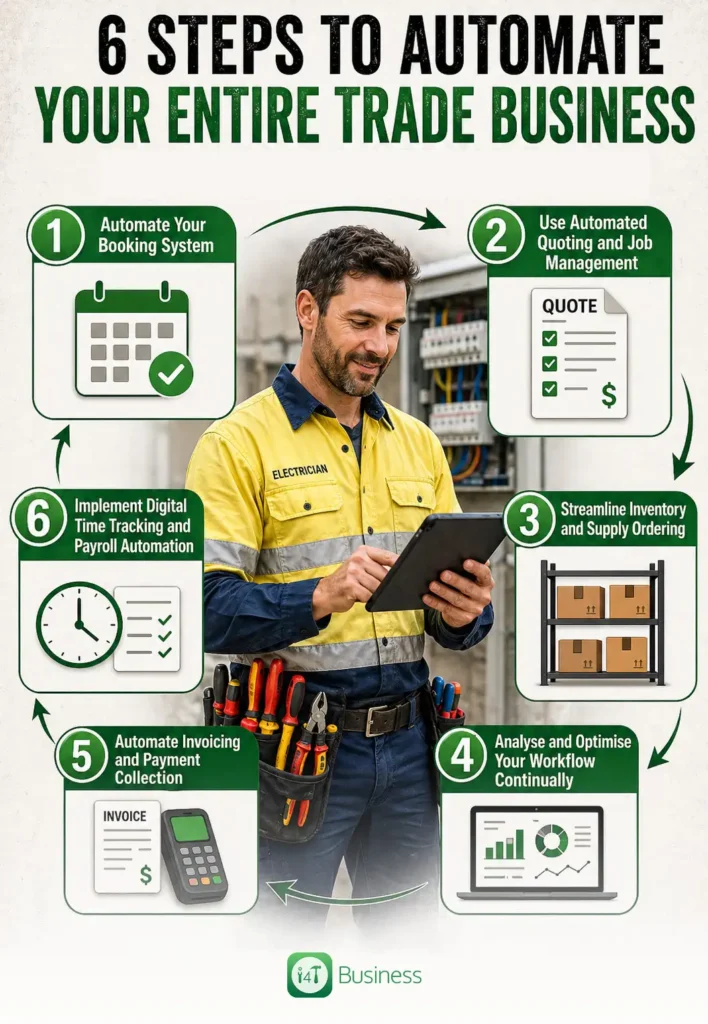
Step 1: Automate Customer Enquiries and Booking Requests
The first step to automating your trade business is to handle enquiries and booking requests more efficiently. Traditionally, customer leads come through phone calls, emails, messages, or walk-ins, and without an automated system, it’s easy for some to fall through the cracks. By using tools such as online booking forms, integrated call logging, or chatbots on your website, you can ensure every enquiry is captured accurately in one central place. This not only reduces the chance of missing potential jobs but also speeds up your response time, which customers appreciate. Faster replies often turn leads into confirmed bookings. Centralising this data also means your admin team or yourself can follow up efficiently without juggling spreadsheets or notes.
Step 2: Automate Scheduling and Job Allocation
Once a booking is confirmed, the next challenge is scheduling. Automation helps enormously here by integrating your calendar with technicians’ availability, locations, and job priorities. Rather than manually assigning jobs or juggling multiple calendars, FSM workflow automation lets you dispatch work with a few clicks, optimising travel routes and technician workload. This not only saves time but improves team communication and punctuality, reducing customer complaints and last-minute cancellations. Reminders and automated notifications ensure everyone stays in the loop, helping your team keep on top of daily demands effortlessly.
Step 3: Automate Job Creation, Job Details, and Workflow Tracking
In any trade business, clarity and accuracy around each job are crucial. With job process automation, you can instantly create detailed job records that include customer info, job notes, site history and any recurring tasks or compliance checklists. Tradies can update job status in real time via mobile apps, ensuring the whole team sees the latest job progress. This reduces confusion, improves accountability and helps managers track workload and job outcomes effectively. Having accurate digital records also simplifies reporting and customer communications.
Step 4: Automate Quotes, Approvals, and Job-to-Invoice Handover
Quote preparation often slows down trade business workflows. Automating quoting through pre-built templates tailored to your service offerings speeds up this stage dramatically. Digital quote approvals mean customers can accept or request changes without delays. Once a quote is approved, the seamless handover into your invoicing process eliminates manual data entry errors and potential revenue leakage. Automate quoting and invoicing together to ensure your cash flow isn’t held up by paperwork bottlenecks. This integration is vital for maintaining a smooth booking to payment workflow.
Step 5: Automate Invoicing and Payment Collection
Invoicing automation makes a big difference to how quickly you get paid. Automatically generating invoices based on completed jobs pulls together labour, materials and any other costs without double handling. With payment automation for trade businesses, you can send electronic invoices complete with easy, secure payment links and schedule reminders that follow up overdue accounts. This reduces admin time chasing payments and improves your cash flow health, which is critical for any trade business. Getting paid faster means you can invest more confidently in growing your services or paying your team on time.
Step 6: Automate Reporting, Follow-Ups, and Repeat Business
Job automation doesn’t stop at payment. Post-job automation can keep your trade business thriving by automating reporting for performance insights, sending follow-up surveys or review requests, and scheduling service reminders for recurring work. By automating communications and customer outreach, you build stronger relationships and encourage repeat business, which is the lifeblood of many tradies and field services. These automated touchpoints ensure your customers feel valued, keep you top of mind, and fuel ongoing revenue streams.
How the Full Booking-to-Payment Workflow Works When Everything Is Connected
Bringing these six steps together creates a connected, end-to-end workflow that saves time and improves service quality. Customer enquiries flow into a central system where bookings are instantly logged. Scheduling automation dispatches the right technician at the right time, with job creation capturing all details and updates in real time. Quotes move swiftly into invoicing without double handling, payments are tracked and reminders sent automatically, and reporting keeps you informed with insights and customer follow-ups. This cohesive workflow powered by field service management software eradicates bottlenecks and boosts efficiency across your entire operation.
Common Mistakes to Avoid When Automating a Trade Business
While automation offers huge benefits, there are common traps that can undermine success. One is automating faulty or broken manual systems without first reviewing your processes. Another is using disconnected software that doesn’t communicate well, creating new silos and duplication. Overcomplicating workflows or overwhelming staff with too many new tools at once also hinders adoption. Finally, choosing a generic software solution not designed for trade businesses can result in missing vital tradie features and integration needs. Taking the time to plan and choose suitable job management software that fits your specific trade will prevent these pitfalls.
How to Start Automating Without Overwhelming Your Team
Start your trade business automation journey gradually, focusing on the biggest pain points first, such as streamlining booking or automating invoicing. Prioritise repetitive, manual tasks that sap time and cause errors. Train your team and involve them early to gain buy-in and identify any bottlenecks. Choose software solutions that support the full booking to payment workflow to avoid patchwork fixes. Incremental change helps your team build confidence and makes the shift to field service automation smooth and sustainable.
Who Benefits Most From Trade Business Automation?
Whether you’re a solo tradie juggling every job detail yourself or a growing team managing numerous sites and technicians, automation brings benefits. Multi-job operators especially gain from scheduling and job tracking software that keeps everything organised. Service businesses with ongoing maintenance contracts or recurring customer needs find automated follow-ups invaluable for cash flow and growth. Essentially, any trade business feeling admin pressure, workflow delays or cash flow challenges will see a positive impact by adopting service business automation.
Conclusion
To sum up, the biggest gains come from connecting your entire trade business workflow rather than just digitising isolated tasks. Automating trade business operations from booking through to payment cuts admin time, improves job visibility, enhances customer service, speeds up invoicing and ultimately strengthens cash flow. Embracing field service management and job process automation tools tailored to tradies lets you work smarter, not harder, unlocking new growth opportunities and delivering a better customer experience along the way.
Ready to Streamline Your Trade Business?
Taking control of your workflow and automating your trade business doesn’t have to be overwhelming. i4T Business Job Management Software is designed specifically for tradies and field service operators to automate everything from customer booking to payment collection smoothly. Streamline admin tasks and keep your team and customers happy with one easy-to-use system. Start your automation journey today and see how much more efficient and profitable your trade business can be.
Frequently Asked Questions
Automating a trade business means using software and systems to streamline repetitive tasks like booking, scheduling, quoting, invoicing and payments to reduce manual work and improve efficiency.
FSM workflow automation refers to the use of Field Service Management software to connect and automate the entire service delivery process—from customer enquiries to dispatching technicians and processing payments.
Job process automation helps tradies by simplifying job creation, tracking progress in real time, reducing errors, improving communication and speeding up invoicing and payment.
Trade businesses should start automating the area causing the most admin delays, often customer booking or invoicing, to quickly see efficiency and cash flow improvements.
Yes, many affordable job management software solutions are designed for small trade businesses, allowing them to automate key tasks without significant upfront investment.
Automation speeds up invoicing by generating accurate invoices quickly and sending payment links and reminders automatically, reducing delays in payment collection.
While possible with standalone tools, job management software that integrates bookings, scheduling, quoting and invoicing offers the best way to fully automate and streamline the trade business workflow.