

Understanding invoice payment terms in Australia is essential for tradies and service businesses aiming to avoid late payments and keep cash flowing smoothly. Late payment protection doesn’t start when you send an invoice; it begins before the job even starts. Agreeing on clear payment terms upfront, including them in your quotes and contracts, and restating those terms on your invoice can help reduce overdue payments significantly.
This guide covers seven practical late payment rules that every tradie and service business should know. From setting payment terms before the work starts to managing overdue invoices professionally, these tips will help you keep your business finances on track. Remember, this article provides general information and is not legal advice; it’s always wise to check local rules or get professional help for specific situations.
1. Agree on payment terms before the job starts
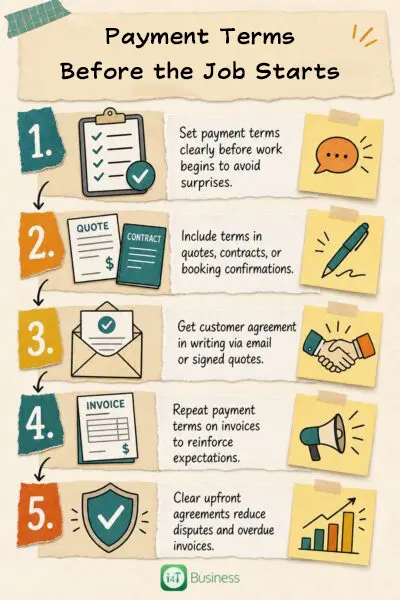
One of the simplest ways to avoid late payments is to set your payment terms clearly before the job begins. This means including your payment terms in your quote, contract, or booking confirmation so your customers know exactly when and how they’re expected to pay.
Getting your customer to agree to these terms in writing, whether via email approval or a signed quote, ensures everyone is on the same page. It’s not a good idea to spring payment conditions on customers after the job is finished, as this can lead to confusion or disagreement.
For example, you might say: “Payment is due within 14 days of invoice date. Please confirm your acceptance by replying to this email.” Your invoice should then repeat this agreed payment term to reinforce expectations. Keeping these agreements upfront reduces the risk of disputes and overdue invoices.
2. Use clear invoice payment terms in Australia
Using clear and straightforward invoice payment terms in Australia is crucial. Common terms include payment upfront, 7 days, 14 days, 21 days, or 30 days. The right choice depends on your business size, cash flow needs, and customer relationship.
For example, smaller tradie businesses often prefer shorter terms like 7 or 14 days to protect their cash flow since they rely on timely payments to manage materials and wages. Larger businesses or service providers may offer 30 days for regular clients.
Be specific with dates rather than vague phrasing. Saying “due on receipt” means payment is expected as soon as the customer gets the invoice, while “due within 7 days” specifies a clear timeframe. Alternatively, you can state an exact date, such as “Payment due by 15 April 2024,” which leaves no room for confusion.
Shorter terms can help tradies manage cash flow better, though it’s essential to balance this with the expectations of your customers and the competitiveness of your service business.
3. Put the right details on every invoice
A well-prepared invoice can speed up payment. Make sure every invoice includes key details like an invoice number, invoice date, payment due date, your business name, address, and ABN if registered for GST. The customer’s details should be clear too.
Describe the job or service provided so it’s unmistakable what the invoice covers. Include the total amount due, GST if applicable, and specify accepted payment methods such as bank transfer, credit card, or PayPal. Don’t forget to add your contact number or email to make it easy for customers to reach you with questions.
For GST-registered businesses, issuing a tax invoice that complies with ATO requirements is important to keep your bookkeeping smooth. Clear, professional invoices reduce excuses and make it easier for customers to process payments on time.
4. Use deposits and progress payments to reduce risk
Avoid being out of pocket by asking for deposits or using progress payments on bigger or longer jobs. Deposits provide upfront cash to cover materials and some labour costs, reducing your financial risk.
Progress payments break a big job into smaller chunks. For instance, a tradie might require 30% deposit, 40% when halfway through, and the final 30% on completion. This method helps keep cash flow steady and ensures the customer stays committed to paying throughout the project.
A simple payment plan could be: “30% deposit on booking, 50% on halfway mark, balance on completion.” Setting these terms before work starts and including them in your quote helps avoid misunderstandings and payment delays. Prevention here is always better than chasing overdue invoices later.
5. Be careful with late payment fees and interest
Charging late payment fees or interest on overdue invoices can be a useful deterrent, but only when done fairly and transparently. You must set out any late fees clearly in your payment terms and ensure the customer agrees upfront. Surprise fees after work is complete can sour relationships.
The fees should be reasonable and not excessive. Keep in mind that legislation about charging interest or fees on late payments varies across Australian states and territories. It’s best to seek advice if you want to use strict late payment policies or on higher-value contracts.
A cautious example of wording might be: “If payment is not received within 14 days of the due date, a late payment fee of $25 or 5% of the invoice total may apply, subject to local laws.” Clear communication helps maintain professionalism and reduces the chance of disputes.
6. Know when construction payment rules may apply
If you’re a tradie working in building and construction, be aware that specific Security of Payment laws may cover your job. These laws aim to ensure you get paid on time and provide processes for making payment claims and schedules.
The rules and timelines differ from state to state. They usually involve strict deadlines for payment claims and responses to avoid disputes. For example, you might lodge a progress claim under these laws and expect a payment schedule within a set number of days.
Because these rules are complex and vary by location, check your state or territory’s requirements via official business resources or seek specialised advice to understand how these laws affect your work and invoicing.
7. Follow a proper overdue invoice process
When an invoice does become overdue, managing it calmly and professionally is essential. Start with a friendly reminder call or email soon after the payment due date passes, then send a follow-up reminder if needed.
If there’s still no payment, send a final notice clearly outlining the amount owing, due date, and consequences of non-payment. Keep all written records of communications for reference.
Before escalating further, check if the customer has any genuine dispute or issue with the job and try to resolve it fairly. If necessary, send a formal letter of demand or consider debt collection services or legal action as a last resort.
Taking this structured approach helps maintain good customer relations and improves the chance of recovering your money without damaging your reputation.
Frequently Asked Questions
Standard terms often range from 7 to 30 days, depending on the business size and customer relationship.
Yes, if agreed upfront in writing and where permitted by law, tradies can charge reasonable late payment fees.
Yes, it sets clear expectations for immediate payment but may not suit all customers or jobs.
Start with polite reminders, check for issues, then follow a formal overdue invoice process if needed.
It’s best to include payment terms in both quotes and invoices so customers agree before work starts.
It helps organise quotes, jobs, invoices, and reminders all in one place, improving cash flow visibility and reducing admin time.