//
Share this article

Table of Contents

How Plumbers Can Track Emergency Jobs and Scheduled Work Together

How Plumbers Can Track Emergency Jobs and Scheduled Work Together

Table of Contents

Key Takeaways

  • Effective software for plumbing business is essential for balancing emergency and scheduled jobs efficiently.

  • Implementing a smart plumbing workflow can mitigate common scheduling challenges.

  • Prioritising emergencies through a triage system enhances operational efficiency.

Key Answer

Discover how effective software for plumbing business can help you balance emergency jobs with scheduled work, enhancing workflow efficiency and customer satisfaction.

Plumbing businesses are often caught between a rock and a hard place, trying to manage urgent call-outs while maintaining planned schedules. This balancing act can be a logistical nightmare, affecting both productivity and customer satisfaction. However, with the right approach and a robust software for plumbing business, you can track emergency jobs and scheduled work seamlessly. Let’s explore how you can optimise your plumbing workflow to handle these challenges efficiently.

Why Managing Emergency and Scheduled Jobs Is Difficult

Managing both emergency and scheduled plumbing jobs is akin to walking a tightrope. The unpredictable nature of emergencies can throw a well-planned day into chaos. Picture this: your team is set for a day of scheduled maintenance, but a frantic call comes in about a burst pipe in the CBD. Suddenly, your resources are diverted, leaving a gap in your regular schedule.

Moreover, this juggling act requires immediate decision-making, which can be stressful and error-prone. Without a system in place, you risk overbooking or underutilising your team, leading to loss of revenue and dissatisfied customers.

Common Scheduling Challenges Plumbing Businesses Face

Plumbing businesses in Australia face numerous scheduling hurdles. Emergencies disrupt planned jobs, leading to delays and rescheduling headaches. With varied job durations, it’s challenging to predict how long each task will take, causing potential overlaps.

Additionally, lacking real-time updates can mean your team is unaware of sudden changes, leading to inefficiencies. No-shows and cancellations are also part of the mix, creating gaps in the day that could otherwise be filled with last-minute bookings.

How to Prioritise Emergency Plumbing Jobs

When emergencies strike, prioritising effectively becomes crucial. A practical approach is to assess the severity and location of the problem first. Jobs like burst pipes or blocked drains might take precedence over less urgent issues such as a dripping tap.

Employing a triage system can greatly assist in this process. This means categorising jobs by urgency and potential damage. For instance, a customer in the suburbs with a minor issue could be rescheduled to accommodate an urgent job in the city centre.

Building a Smarter Plumbing Workflow

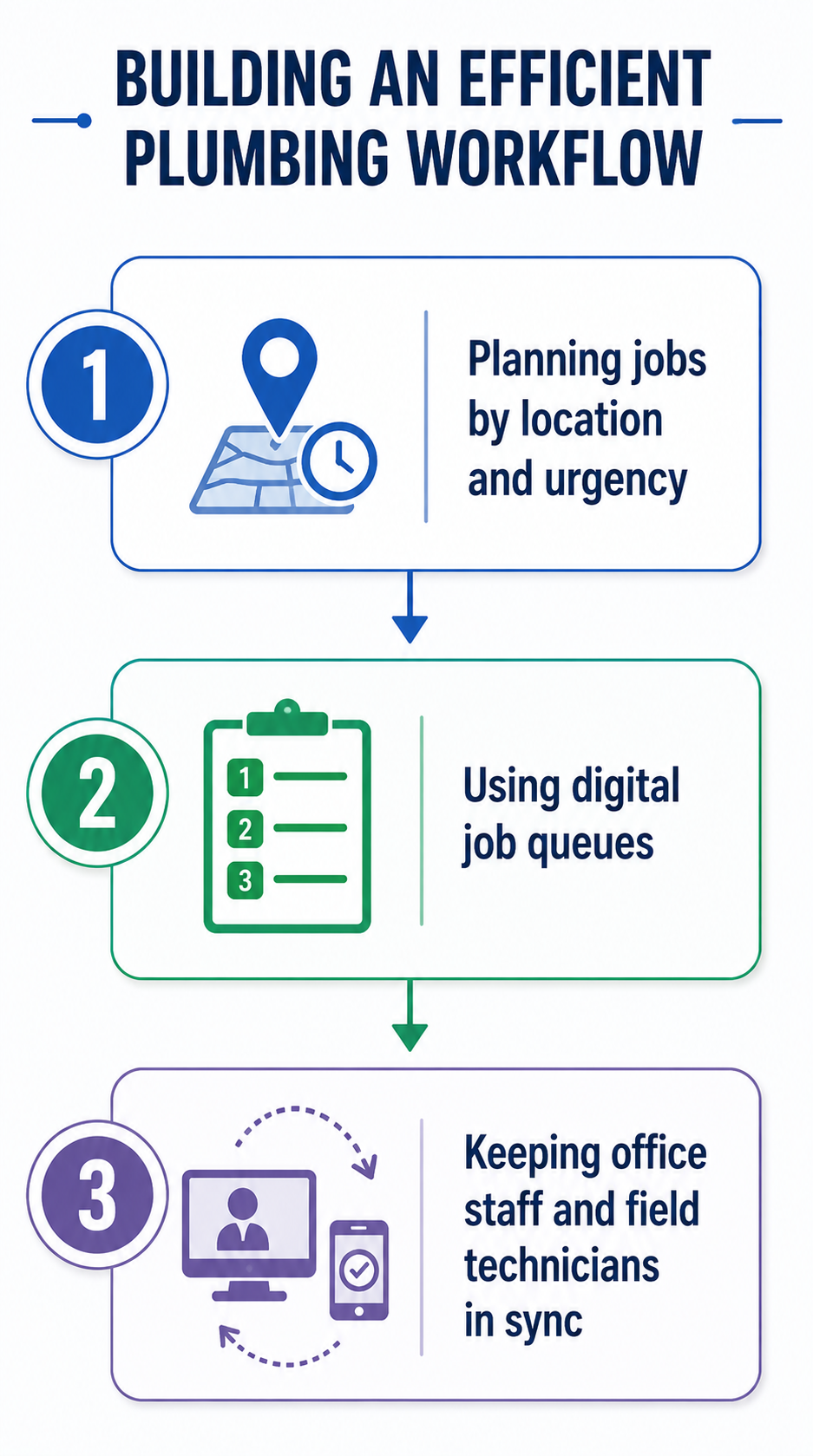
To streamline operations, consider adopting a dynamic plumbing workflow. This involves using software for plumbing business that supports real-time tracking and updates. By maintaining a centralised calendar, you can better coordinate your team’s efforts across multiple jobs.

A buffer management strategy could also be beneficial. This involves setting aside intentional white space in the schedule for emergencies or using ‘float’ technicians who are ready to jump into urgent tasks as they arise.
5Fbkcmtr4EmY3uA5rPn6NR4i7aDRajzuveu1XlED.png

How Software for Plumbing Business Improves Scheduling

The right software for plumbing business acts as a game-changer in managing schedules. It automates task assignments, tracks job progress, and provides instant updates. This not only reduces manual errors but also enhances communication among your team.

Software solutions offer features like GPS tracking, allowing you to dispatch the nearest available technician, saving time and reducing travel costs. Moreover, by integrating customer data, you can personalise service, thus improving client satisfaction.

Best Practices for Balancing Emergency and Planned Work

Balancing emergency and scheduled work requires clear protocols and efficient tools. Establish guidelines for handling last-minute calls, ensuring your team knows the prioritisation process.

Developing automated client communication is crucial. Use templated messages to inform clients of delays or rescheduling due to emergencies. This maintains transparency and trust, key elements in customer retention. Also, have a strategy for coordinating inventory to ensure that van stock is always equipped for both planned and emergency jobs.

Essential Features to Look for in Job Management Software

When selecting job management software, look for features that enhance both efficiency and productivity. Critical elements include real-time job tracking, automated scheduling, and inventory management.

It’s also beneficial to choose software that offers performance analytics. This helps you measure key performance indicators like dispatch efficiency, providing insights into your operational effectiveness. Integrate these tools to build a robust infrastructure that can handle the unpredictable nature of plumbing work.

Improve Productivity, Customer Satisfaction and Profitability

Implementing effective software solutions and practices can significantly boost productivity and customer satisfaction. By managing your resources better, you not only meet but exceed customer expectations, leading to increased profitability.

The key is in leveraging software for plumbing business like i4T Business to streamline operations. With enhanced scheduling and proactive communication, you cultivate a reputation for reliability and efficiency, which is indispensable for growth.

Book a demo today.

Frequently Asked Questions

Plumbers should prioritise emergencies based on the severity of the issue and potential damage, ensuring critical tasks like burst pipes are addressed first.

Software enhances a plumbing business by automating scheduling, tracking job progress in real-time, and improving team communication, which increases efficiency.

Real-time job tracking allows plumbers to efficiently allocate resources, respond promptly to changes, and maintain seamless communication across teams.

Communication is crucial to keep clients informed about schedule changes and maintain their trust during emergencies, ensuring continued customer satisfaction.

Effective inventory management involves coordinating real-time tracking of van stock to ensure parts for emergencies do not affect planned work.

Scroll to Top