


Key Takeaways
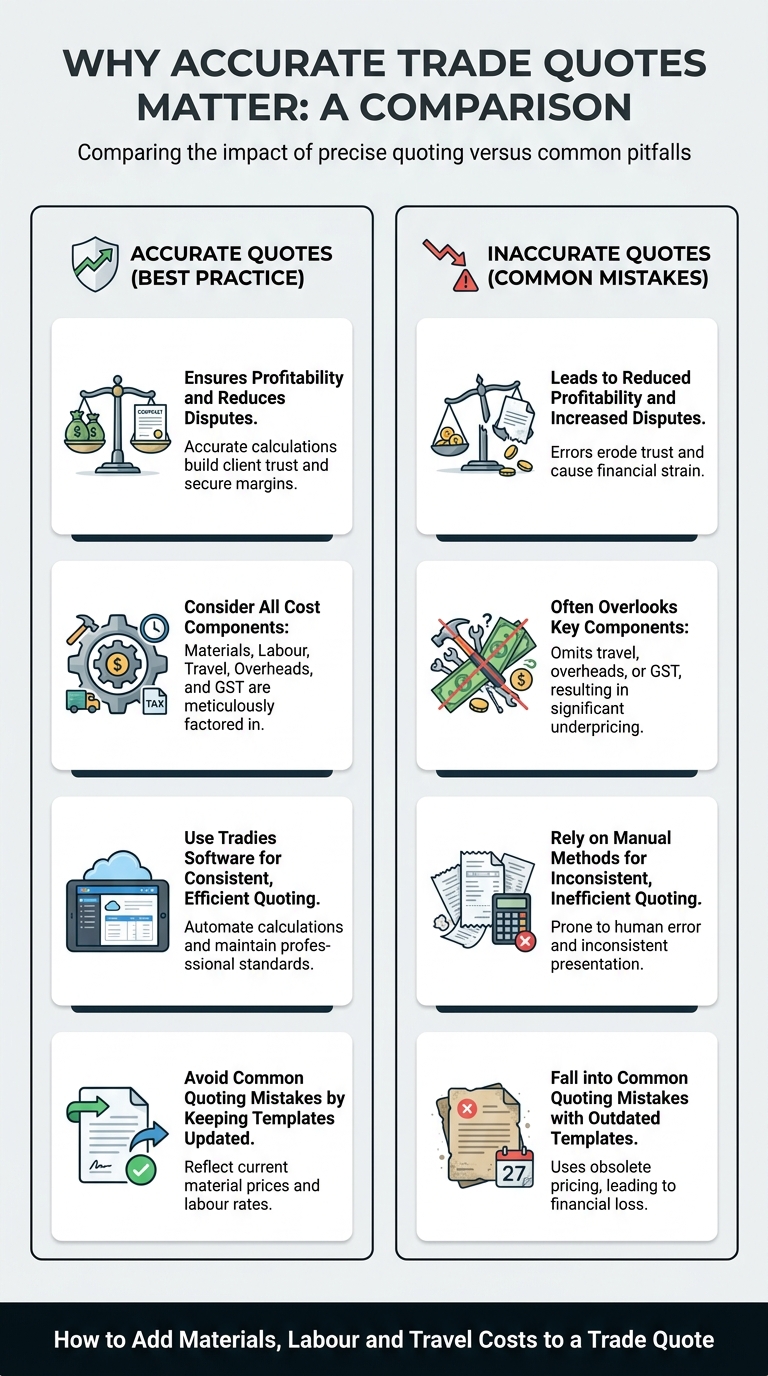
Accurate quoting ensures profitability and reduces disputes.
Consider all cost components: materials, labour, travel, overheads, and GST.
Use tradies software for consistent, efficient quoting.
Avoid common quoting mistakes by keeping templates updated.
Key Answer
Learn how to add materials, labour, and travel costs to a trade quote accurately. This guide covers all essential elements, from quote templates to GST, ensuring your trade business maintains clear and profitable pricing strategies.
As a tradie in Australia, mastering how to add materials, labour and travel costs to a trade quote is crucial. Accurate quoting not only secures your profit margins but also builds trust with clients. This guide will walk you through the essential steps to create precise, transparent quotes that leave no room for surprises.
Why Accurate Trade Quotes Matter
Accurate trade quotes are the backbone of a successful trade business. They ensure that you cover all costs and achieve your desired profit margins. More importantly, they set clear expectations for both you and your clients, reducing the risk of disputes down the track.
When your quotes consistently reflect real costs, you avoid the financial pitfalls of underquoting. This is where quoting software for tradies can be invaluable, enabling you to account for every dollar spent and earned.
Calculating Materials Costs Correctly
The foundation of any trade quote starts with accurately estimating material costs. Begin by listing all materials required for the job, along with their unit prices and expected quantities. Be sure to consider potential wastage, which can add up if overlooked.
To protect yourself from price volatility, consider including a clause in your quotes that accounts for potential price changes within a certain period. Using a quote template can help maintain consistency here, ensuring you don’t miss any critical details.
For a detailed guide, visit How to Write a Quote for a Job: A Guide for Service Pros.
Working Out Labour Costs
Labour costs can be tricky as they encompass more than just hourly wages. To calculate these costs accurately, consider the fully burdened labour rate. This rate includes not just wages, but also superannuation, insurances, and downtime.
You should also factor in the time it takes to complete each job, including breaks and potential delays. This ensures you account for all working hours, avoiding underquoting.
For more details on setting your rates, you can explore How to Calculate Tradie Charge-Out Rates.
Adding Travel and Call-Out Charges
Travel costs can often surprise even the most seasoned tradies. These expenses include vehicle wear and tear, fuel, and time spent travelling. It’s crucial to decide whether you’ll use a flat rate, mileage-based billing, or zone pricing for travel.
Call-out fees are another consideration, providing a way to cover costs when the distance or time travelled is significant. Including these fees in your quote ensures that no hidden costs catch you off guard.
Including Overheads, Profit and GST
Overheads encompass general business expenses not tied to specific jobs, such as rent, utilities, and administrative costs. To allocate these correctly, calculate the percentage of your overheads relative to your total business expenses and distribute this across all jobs.
Profit should also be clearly defined in your quotes. Determine your desired profit margin and incorporate this into your calculations. Lastly, don’t forget to add GST, which is 10% in Australia, to ensure compliance with local tax regulations.
Tools like i4T Business Job Management Software can help manage these components effectively.
Using Quote Templates to Stay Consistent
Quote templates are invaluable for maintaining consistency and accuracy across all your jobs. They help you remember to include every cost element, from materials to overheads, ensuring nothing gets overlooked.
Tradies software often comes equipped with customisable templates that can be tailored to your specific needs, streamlining your quoting process and reducing the chance of human error.
Common Trade Quoting Mistakes to Avoid
Even experienced tradies can make quoting mistakes. Common pitfalls include failing to update material costs, underestimating labour, or ignoring potential job variations that can affect the final price.
To avoid these, regularly review your quotes against actual job costs and adjust your templates as necessary. Always communicate clearly with clients about what your quote includes and any factors that might lead to changes.
By keeping your quoting process updated and transparent, you can sidestep many of these common errors.
How Tradies Software Simplifies Job Quoting
Embracing technology can significantly ease the burden of job quoting. Tradies software automates many aspects of quoting, from material cost updates to integrating call-out charges and GST calculations. With software, you can manage job variations seamlessly and ensure every quote is as accurate as possible.
Such tools also offer insights into your job performance and profitability, helping you make informed business decisions.
To see these benefits in action, start your free trial of i4T Business today and transform the way you quote jobs.
Frequently Asked Questions
A trade quote should include materials costs, labour, travel and call-out charges, overheads, profit margin, and GST.
To avoid underquoting, ensure you accurately calculate all costs and regularly update your quotes and templates. Leveraging tradies software can also help streamline this process.
Tradies software automates the quoting process, helping to update costs, manage job variations, and ensure all components like GST are included accurately.
Including GST is crucial for compliance with Australian tax regulations and ensures transparency with clients.
Quote templates provide a consistent format for including all necessary cost components, reducing the risk of forgetting any element in a quote.