

Key Takeaways
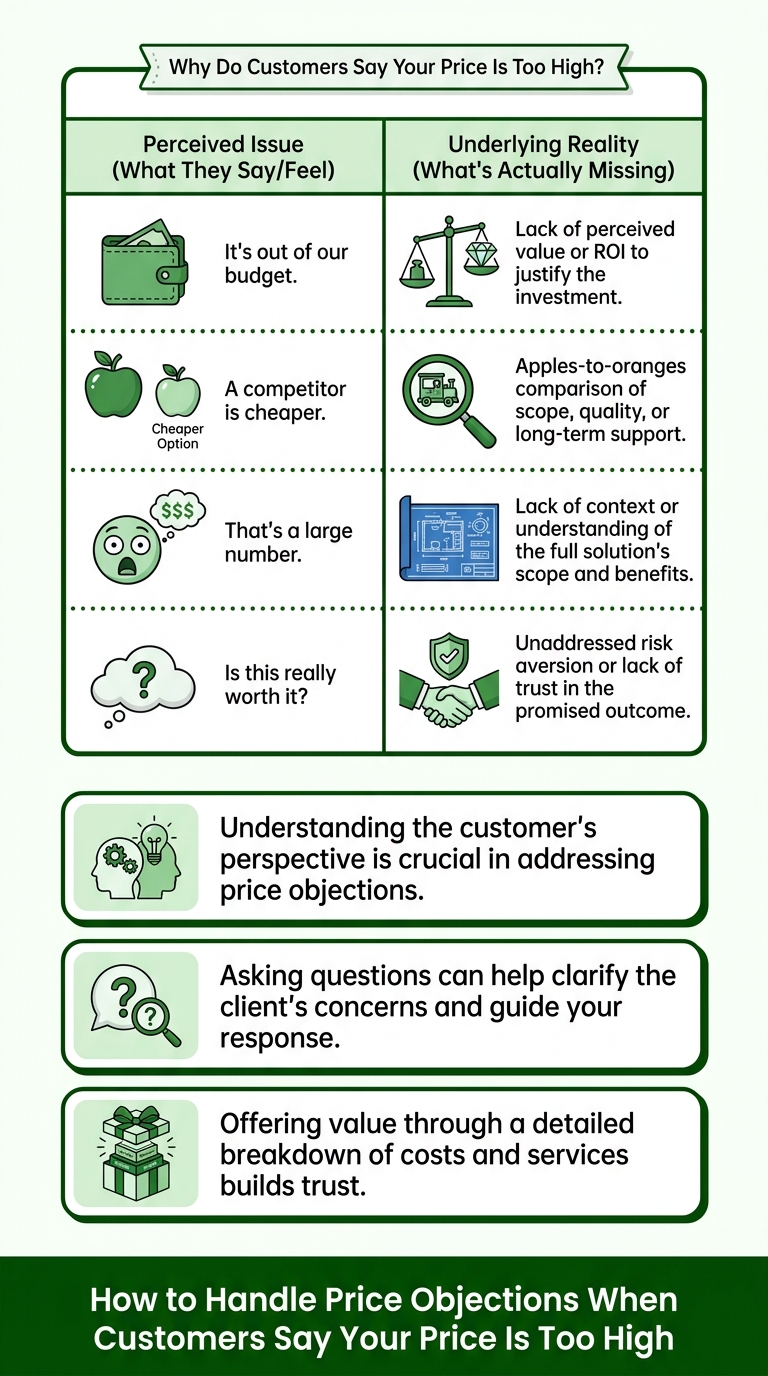
Understanding the customer’s perspective is crucial in addressing price objections.
Asking questions can help clarify the client’s concerns and guide your response.
Offering value through a detailed breakdown of costs and services builds trust.
Key Answer
Master handling price objections by asking questions, explaining your value, and offering flexible options without cutting margins. Maintain your pricing integrity confidently.
As a tradie in Australia, you’ve probably heard it before: “Your price is too high!” Understanding how to handle price objections when customers say your price is too high is crucial for maintaining your business’s reputation and profitability. In this guide, we’ll explore practical strategies for addressing these objections with confidence and clarity, ensuring you don’t undersell the value of your work.
Why Do Customers Say Your Price Is Too High?
Understanding why customers think your price is high is the first step in addressing their concerns effectively. Often, customers might not have a clear understanding of what goes into the cost of a job, including the quality of materials, the time it takes, and the skills involved. In other cases, they might have received a lower quote from a competitor or simply don’t realise the full scope of work involved.
Ask Questions Before Defending Your Price
Before jumping into a defence, it’s crucial to understand exactly what the customer’s objection is. Ask open-ended questions like, “What aspect of the price is concerning for you?” or “Can you help me understand what you’re comparing this to?” These questions not only show that you are listening but also help you tailor your response to address their specific concerns.
Explain What's Included and Show the Value
Once you understand the objection, clarify the value included in your pricing. Explain the quality of materials, the expertise of your team, and any guarantees or warranties that come with your service. For instance, breaking down the costs into materials, labour, and other fees can make the price seem more justified. Transparency is key.
Learn more on: What Should My Quote Include to Win More Jobs?, a detailed breakdown can distinguish you as professional and trustworthy.
Don't Immediately Offer a Discount
It’s tempting to offer a discount when a customer pushes back, but this can devalue your service and set a dangerous precedent. Instead, reinforce the benefits and unique aspects of your service. Offering discounts too quickly might make clients think there was a markup or that your initial price wasn’t fair.
Offer Options Without Cutting Your Margin
If the price is still a sticking point, consider offering alternative options that can save the customer money without lowering your profit margins. This could include using different materials or altering the project scope slightly.
Find more about this in: A Tradie’s Ultimate Guide to Calculating Profit Margins, maintaining healthy margins is critical for business growth.
How to Respond When a Competitor Is Cheaper
When a client mentions a competitor’s lower price, resist the urge to immediately price match. Instead, focus on what differentiates your service–be it quality, reliability, or after-service support. Emphasising your unique value can sometimes justify a higher price.
Know When to Stand Firm or Walk Away
In some cases, you need to stand firm on your pricing. Understand your costs and margins to confidently stick to your guns. If a client is unwilling to meet your price and it threatens your business’s sustainability, it may be time to walk away. It’s better to lose a sale than to operate at a loss.
Be Confident in Your Price and Clear About the Value
At the end of the day, confidence in your pricing and the ability to clearly convey your value can significantly improve how you handle price objections. Remember, the goal is not just to win the job but to secure it at a price that keeps your business profitable.
Start your free trial of i4T Business at i4T Business to streamline your quoting and ensure you’re setting the right prices for your services.
Frequently Asked Questions
Start by asking questions to understand their concerns. Then, explain the value behind your pricing clearly and offer alternative options without compromising your profit margins.
Offering a discount immediately can devalue your services and set a precedent that your initial price was inflated. It’s better to reinforce the benefits of your service.
Focus on what differentiates your service, such as quality, reliability, and customer support. Highlight these aspects to show why your price reflects added value.
If the client’s demands threaten your profit margins and business sustainability, it’s better to walk away than to compromise on your pricing integrity.
Review all costs, including materials and labour, and consider your desired profit margin. Use tools like A Tradie’s Ultimate Guide to Calculating Profit Margins for detailed guidance.