

Running a trade business in Australia comes with the challenge of juggling multiple jobs, crews, and locations all at once. Tradies know the feeling, from scheduling clashes and endless phone calls to last-minute changes that throw out the whole day’s plan. Managing these moving parts smoothly isn’t just about working harder; it’s about working smarter. In this article, we’ll explore practical and Aussie-centric ways to manage multiple jobs for tradies, helping you streamline team management, improve communication, and boost your bottom line with less stress.
Why Managing Multiple Jobs Becomes Difficult So Quickly in a Trade Business
Tradie businesses often start with just a few jobs and a small crew, but as they grow, the complexity rises fast. Suddenly, you’re dealing with multiple projects in different suburbs, diverse teams with varied skill sets, subcontractors, suppliers, and tight deadlines. Each job has unique requirements: tools, timelines, customer expectations, and teams need to move seamlessly between them without dropping the ball.
The challenge is compounded by factors like remote work sites where face-to-face communication is limited, unpredictable weather, material delivery delays, and urgent call-outs. Without a solid system, tradies can find themselves lost in double bookings, unclear instructions, and missed follow-ups, which all directly impact productivity and profitability.
The Signs Your Current System Is No Longer Working
If managing multiple jobs is starting to feel overwhelming, chances are your current approach is running into trouble. You may notice:
Communication breaking down between office staff and tradies on site, resulting in misunderstandings or rework.
Jobs getting delayed because teams aren’t where they’re supposed to be or tools aren’t ready.
Double handling where paperwork or instructions have to be repeated because there’s no central record.
Missed follow-ups or forgotten tasks that disappoint customers and damage your reputation.
Frustrated crew members juggling overlapping jobs or unsure about priorities.
Profit margins shrinking because of inefficient scheduling and wasted labour hours.
What an Efficient Trade Business Needs to Stay Organised
To manage multiple jobs with ease, a trade business needs a setup that embraces clarity, visibility, and repeatability. Centralised information is a must, so everyone, whether in the office or on site, has access to the latest job details, schedules, and notes. This avoids confusion caused by scattered emails, text messages, or scribbled job sheets.
Clear and open communication channels encourage accountability and allow quick updates if plans change. Having repeatable systems for how jobs move from quoting to completion also means less firefighting and more predictability. When every job follows a consistent workflow, you can plan ahead better, spot bottlenecks, and keep customers in the loop with confidence.
The Importance of a Clear Workflow From Booking Through to Completion
Standardising the path each job takes transforms chaos into control. From the initial booking and resource allocation to the day-to-day work on site and final invoicing, a clear workflow ensures nothing falls through the cracks. Tradies gain peace of mind knowing that every step has been thought through and assigned.
For example, when a customer books a service, the details should flow straight into scheduling software, triggering the right notifications to crews and suppliers. Progress updates throughout the job help administrators flag potential issues early, like delays or extra work, so these can be addressed proactively rather than left to pile up.
Clearly defined workflows also make it easier to onboard new staff or subcontractors since processes aren’t reliant on ‘how it’s always been done’ in someone’s head.
How a Job Allocation System Improves Efficiency
Not all tradies are the same, and neither should their job assignments be. A good job allocation system ensures that each task is given to the right person or team, balancing skill set, location, urgency, and existing workload. Instead of assigning jobs randomly or solely based on who’s available, you match the job to those best suited to deliver quality results promptly.
This optimises your workforce, reduces errors, and builds stronger customer satisfaction. For instance, if you have an electrician crew trained in solar installations, they should be prioritised for those jobs rather than a general maintenance team. When combined with location data, the system avoids sending teams on inefficient or backtracking routes, saving hours of travel time.
Why Team Scheduling Software for Trades Can Make a Major Difference
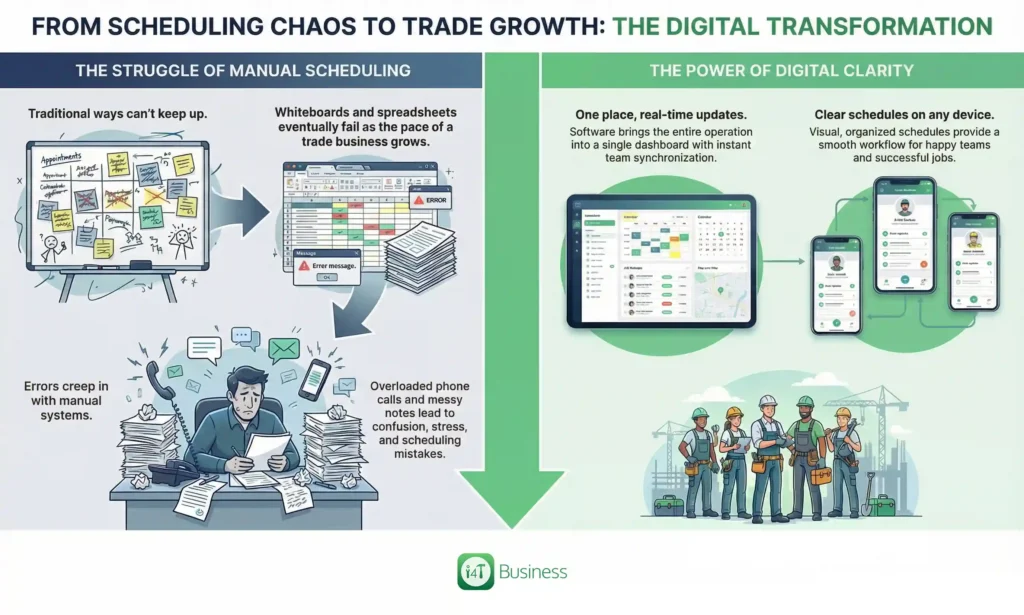
Traditional ways of scheduling can’t keep up with the pace of growing trade businesses. Whiteboards, spreadsheets, or heaps of phone calls only work up to a point before errors creep in. Using team scheduling software for trades brings your entire operation into one place with real-time updates and clear visual schedules accessible on any device.
Traditional ways of scheduling can’t keep up with the pace of growing trade businesses. Whiteboards, spreadsheets, or heaps of phone calls only work up to a point before errors creep in. Using team scheduling software for trades brings your entire operation into one place with real-time updates and clear visual schedules accessible on any device.
Why Job Tracking Tools Matter
Keeping tabs on job progress is critical for managing multiple jobs effectively. Job tracking tools provide visibility on what stage each project is at, any issues encountered, notes from tradies in the field, and upcoming steps required. Without these tools, business owners and office teams rely on fragmented info from texts, calls, or guesswork, which inevitably leads to mistakes or wasted time.
With job tracking, you can quickly identify if a job is falling behind schedule or if extra materials are needed, enabling you to take action before it turns into a costly delay. It also supports better invoicing accuracy and customer communication, as you have a detailed record of work completed and time spent.
How Communication Breaks Down Between the Office and the Field
One of the biggest hurdles in trade businesses is poor communication between the office and those on site. Often, information gets lost or distorted through multiple handoffs think of a message passed along by several team members or important details buried in text chains. This can result in missed instructions, rework, or even safety risks.
Having a single shared source of truth, where all job info, schedules, and updates live, eliminates these breakdowns. When crews update job status directly through their devices and office staff can instantly see changes, the entire team stays aligned. This approach cuts down confusion and builds trust between management and tradies.
How to Handle Real-World Disruptions
Trade jobs rarely go exactly to plan. Unexpected issues such as urgent call-outs, bad weather, staff absences, supplier delays, customer change requests, or jobs creeping over their estimated time are part and parcel of the industry. Managing multiple jobs means building flexibility into your systems to absorb these shocks.
This requires quick communication channels, the ability to reassign work easily, and contingency planning. For example, if a tradie calls in sick, your scheduling tool should let you identify a replacement in the nearby area with the right skills. Keeping customers informed about delays or changes also helps manage expectations and maintain goodwill.
How to Measure Whether Jobs and Teams Are Performing Well
You can’t improve what you don’t measure. Key operational metrics help trade business owners evaluate how efficiently their jobs and teams are performing. Useful indicators include average job completion times, the frequency and cost of rework, labour utilisation rates, response times to customer requests, and overall job profitability.
Having these numbers readily available, often via dashboards integrated with your scheduling and tracking tools, lets you spot trends, identify bottlenecks, and reward your best teams. This data-driven approach ensures your business keeps moving forward and scales sustainably.
Common Mistakes Trade Businesses Make When Scaling
Many trade businesses hit a wall when growing beyond a handful of jobs or crews because they still rely on informal systems, memory, or a single key person to juggle schedules and communication. This reliance is risky if that person is unavailable, the whole operation can stall.
Others try to use generic or rigid business tools that don’t fit the mobile, fast-paced nature of trades. They neglect investing in job allocation or tracking technology, thinking manual approaches save money, but end up costing more in lost time and customer trust.
Failing to standardise workflows and unclear job responsibility leads to chaos as complexity grows. Recognising these pitfalls early and transitioning to smarter systems is critical to avoid burnout and frustration.
A Practical Path Forward
For tradies juggling multiple jobs and teams, the way forward lies in embracing digital tools designed for trade business management. Using specialised team scheduling software, job allocation systems, and job tracking tools creates a cohesive, transparent, and efficient operation. With all stakeholders accessing the same information and workflows, mistakes drop, communication improves, and productivity rises.
Investing time in setting up these systems might feel big at first, but the pay-off is reduced stress, saved hours, better customer experiences, and stronger profits. If you’re looking for a better way to manage scheduling, job allocation, team coordination, and job progress tracking in your trade business, consider solutions like those offered by i4T Business. They’re built with Aussie tradies in mind, supporting growth that’s practical and sustainable.
FAQ
Tradies manage multiple jobs by using clear scheduling, prioritising tasks, allocating jobs based on skills and locations, and leveraging digital tools to keep communication and progress tracking organised.
A job allocation system matches jobs to the right teams or individuals based on factors like skill set, availability, location, and workload to improve efficiency and job outcomes.
Job tracking tools provide real-time visibility into job progress, help identify issues early, improve communication, and ensure accurate billing and customer updates.
Team scheduling software is essential as soon as you have multiple jobs and crews to coordinate, as it helps manage schedules, respond to changes, and balance workloads efficiently.
Better scheduling reduces wasted time and labour, prevents missed jobs or delays, improves customer satisfaction, and helps maximise the productivity of your crews, all boosting profitability.