


//
Share this article

Table of Contents

Job Management App vs Spreadsheets: What Should Tradies Use?

Table of Contents

Key Takeaways

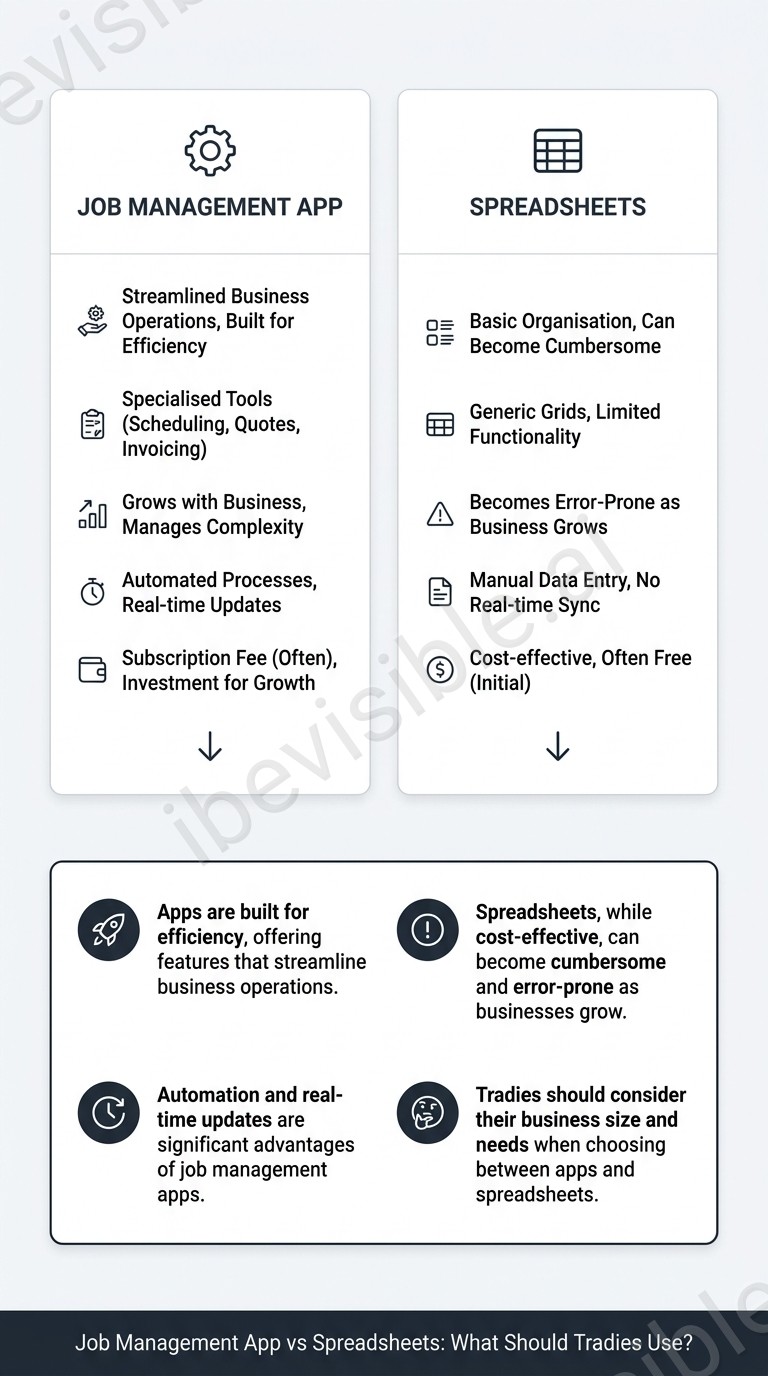
  • Job management apps are built for efficiency, offering features that streamline business operations.

  • Spreadsheets, while cost-effective, can become cumbersome and error-prone as businesses grow.

  • Automation and real-time updates are significant advantages of job management apps.

  • Tradies should consider their business size and needs when choosing between apps and spreadsheets.

Key Answer

Discover if a job management app or spreadsheets are best for your trade business. Weigh the pros and cons to find the tool that boosts your productivity.

In the bustling world of Australian trades, efficiency is key. As a tradie, you might be asking yourself, “Job Management App vs Spreadsheets: What Should Tradies Use?” Whether you’re managing quotes, schedules, or invoices, finding the right tool can streamline your operations and boost productivity. Let’s delve into why a job management app might be the better choice for your trade business.

What Is a Job Management App?

A job management app is a digital solution designed to help tradies manage every aspect of their business. From scheduling jobs to sending invoices, these apps provide a centralised platform to streamline operations. By leveraging technology, you can enhance communication, track progress in real-time, and ensure nothing slips through the cracks. With features tailored specifically for trades, such as on-site updates and customer communication tools, a job management app becomes an indispensable tool in a tradie’s toolbox.

Why Tradies Use Spreadsheets in the First Place

Spreadsheets have long been the go-to for many tradies due to their accessibility and simplicity. They provide a familiar format for organising data without the need for specialised software. Many tradies started with spreadsheets as a cost-effective way to manage their business, offering flexibility in recording information such as job details and financial records. This familiarity and low cost have kept spreadsheets as a popular choice among small business owners.

Where Spreadsheets Start to Fall Short

While spreadsheets are useful, they come with limitations that can hinder business growth. As your business expands, the manual entry involved can become time-consuming and error-prone. Spreadsheets lack automated features, meaning updates and modifications must be done manually, which increases the risk of mistakes. Furthermore, collaboration is cumbersome, often leading to confusion over which version of a spreadsheet is the most current. These inefficiencies become more pronounced as job volumes increase, making spreadsheets a liability rather than an asset.
watermarked_8532139cf552ee219abd2117ff5bd69c.jpg

What a Job Management App Does Better

A job management app offers automation that spreadsheets simply can’t match. These apps are designed to handle tasks like scheduling, invoicing, and client communication seamlessly. With real-time updates, you can monitor job progress as it happens, making it easier to adjust schedules and resources as needed. They also integrate with other digital tools, providing a comprehensive overview of your business operations and reducing the need for multiple software platforms. This kind of automation not only saves time but also improves accuracy, helping you focus on growing your business.

Job Management App vs Spreadsheets: Key Differences

The key differences between a job management app and spreadsheets lie in functionality and efficiency. A job management app is built for purpose, with features specifically tailored for tradies, such as GPS tracking and mobile access. In contrast, spreadsheets are generic, requiring extensive customisation to fit specific needs. Moreover, job management apps offer cloud-based solutions, ensuring data is accessible anytime, anywhere, which is a significant advantage over static spreadsheet files. These differences highlight why many tradies are making the switch to digital apps.

When Spreadsheets May Still Be Enough

Spreadsheets may still suffice for tradies running very small operations or those with limited job volumes. If you’re managing only a handful of projects and your client interactions are straightforward, the simplicity and low cost of spreadsheets can be beneficial. They provide a basic level of data organisation without requiring significant financial investment. However, as soon as your workload increases or the complexity of your jobs grows, the limitations of spreadsheets become apparent.

Signs It Is Time to Move to a Job Management App

There are several clear indicators that your business might benefit from transitioning to a job management app. If you find yourself spending more time on administrative tasks than actual trade work, it’s time to reconsider your tools. Frequent errors, delayed invoicing, and the inability to track jobs in real-time are also red flags. As your business expands, an app can provide the scalability and efficiency needed to keep up with demand without sacrificing quality.

Should Tradies Use an App or Spreadsheets?

So, should tradies use an app or spreadsheets? While spreadsheets have their place, a job management app is often the more robust solution for growing businesses. With enhanced capabilities for managing jobs, quotes, schedules, invoices, and field updates, these apps offer a level of organisation and efficiency that spreadsheets can’t match. If you’re ready to elevate your business operations and minimise admin headaches, consider booking a trial of i4T Business to see firsthand how a job management app can transform your trade business.

Frequently Asked Questions

Job management apps provide automation, real-time updates, and tailored features for tradies, offering a more efficient and error-free alternative to spreadsheets.

Spreadsheets may still be suitable for tradies with very small operations or limited job volumes, where simplicity and low cost are priorities.

If administrative tasks are overwhelming your trade work, or if errors and delayed invoicing are frequent, it may be time to consider a job management app.

Look for features like real-time updates, integration with other tools, and mobile access to ensure it meets your business needs.

They automate processes, handle increased data volumes efficiently, and offer cloud-based accessibility, making it easier to scale as your business grows.

Scroll to Top