
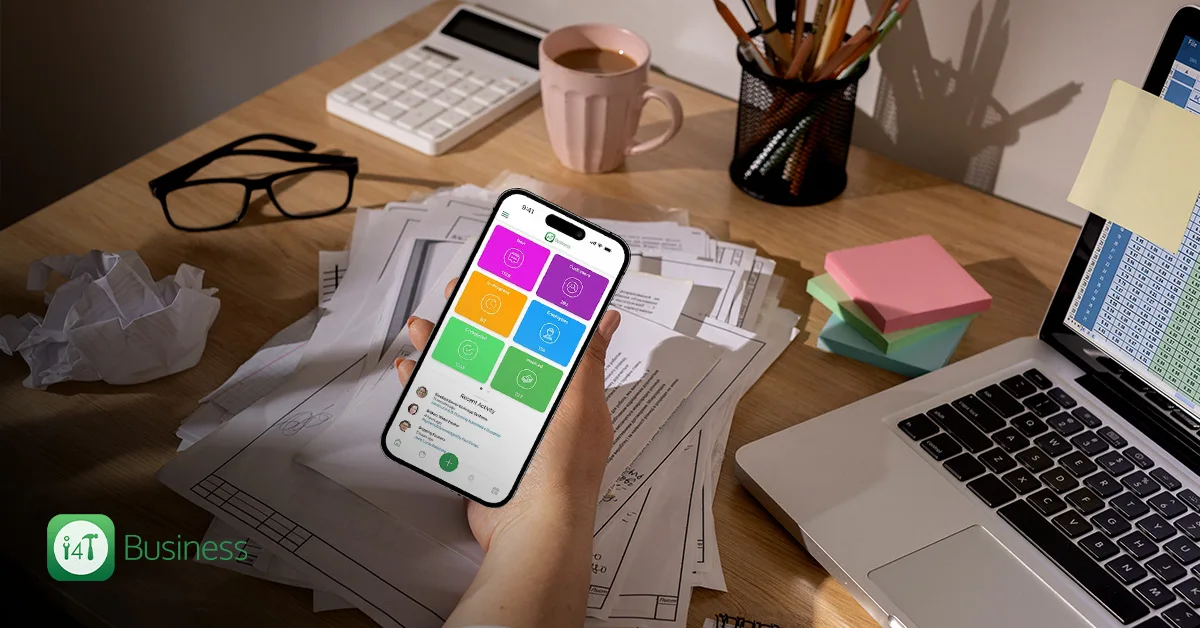
In the busy world of field service management (FSM) and trade businesses, many operators still rely heavily on traditional paperwork to run their day-to-day operations. Job sheets, diaries, whiteboards, handwritten notes, printed invoices, and plenty of phone calls form the backbone of many tradie systems across Australia. However, as businesses grow and the demands on team coordination and job management increase, these manual systems often fall short, leading to inefficiencies and frustration.
This article dives into the practical comparison of mobile apps vs paperwork for tradies, highlighting why many in the FSM and trade sectors are shifting towards digital solutions. We’ll explore what working with paperwork really involves versus using mobile apps, uncover the hidden costs of sticking to manual systems, and reveal how mobile apps can transform the efficiency, organisation, and customer experience of your trade business.
What Paper-Based Job Management Looks Like in a Trade Business
For many tradies, managing jobs and teams with paperwork means a hands-on approach that’s been in use for decades. It involves jotting down job details in diaries or notebooks, scribbling client information on printed job sheets, and physically shuffling through piles of paperwork to keep track of schedules and invoices. Commonly, a whiteboard or a wall calendar in the office or workshop acts as the day’s visual reference for upcoming bookings.
Communication tends to be fragmented, relying on phone calls or texts between the office and field workers. Job updates, changes, and customer requests often go through several people before they’re recorded or actioned. Invoicing and quoting require manual completion and re-entry of data into accounting systems, which can result in errors or delays.
This system might work when you’re just starting out or running a very small team, but as job numbers increase and admin volumes grow, paper trails can quickly become messy. Lost or damaged paperwork, double bookings, missed calls, and invoicing mistakes become common headaches, drawing time away from actual work and customer service.
How Mobile App-Based Job Management Works in Practice
Mobile apps for FSM and trade businesses bring all your job management into one digital hub. Scheduling, job details, team communication, customer histories, photos, quoting, invoicing, and progress updates live within a single platform accessible on smartphones and tablets out in the field and in the office.
Instead of chasing paper or passing messages through phone calls, teams can instantly update jobs in real time as work progresses. Customer requests and changes filter through immediately, helping dispatchers adjust schedules on the fly. Photos of completed work or site issues can be attached directly to job sheets via the app, providing instant and reliable proof for clients and records.
Invoicing and quoting become streamlined processes triggered from the job itself, reducing re-entry errors and speeding up payments. Managers gain complete visibility over all ongoing jobs, team availability, and client history, supporting faster decision-making and a more organised operation overall.
Mobile Apps vs Paperwork for Tradies: A Practical Comparison
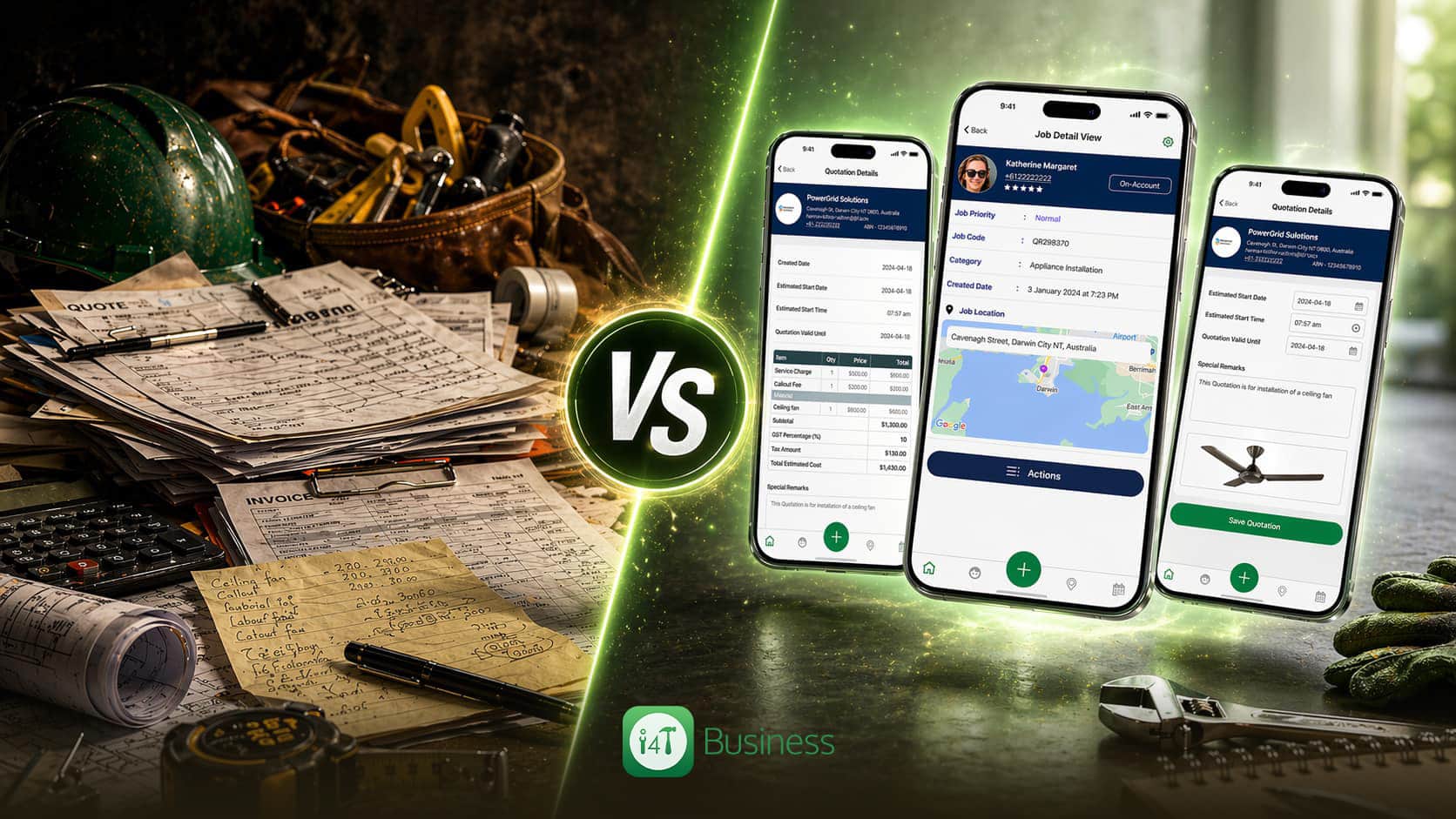
When it comes to operational speed, mobile apps wipe the floor with paperwork. Manual admin tasks like rewriting handwritten notes into digital records or chasing lost documents slow progress and waste valuable time. Apps automate many of these steps, cutting hours of after-hours admin down to minutes.
Accuracy is another major win for mobile systems. With paperwork, missed information or illegible handwriting can lead to costly miscommunications. Digital forms and checklists ensure data is entered correctly and consistently every time.
Communication between office and field teams also improves drastically. Instead of relying on calls or texts that might be missed or misunderstood, apps centralise conversations and job updates, providing a clear chain of information that everyone can access instantly.
Visibility across jobs is often near impossible with paper. Managers might spend half their day digging through physical files or chasing workers for updates. Mobile apps give a real-time overview of who’s on site, what stage each job is at, and any outstanding tasks or delays. This transparency helps reduce scheduling errors and missed appointments.
For customers, mobile apps support quicker response times and a more professional experience. Quotes can be prepared faster, job progress communicated clearly, and invoices sent promptly, all contributing to higher satisfaction and quicker payments.
The Hidden Costs of Paperwork in FSM and Trade Businesses
While paperwork may seem affordable upfront, its hidden costs mount quickly in operational inefficiency. Lost or misplaced information leads to duplicate admin effort as staff try to recover missing details or redo tasks. Delayed invoicing, common with slow manual systems, harms cash flow and increases follow-up work.
Paper systems create blind spots in scheduling. Without real-time updates, jobs can be double-booked or left unattended due to miscommunication. This not only impacts customer trust but also lowers overall job capacity and revenue potential.
Furthermore, paperwork management demands extra storage space and supplies, plus the labour needed to organise and file documents. These indirect expenses accumulate over time, reducing the profitability of your trade business even if they’re easy to overlook day-to-day.
Ultimately, the reliance on manual systems makes scaling tricky. As you add more staff or take on bigger projects, the inefficiencies multiply, making growth stressful and costly.
Real Tradie Apps Benefits in Everyday Operations
Mobile apps offer tangible improvements for tradies juggling multiple jobs, teams, and customers. Job tracking becomes straightforward, with live updates providing clear progress snapshots, reducing the need for phone check-ins or guesswork.
Admin time shrinks dramatically, freeing up hours each week previously spent on filing, chasing paperwork, or entering data multiple times. This extra time can be put towards growing the business or improving customer service.
Field teams benefit from instant access to customer histories, site notes, and safety requirements, enabling them to arrive prepared and work more efficiently. Faster quoting and invoicing streamline cash flow and reduce payment delays, which is essential for sustaining a healthy bottom line.
Communication barriers break down as messages and alerts flow through a shared platform. This boosts team morale, reduces misunderstandings, and helps avoid costly mistakes from missed instructions.
From the customer’s perspective, apps enable a professional touch that builds trust. Instant updates, clear invoices, and on-the-spot quotations enhance your reputation and often lead to repeat business or referrals.
Digital vs Manual Job Management as Your Business Grows
For sole traders or teams of just a few workers, paperwork might feel manageable and familiar. Many start out documenting jobs manually before considering digital solutions. However, as the workload increases, manual systems begin to falter under pressure. The volume of paperwork grows, mistakes become more frequent, and time-consuming admin piles up.
At this point, switching to mobile apps isn’t just about efficiency but survival. Digital job management scales easily with your business. Adding new team members, expanding service areas, and handling more complex workflows is much simpler when your system is automated and centralised.
While some small operations remain content with paper, the risk of missed jobs, invoicing errors, or poor customer communication grows, putting growth ambitions at risk. Digital tools deliver the control and flexibility that modern FSM and trade businesses need to thrive in a competitive market.
Addressing Common Concerns About Switching to Mobile Apps
Switching from paperwork to digital apps can feel daunting for tradies worried about complexity or costs. However, many modern apps are designed with simplicity in mind, offering intuitive interfaces that require little technical experience.
Costs are often viewed as a barrier, but when you consider the hours saved on admin, reductions in errors, and faster payment cycles, the return on investment can be substantial. Many apps offer scalable pricing so you only pay for features and staff numbers you need.
Staff resistance to new technology is common but can be overcome with proper training and clear communication on the benefits. Involving your team in choosing and trialling apps builds buy-in and smooths the transition.
It’s also important to remember that mobile job management apps are designed specifically for tradies and FSM businesses. They address real operational problems rather than forcing complicated, generic software tools.
Where Paperwork Still Has a Role, but Why It Can Hold You Back
Paperwork will likely always have a place for certain tasks, such as legally required forms, on-site signatures, or as a backup record. Some tradies prefer pen and paper for quick personal notes or as a mental checklist during physical work.
However, relying on paperwork as the core system creates bottlenecks that slow your entire operation. It fragments information, limits visibility, and makes collaboration difficult across teams or locations.
While it might suit the smallest operations or specific situations, using paper as the backbone in today’s digitally connected environment prevents a trade business from maximising efficiency, providing timely communication, and maintaining professional standards expected by modern customers.
How to Know Your Business Has Outgrown Paperwork
There are clear signs when paperwork is no longer keeping up with your trade business needs. Frequent missed or rescheduled jobs can be a red flag, often caused by communication breakdowns or poor scheduling organisation.
Losing notes or client information, constant filing backlogs, or delays in quoting and invoicing show that manual systems are straining under volume.
Spending after-hours on admin instead of rest or growth planning is a sign paperwork is eating into your time needlessly. Poor or unclear communication with your team or customers often points to scattered manual processes.
Finally, a lack of visibility over job status or team availability makes it tough to plan ahead or respond to urgent customer needs quickly.
If any of these issues sound familiar, it’s time to seriously consider moving towards a mobile app-based system.
Choosing the Right Mobile App for Your FSM or Trade Business
When selecting a mobile app, ease of use must be top of mind. Look for a platform designed for tradies, with simple navigation and clear features focussed on job and team management without complexity.
Core capabilities should include straightforward scheduling tools that sync between office and field, easy quoting and invoicing functions, quick job tracking updates, and built-in communication channels.
It’s also essential the app can store customer histories, site notes, and photos, making repeat work and site visits hassle-free.
Support for different team sizes and the ability to scale as your business grows will future-proof your choice, as will compatibility with existing accounting or admin tools where relevant.
A solid support network, through tutorials, responsive customer service, or a helpful user community, can make all the difference when transitioning to digital.
Transitioning from Paper to Digital Without Disruption
Switching from paperwork to apps doesn’t have to be a headache if planned carefully. Start small by digitising one aspect of your workflow, such as job scheduling or invoicing, before rolling out a full system.
Involve your team early in the change process to address concerns and gather feedback. Provide training sessions or resources to build confidence with new tools.
Maintain backup copies of crucial paperwork during the transition period to avoid any operational hiccups. Gradually encourage field staff to update jobs and records digitally in real time.
Set clear expectations around timelines and outcomes, celebrating quick wins like time saved or faster job completion to build momentum.
Remember, moving to mobile apps is a step-by-step journey. Patience and ongoing support are key to making the switch smooth and beneficial for all.
Conclusion
When it comes to mobile apps vs paperwork for tradies, the choice isn’t just about technology but about working smarter in a demanding and competitive industry. While paperwork remains familiar and may seem cost-effective initially, it quickly becomes a limiting factor as your business grows. Manual systems slow down admin, increase errors, reduce visibility, and ultimately affect profitability and customer satisfaction.
Mobile apps offer practical benefits that can transform how a trade or FSM business operates, from speeding up scheduling and invoicing to improving team communication and customer experience. They provide the real-time control and scalability needed to keep your teams efficient and your customers happy.
For modern tradies looking to reduce paperwork headaches and run a more professional, streamlined operation, investing in a mobile app like i4T Business, is generally the smarter, more sustainable choice.
Frequently Asked Questions
Yes, mobile apps generally offer faster, more accurate, and more efficient job management than paperwork, improving communication and reducing admin workload.
Mobile apps help tradies streamline scheduling, quoting, invoicing, job tracking, and team communication – all in real time and accessible on-site.
When paperwork causes missed jobs, invoicing delays, lost information, or excessive admin, it’s a clear sign to adopt digital job management tools.
Absolutely. Even small teams can save time and reduce errors by moving to apps, though the benefits become more pronounced as the business grows.
Many tradie-friendly apps are affordable and easy to use, with simple interfaces and good support to ease the transition without much disruption.