


Key Takeaways
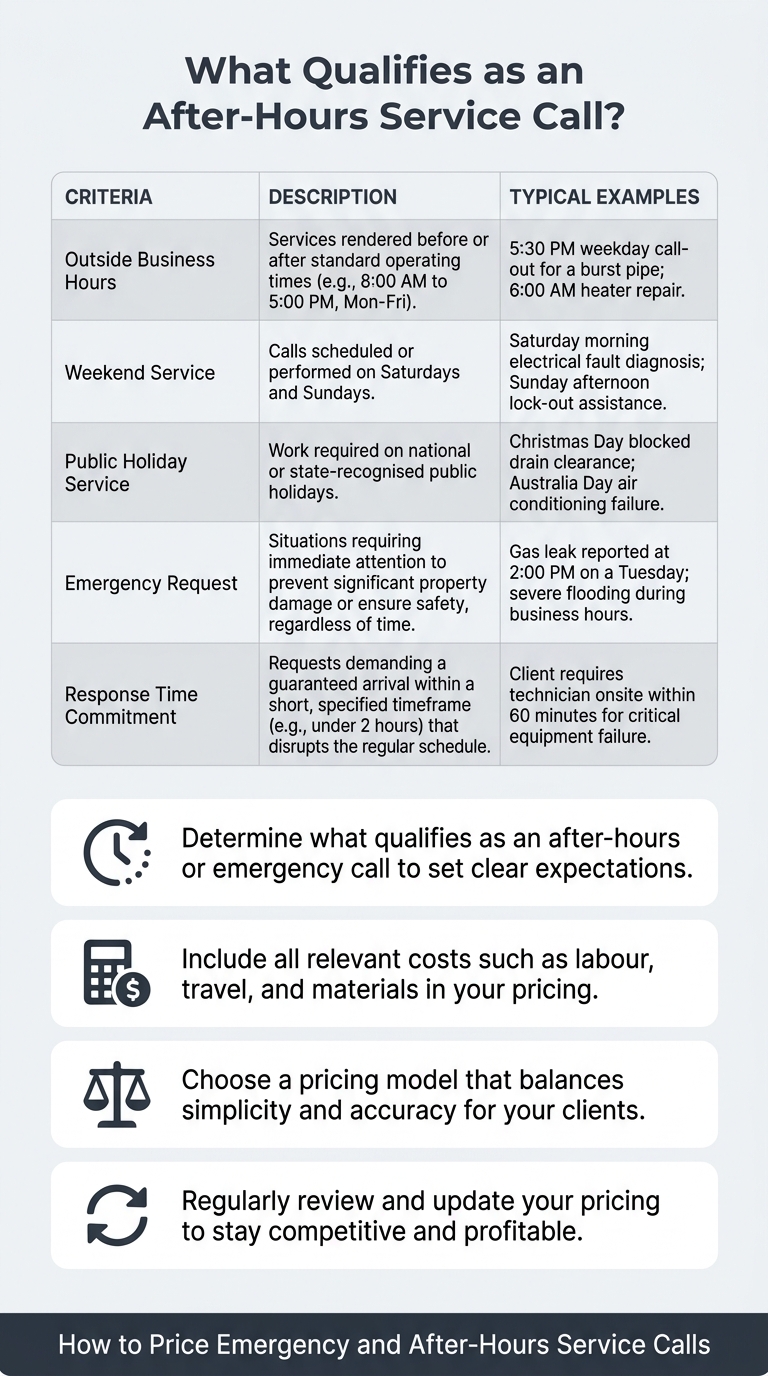
Determine what qualifies as an after-hours or emergency call to set clear expectations.
Include all relevant costs such as labour, travel, and materials in your pricing.
Choose a pricing model that balances simplicity and accuracy for your clients.
Regularly review and update your pricing to stay competitive and profitable.
Key Answer
Learn how to effectively price emergency and after-hours service calls to maintain profitability and customer satisfaction in the Australian trades industry.
In the world of tradies, knowing how to price emergency and after-hours service calls can be the difference between maintaining customer satisfaction and losing clients. Setting a fair and transparent after-hours call-out fee not only builds trust with your clients but also ensures your business remains profitable. In this guide, we’ll cover everything you need to know to get your emergency pricing just right.
What Qualifies as an After-Hours Service Call?
Determining what constitutes an after-hours service call is crucial for setting expectations with your clients. Typically, after-hours services are required outside of regular working hours, which usually run from 7 am to 5 pm, Monday to Friday. Services needed during evenings, nights, weekends, or public holidays generally qualify as after-hours.
An emergency call is slightly different. It involves urgent situations that, if not addressed promptly, could lead to significant damage or safety issues. For example, a burst pipe causing flooding or an electrical fault presenting a fire hazard are clear emergencies. Clarifying these distinctions with your clients can help avoid misunderstandings and ensure that your after-hours call-out fees are perceived as fair.
What Your After-Hours Call-Out Fee Should Include
A well-structured after-hours call-out fee covers various costs. First, consider your labour costs. This includes the higher wages you might pay your staff for working outside of regular hours. Next, factor in travel costs, which can increase significantly if the job is further afield. Don’t forget to include material costs, particularly if the job requires urgent parts or specialised equipment.
Moreover, think about the indirect costs, such as overtime for staff and any additional overheads like increased insurance premiums for late-night work. Ensuring all these elements are included will safeguard your margins and maintain the quality of your service.
Choosing the Right Emergency Pricing Model
Selecting an appropriate pricing model is pivotal. Fixed fees offer simplicity and transparency, making it easy for customers to understand what they’ll pay upfront. However, they may not always cover unforeseen complications that arise on the job.
An alternative is a variable pricing model, which charges customers based on time, materials, and complexity. This approach can be more accurate but requires clear communication to avoid disputes. Whatever model you choose, make sure it’s sustainable for your business and clear to your clients.
Calculating Labour, Travel and Material Costs
To accurately price after-hours services, break down each component of your costs. Start with labour: calculate overtime rates for your team and include superannuation contributions. Then consider travel costs, factoring in fuel and vehicle wear and tear. Material costs should cover the price of parts and any unique items needed for emergency repairs.
A good practice is to review these costs regularly, ensuring they reflect current prices and your business needs. Doing so will help you maintain competitive pricing and protect your profitability.
Setting Fair Evening, Weekend and Holiday Rates
When setting rates for different times, consider demand and operational costs. Evening and weekend rates often need to be higher to cover increased labour costs and reduced availability. Public holidays might require even higher fees due to increased demand and limited staff availability.
For a detailed approach to pricing, you may want to explore A Complete Guide to Service Pricing for Small Trade Businesses. This will help you fine-tune your pricing strategy in line with market expectations and operational realities.
Communicating Emergency Pricing with Customers
Transparent communication is key when it comes to emergency pricing. Always inform your clients about potential costs upfront. Use clear, simple language to explain your after-hours call-out fee and what it entails.
Utilise digital tools to send detailed quotes and invoices quickly. This not only speeds up the process but also ensures that your clients are fully aware of the costs involved before work begins.
Common After-Hours Pricing Mistakes to Avoid
Avoid underestimating the costs of providing after-hours services. Common mistakes include setting prices too low, not accounting for all costs, and failing to communicate pricing clearly to customers. Each of these can erode profits and damage trust.
To prevent these pitfalls, regularly review your pricing strategy and update it to reflect changes in operational costs and market conditions. For more insights, consider reading about hidden profit killers in trade businesses.
Improving Emergency Scheduling and Invoicing
Efficient scheduling and invoicing can drastically improve your after-hours service. Digital solutions like i4T Business, help with holiday season scheduling, and streamline the process. It offers tools offer real-time updates, ensuring your team knows their schedule and can adapt quickly to emergency calls.
Automated invoicing reduces errors and speeds up payment collection. By integrating i4T Business, you ensure your business operates smoothly, even during the most hectic times.
Frequently Asked Questions
An after-hours service call refers to services rendered outside of standard business hours, typically evenings, nights, weekends, and public holidays.
Include all direct costs such as labour, travel, and materials, and consider indirect costs like overtime and increased insurance. Regularly review to ensure competitiveness.
Clear communication ensures customers understand what they are paying for, helping to build trust and prevent disputes over billing.
Common mistakes include underestimating costs, not updating prices regularly, and failing to clearly communicate costs upfront to customers.
Digital tools offer real-time scheduling updates, better coordination for emergency calls, and automated invoicing, improving efficiency and customer service.