

Key Takeaways
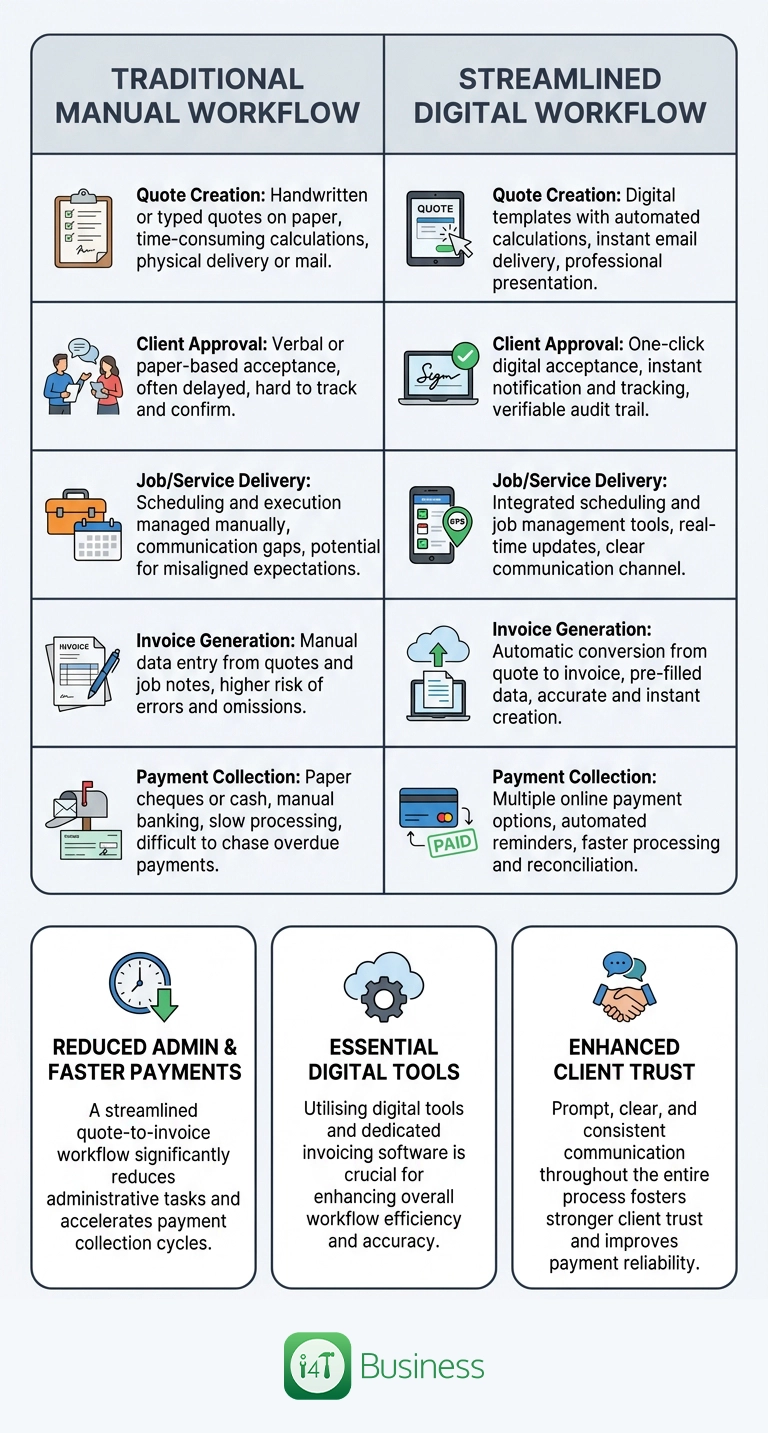
A streamlined quote-to-invoice workflow reduces admin tasks and speeds up payment collection.
Digital tools and invoicing software are crucial for improving workflow efficiency.
Prompt and clear communication throughout the process enhances client trust and payment reliability.
Key Answer
Learn how to build a quote-to-invoice workflow for your trade business to streamline operations and enhance profitability using effective invoicing software.
In the bustling world of Aussie tradies, managing your workflow from quote to invoice can seem like a daunting task. Yet, it’s essential for reducing admin work, speeding up quotes, and ensuring you’re paid on time. That’s where understanding how to build a quote-to-invoice workflow for your trade business comes into play. With the right strategies and invoicing software, you can streamline operations, minimise errors, and enhance profitability.
What Is a Quote-to-Invoice Workflow?
A quote-to-invoice workflow is an end-to-end process that guides you from capturing a client’s initial inquiry through to sending them a final invoice. It’s a structured pathway designed to ensure consistency, accuracy, and efficiency in handling customer transactions. This workflow is pivotal for tradies as it bridges the gap between quoting a job and collecting payment, thus reducing the risk of lost income due to mismanaged or delayed invoices.
Why Tradies Lose Time Between Quotes and Invoices
Tradies often find themselves bogged down in paperwork, leading to lost time and revenue. The root cause is typically a lack of streamlined processes, resulting in manual double-handling of information and increased admin burdens. Without a seamless workflow, the path from an accepted quote to an issued invoice is fraught with delays and errors. By implementing effective workflow management and the right invoicing software, these time sinks can be significantly reduced.
Step 1: Capture the Customer Enquiry Properly
The first step in your workflow is capturing customer enquiries accurately and efficiently. Make sure every enquiry is logged immediately, detailing client needs and expectations. Using digital tools, like CRM systems or invoicing software, allows you to centralise information, reducing the likelihood of misplaced notes or forgotten details. This initial step is crucial in setting the tone for professional client interactions.
Step 2: Create a Clear and Professional Quote
Once you have the customer’s enquiry on file, the next step is to generate a clear and professional quote. A well-crafted quote should outline all project costs transparently, leaving no room for ambiguity. Leveraging digital quoting tools can help standardise this process, ensuring that every quote is both accurate and consistent with previous ones. This not only builds trust with your clients but also speeds up the approval process.
Step 3: Turn the Approved Quote Into a Job
After receiving approval from the client, it’s time to convert that quote into an active job. This step involves meticulous scheduling and planning to ensure all resources and personnel are aligned. By integrating your scheduling tools with your invoicing software, you can ensure that job details are automatically updated across all platforms, reducing manual entry and potential errors.
Step 4: Track the Job While Work Is Happening
While the job is underway, keeping track of progress is vital. Utilising project management tools or dedicated field service apps can provide real-time updates, allowing you to monitor timelines and resource allocation. This transparency not only helps in maintaining the project schedule but also ensures that any deviations are immediately addressed, facilitating swift resolution and keeping the client informed.
Step 5: Send the Invoice Quickly After Completion
Once the job is complete, don’t delay sending the invoice. Prompt invoicing is key to maintaining cash flow and financial health. Automating this step through invoicing software ensures that invoices are sent out quickly and accurately, reducing the risk of missed payments. Fast invoicing also conveys professionalism and efficiency, encouraging timely payments from clients.
Final Thoughts: Build a Workflow That Gets You Paid Faster
A well-structured quote-to-invoice workflow is essential for any trade business aiming to thrive. By utilising the right tools and strategies, such as comprehensive invoicing software, you can transform your business operations, reducing admin burdens and enhancing payment speeds. To explore how these solutions can benefit your business specifically, don’t hesitate to book a demo of i4T Business and start your journey towards efficient and profitable workflows.
Frequently Asked Questions
Implementing a quote-to-invoice workflow can reduce administrative burdens, minimise errors, and ensure faster payment, enhancing overall business efficiency.
Invoicing software streamlines the quoting and invoicing process, reduces manual entry errors, and speeds up the payment cycle, improving cash flow and business operations.
Prompt invoicing is crucial for maintaining cash flow and financial health, ensuring you receive timely payments and enhancing your professional image.
Project management tools and field service apps can help track job progress in real-time, ensuring efficient resource allocation and timely project completion.
Using digital quoting tools that standardise and simplify the process can enhance the clarity and professionalism of quotes, speeding up client approvals.